
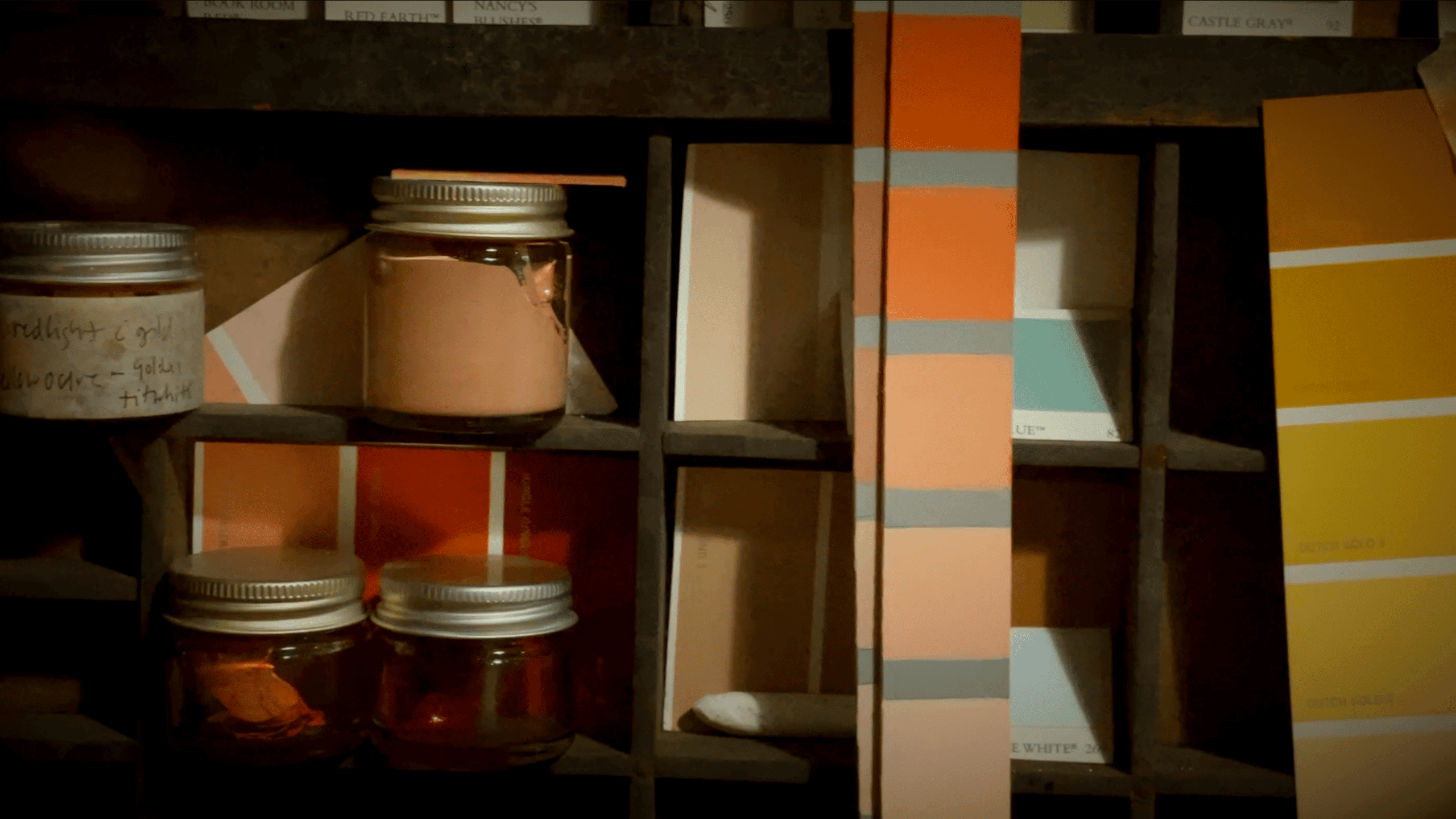
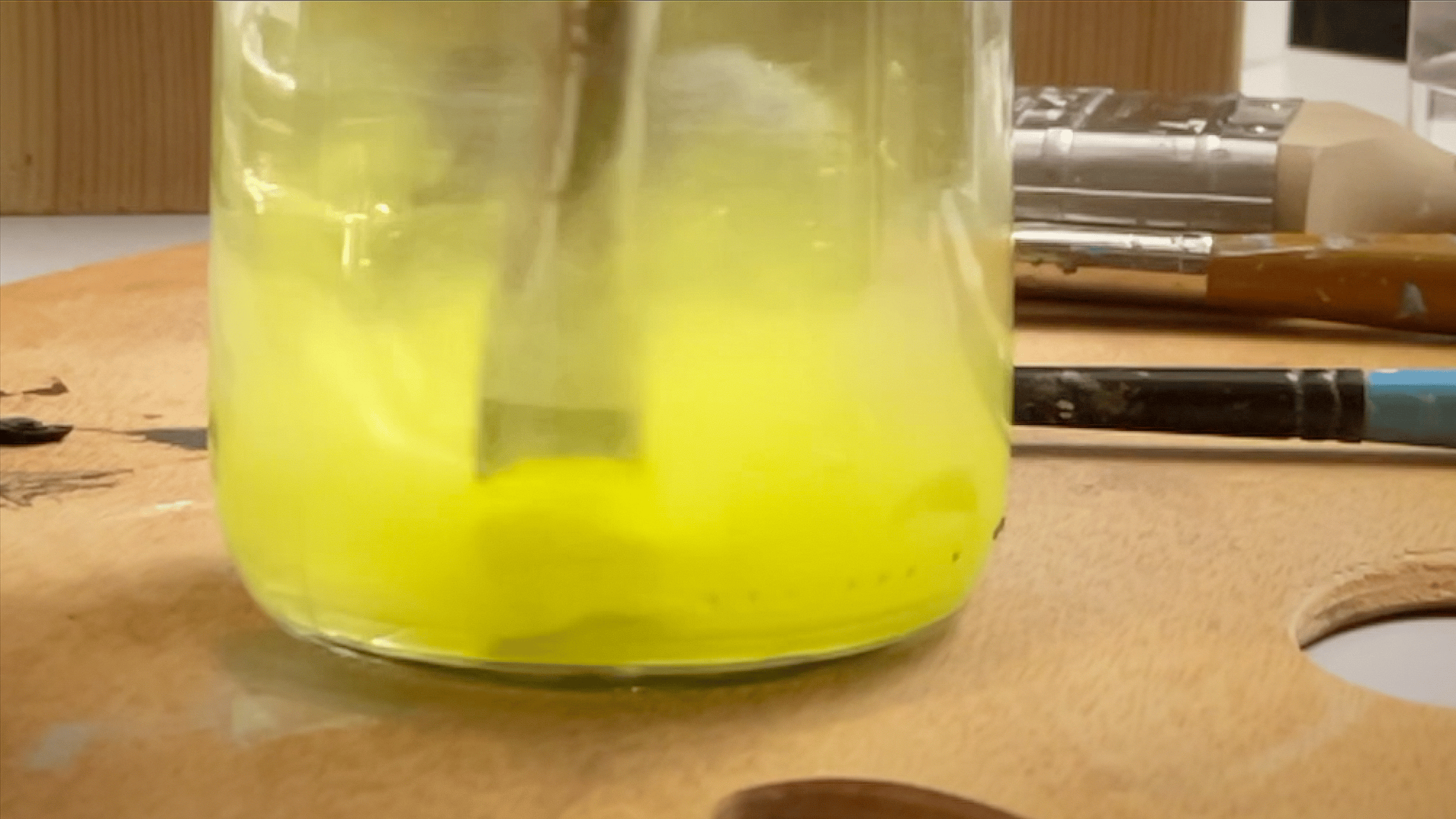
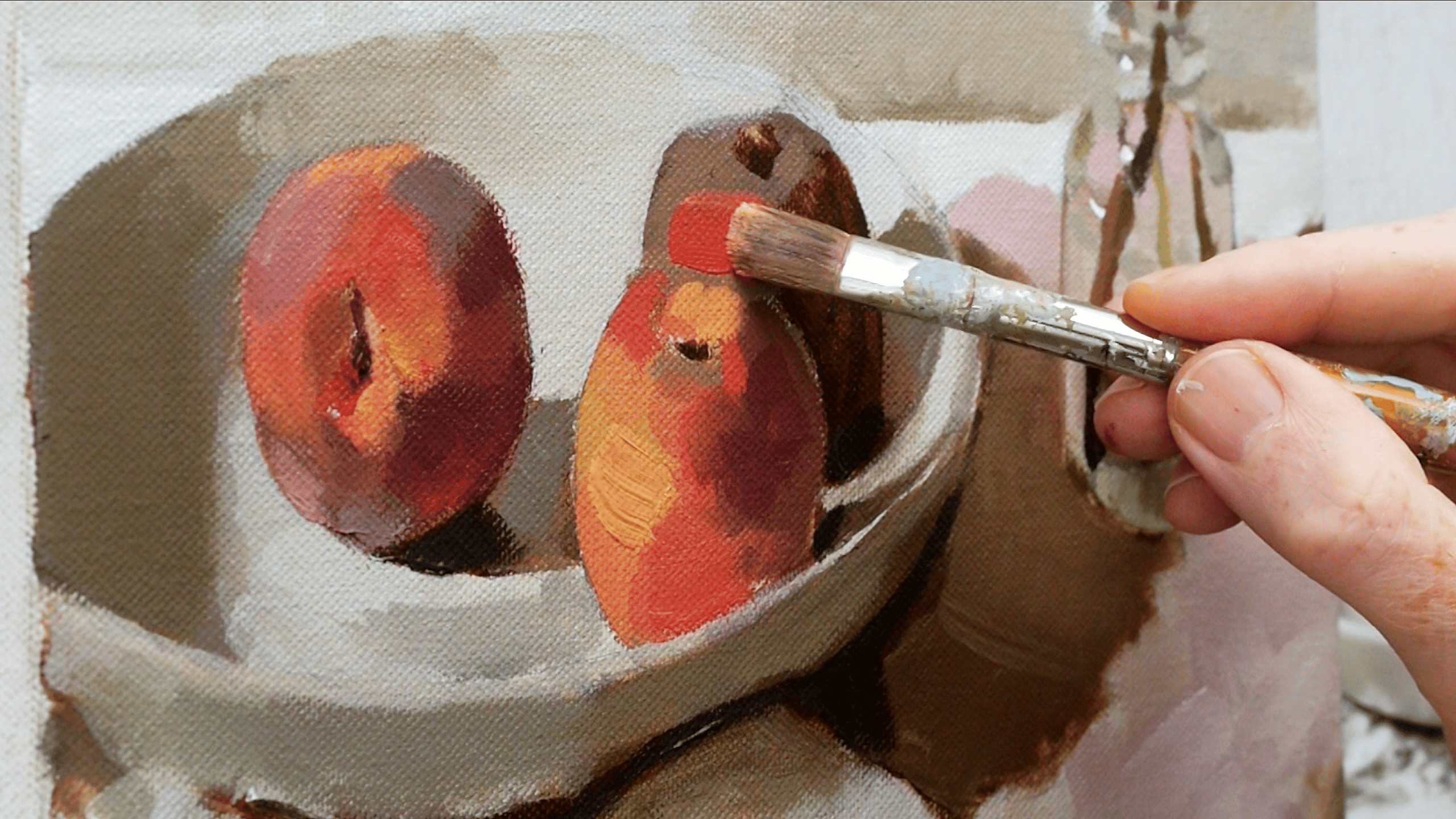
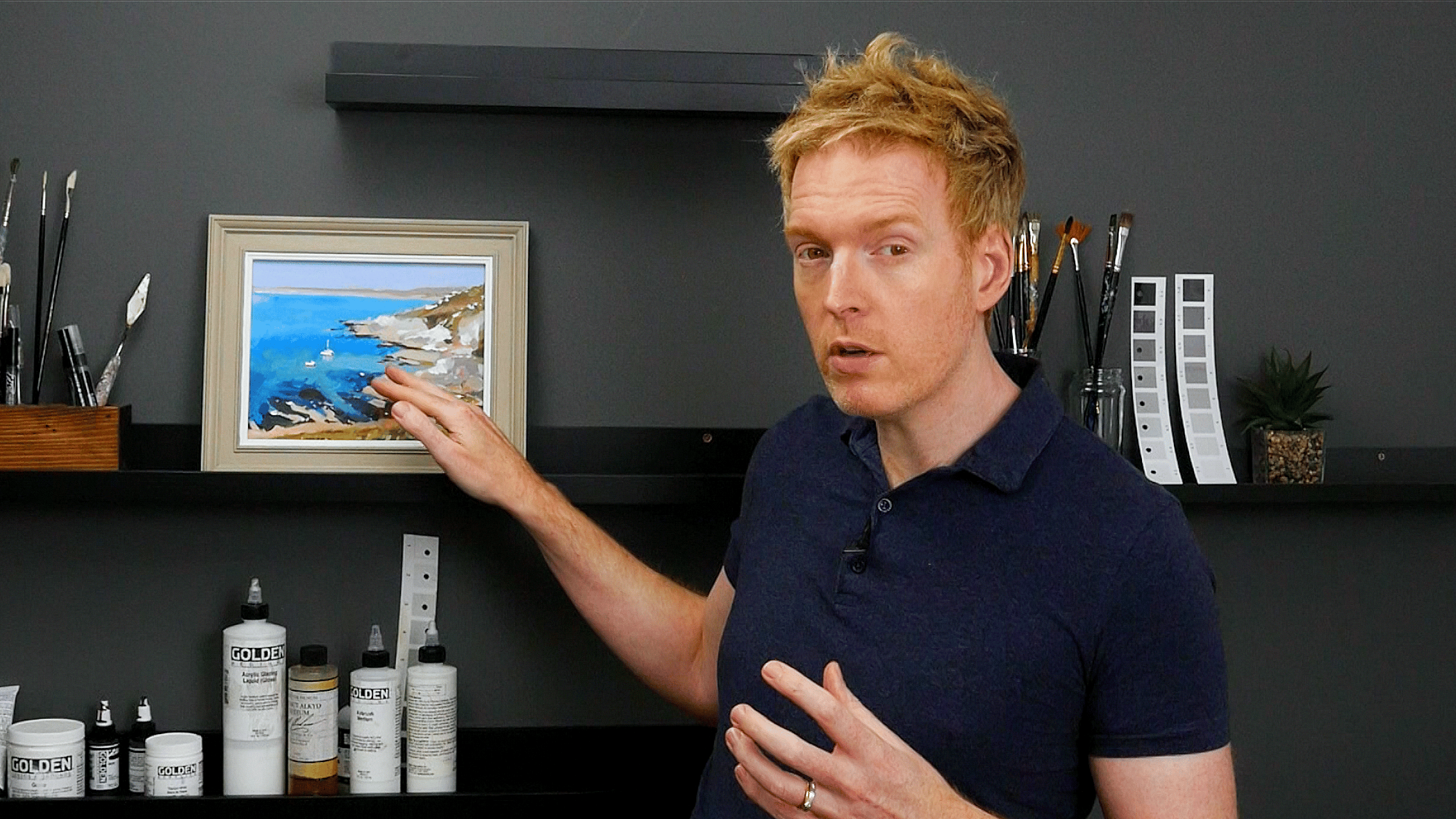
The new Floral Still Life Acrylic Painting Course is now available!
I’ve developed this course to show you how you can transfer the feeling of simplicity and light into a studio floral still life by the arrangement of colours, composition and tonal value range.
Taking classical painting techniques to build up an indirect painting in acrylics you’ll create a more contemporary still life painting that allows you to use a light modern palette and still see a good three-dimensional form.
You like the idea of trying oil paints, but the practicalities of cleaning up your brushes with solvents is out of the question.
It could be you paint in a small room without good ventilation, or you’ve had to stop using traditional oils due to skin sensitivities or asthma.
So what’s the alternative? Acrylics? Watercolour? or go old school with some Egg tempera?
How about real oil paint that can be mixed with water or natural drying oils and cleaned with soap and water? Long working time, soft blends, buttery consistency, no solvents and super easy cleanup.
Mmm, sounds too good to be true, so what’s the catch?…
Morning class, this week I’ve been in Mallorca soaking up the scenery and enjoying painting outside. I found this secluded tree within a lemon grove that I thought would work well as a little Plein air sketch with acrylics.
You can download a reference image below to follow along with the lesson.
Downloading the reference photograph
The photo below can be ‘right clicked’ and ‘Save image as’, so you can use it as a reference image, print it out and follow along with the video above.
I’d travelled through the Cotswolds many times before, captivated by the golden glow of the honey-coloured stone buildings, that just seemed to lend themselves to being painted.
The earthy tones of yellow ochre complimented by soft dull lilacs of wisteria-laden-branches create a really mellow colour palette, you then have crumbling walls surrounded by trees and foliage that bring in a bright sap-green colour pop…
If you’ve ever wanted to have a go with oils but felt the mysterious mix of Linseed Oil and Turpentine put you off, then this simple still life study is for you.
It uses just one medium mix the whole way through and I demonstrate the similarities between the techniques we’ve been using on previous acrylic paintings tutorials.
Traditional oil painting medium recipes can be complicated but it’s not essential to master it all so I’ve kept it simple so you can get painting.
Switching between acrylics and oil paint can be a smooth transition, the main difference is how you dilute the pigments.
I’ve developed this acrylic painting course inspired by a Venetian Sunset to help guide you through the process of moving from small-scale to large-scale acrylic paintings.
What pitfalls does an artist face when painting big?
As a student visiting the Musée de l’Orangerie in Paris, I’d just seen Monet’s monumental Water Lily paintings and I was in awe.
The sheer scale of the pieces with thick painterly brush strokes inspired me to get back to my little studio space at home.
It was time to break out with the big canvas.
I wanted to create impressionistic landscapes and seascapes that still held the qualities of light-fall and realism that I’d seen, but maybe a little bit smaller than 40ft!
And this immersive large-scale painting experience is what many beginner artists want, it feels exciting and well….arty to create something big and expressive.
Grabbing a large decorators brush, making gestural marks on your canvas – feels invigorating, almost like a breakthrough and then…. you start to hear your inner artist voice getting overwhelmed.
You haven’t got a plan, you don’t know what the next step is so you lose you nerve…
5 minutes earlier, you could have mistaken us for locals, idly chatting to a friendly looking Italian who had informed us we needed to take the Linea Arancio (Orange line) to San Marco.
The journey time? Well …it could take anywhere between 30 minutes and 1 hour. He seemed vague, but of course, why should he know details about the journey.
We’d caught a late night flight into Venice and were waiting for one of the last ‘Alliguna’ boats from the airport.
The energy started to change and people formed an orderly queue beside a man clinging precariously to the side of an extremely buoyant boat and then it dawned on us.
The small lurching vessel moored in the dock, that I had 100% assured Vanessa we wouldn’t have to go in, was indeed our transport.
And the vague Italian man … he was the Captain.
The rain lashed into the small space at the rear of the boat, tourists and suitcases packed in together and then I heard Vanessa say “Scusami, Scusami, we’ve changed our minds, we’re getting off at the Rialto Bridge”
Morning class! This week we’re going to learn how to capture the brilliant qualities of reflections in copper, using acrylic paint.
I absolutely love how vibrant this copper pan is surrounded by the dark range. Notice how, even though the background is a dark subject, there is still a lighter tone on either side of the pan to bring it forward.
Copper makes a great subject, allowing us to work with a complementary colour palette of orange and inky blue, deep blacks and vibrant colour glazes.
Cherries overflowing perfectly in a bowl, a sense of life captured in a single moment, creating the perfect still life composition appears to come naturally to some artists.
Reassuringly, there are a few simple adjustments you can make to your own set-ups, that prevent you making the most common beginner mistakes.
By making small changes to the placement of your objects, you can breathe life and energy into your compositions and by observing how your viewing position impacts the shapes and shadows, will help develop accuracy in your drawings…
Love it or hate it, almost all landscape artists want to paint trees, woods and grass realistically.
But mixing greens can be one of the major issues that can start to throw your landscape painting off-course.
Greens can be an Achilles heel for beginners, and the urge to grab a vivid, bright green from the paintbox can be hard to resist.
In the past, I’ve demonstrated how you can achieve some surprisingly subtle greens by using some seemingly ‘non-green’ colours such and black and brown.
And I advise beginners to throw out their pre-mixed green (usually this is Emerald Green included in starter sets) when they’re first starting, in order to practice colour mixing with acrylics and develop their own mixing skills and gain colour confidence.
This second Instagram collection comes from my studio and painting practice, you can read more about the story behind each photo on Instagram @willkempartschool
Your next painting idea could be closer than you think
After following along with painting tutorials, learning new skills and getting excited to develop your own painting practice, it can feel like a step into the unknown when trying to choose what subjects to paint next.
Should you paint landscapes, still lifes or work towards portraits? With so many choices, it can quickly lead to indecision and procrastination.
I’d like to share with you some of the photos I use as my own visual diary that inspire my sketches, paintings and palette choices. It could be from museum trips or travels to new cities, new paint experimentation in my studio or simply a fall of light through a window that has a great quality to it.
Just as a painter’s palette can give you a glimpse into the painter’s approach, your camera roll can reveal what really interests you. The compositions you naturally create, the repeated colours that keep on cropping up and the patterns of the negative spaces you’ve observed all contribute to your own personal style.
Below are a selection of photos with a brief description of what inspired me at the time, and this first collection comes from my trips around National Trust properties, focusing on historical kitchens. Hopefully, they’ll inspire you to start your own visual diary. Then you’ll have a camera roll full of painting ideas!
New @willkempartschool Instagram Collection #1
Also, I’ll be regularly posting the photo collections to my new Instagram account, really hope you enjoy them.
When I was trying to find my way in portraiture, I’d spend hours studying Old Master paintings thinking “Wow, how did they do that?”
I was flummoxed.
Not only did the skin look realistic, but they’d managed to capture those bluish grey tones that lie just beneath the skin’s surface. In my naivety, I just couldn’t work out how you could paint one colour next to another colour yet create such a smoky transition.
I’d repetitively ask Vanessa, “When will I be able to paint the melt of the cheek you see on the Mona Lisa?”