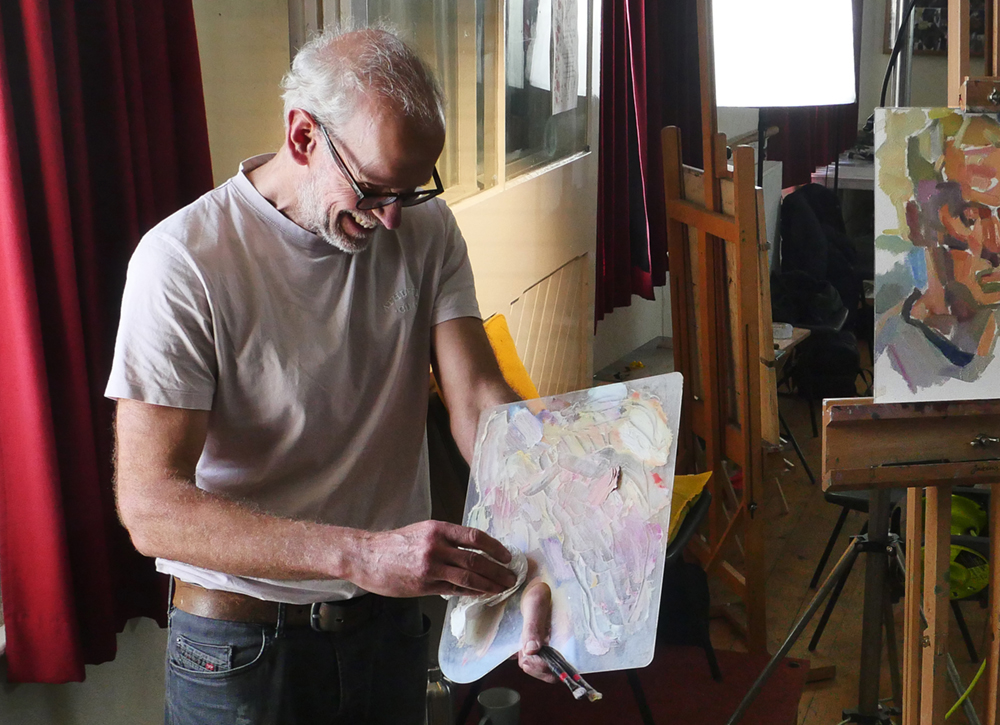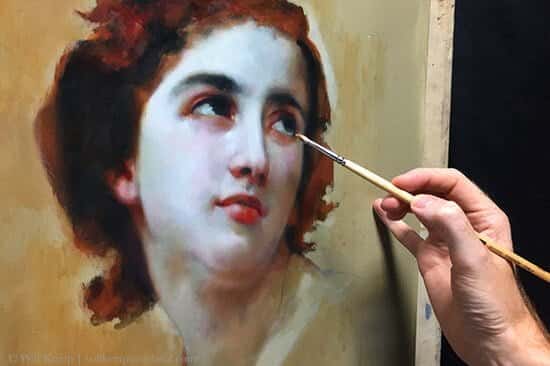
Expressive Portraits workshop with Andrew James
Morning Class!

For the last few days, I’ve been immersed in a portrait painting workshop with Andrew James RP, NEAC.

There’s something wonderful about spending time in a room full of artists who share your enthusiasm for painting. One of the lovely things about painting is that there’s always something new to discover.

01. Expressive Portraiture
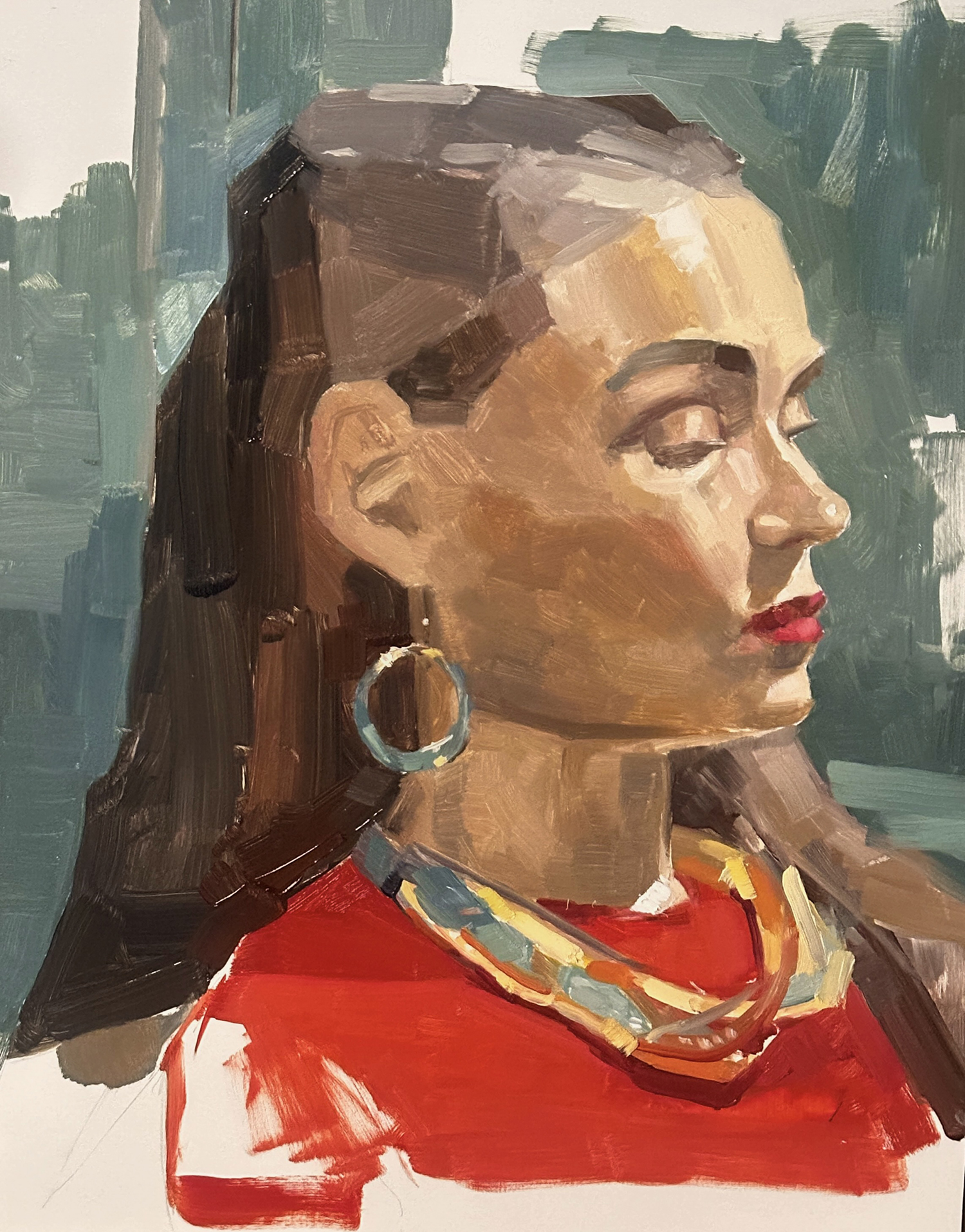
This was a 5-hour session from life with Fi, the model.

The process we worked through during the workshop began with line drawing, followed by tonal studies in charcoal, a monochromatic painting and then a colour study. It was a really lovely progression, building on what we’d learnt at each stage.

And then all the lighting and colours changed!

For our final day’s painting, we had the same model but with different lighting, a different coloured top and a new background, giving us a fresh set of challenges and an opportunity to put everything we’d learnt into practice.

02. The Artist

The tutor of the portrait painting workshop was Andrew James RP, NEAC, Winner of the Carroll Foundation Award in 1998 and the Ondaatje Prize for Portraiture in 2024.

Known for his expressive brushwork, rich paint surfaces and ability to capture the character of his sitter and amazingly insightful feedback!

If you watch Sky Portrait Artist of the Year, he was also on it last night!
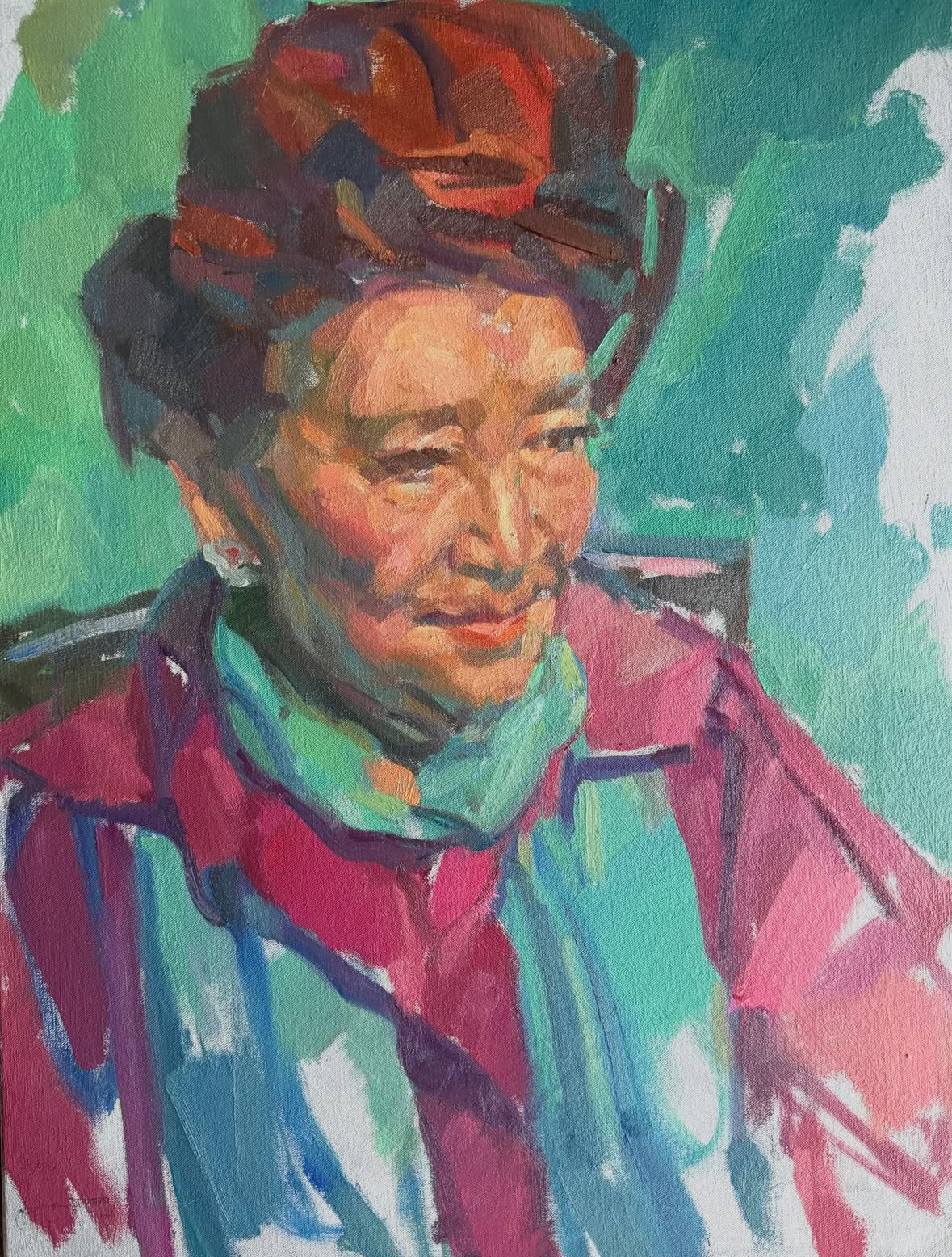
jung-chang-andrew-james

Andrew James, Portrait of Jung Chang, author of Wild Swans

03. Learning to Look

Taking the time to observe. Looking at the relationships between shapes.

When you’re painting from life in a group setting, it’s hard not to feel pressure from other artists around you and the expectation to capture a likeness.

Andrew took a different approach. Despite his ability to draw incredibly quickly, his process was slow, steady and considered, focusing on the major structures first.

He worked from the general to the specific, establishing the head’s outer boundaries before gradually refining the larger forms and moving toward smaller shapes and details.

04. The colour in the shadows
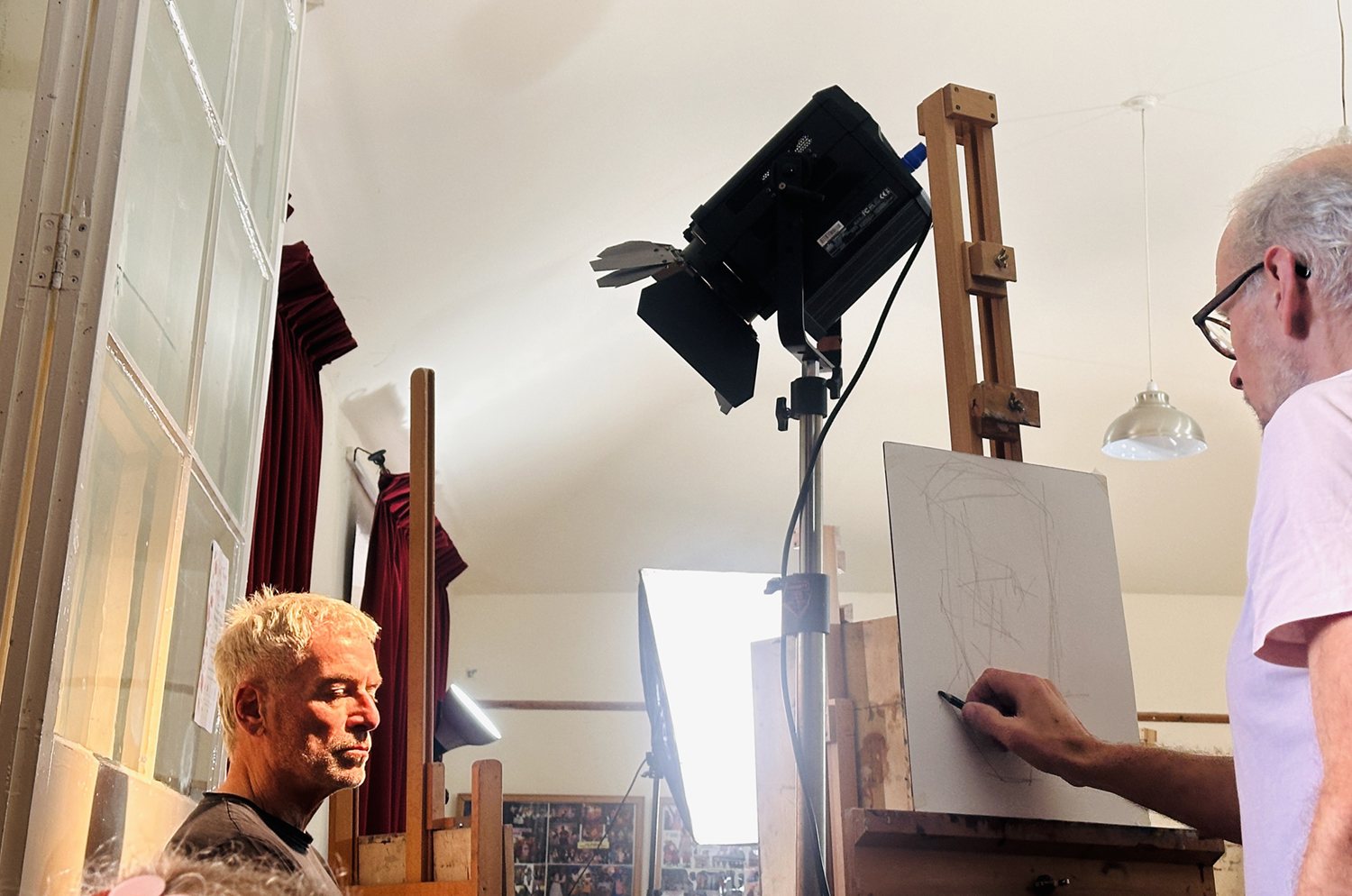
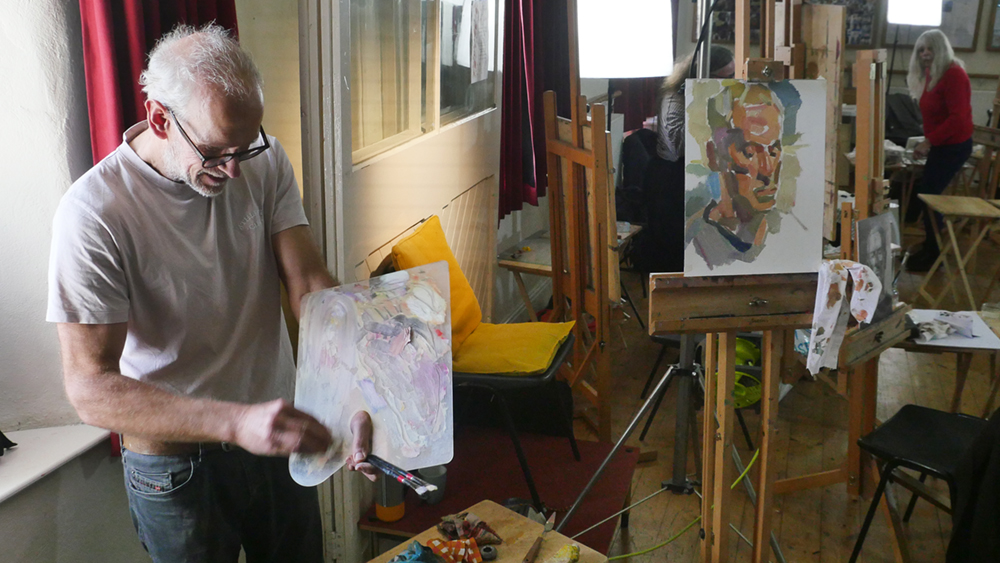
Andy demonstrating how to observe colours in every area of the portrait. Looking at bounce light, green hair, purple shifts.

He began with a simple line drawing using a Conté pencil, once again establishing those foundational structures.

With the underlying drawing in place, he was able to be much more expressive with his painterly marks, shifting his attention towards colour, shape and brushwork rather than the initial structure of the head. (Modelling from Adam.)

05. Tools

When colours are squeezed, there is no time for brush lids to be replaced! A flip-top oil paint tube would be an excellent invention.

06. Oil paint
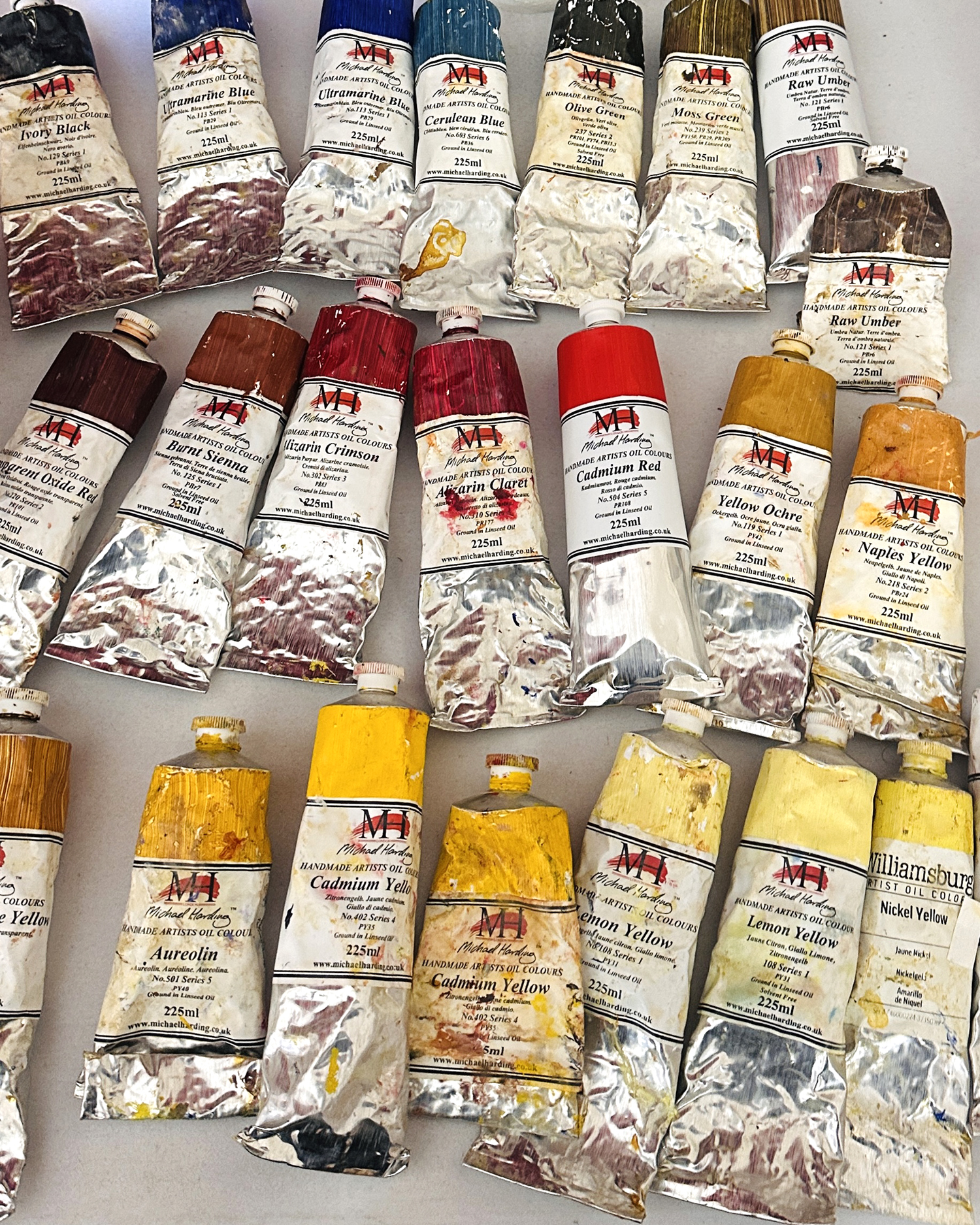
Mmm 225ml tubes!

07. Boldness in brushstrokes
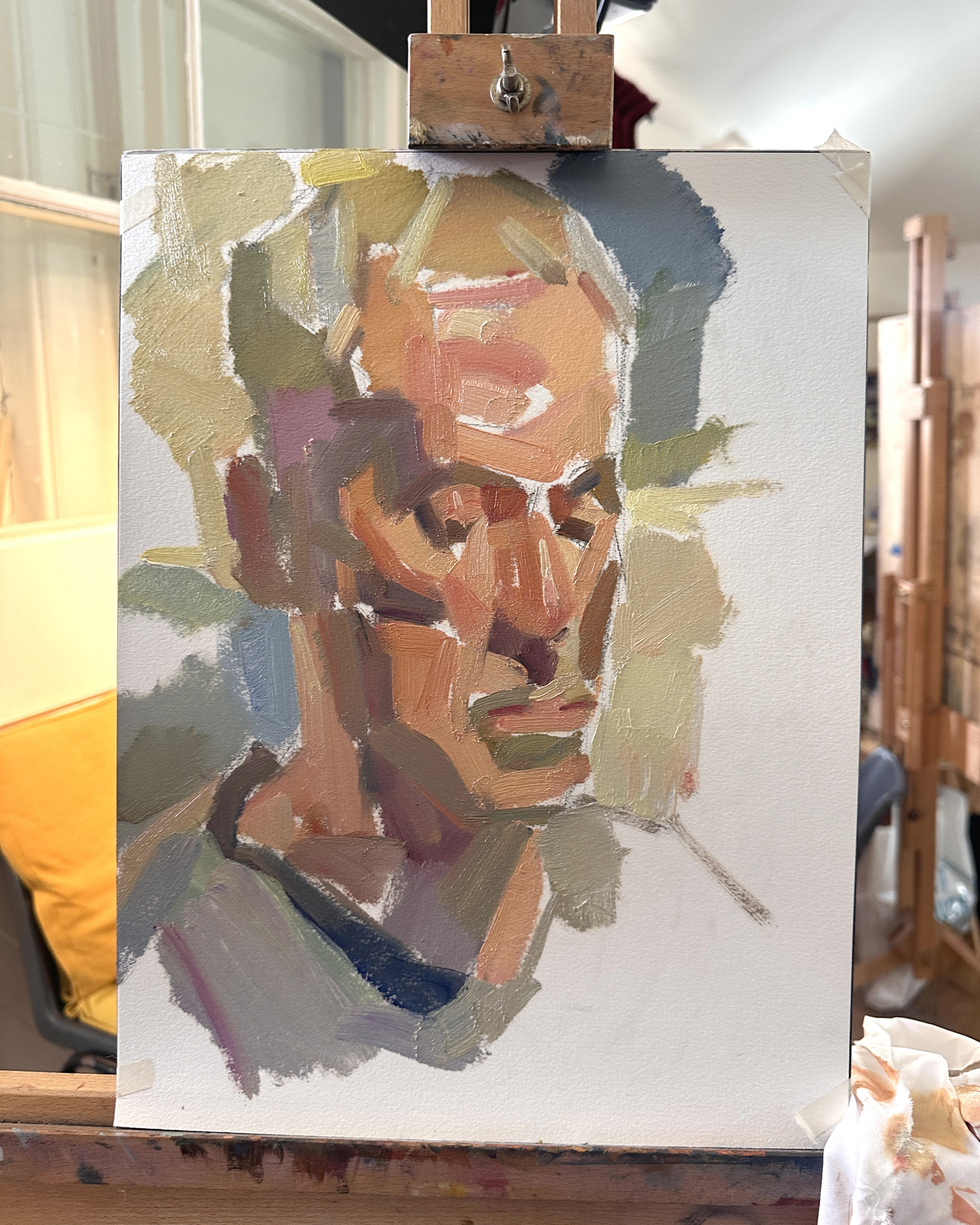
Here is Andy’s 45-minute demonstration, and a complete story told.

No blending, just stroke next to stroke.

Balancing accurate observation with the freedom of painterly brushwork.

08. Colour study
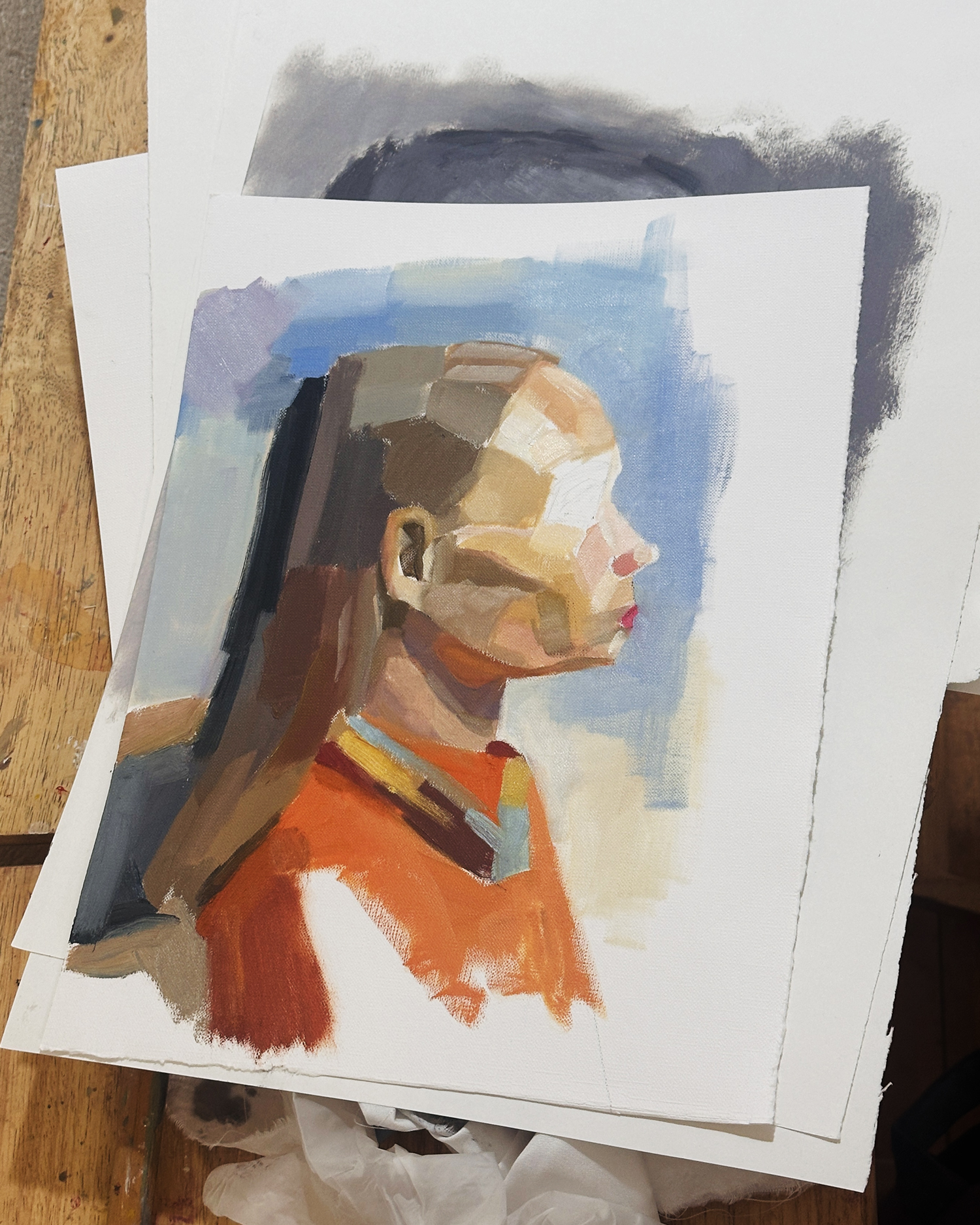
The colour studies were a great way to begin analysing the subject in simple geometric blocks, observing where the light was falling and how it affected both the tonal value and temperature of the colours.

By bringing these abstract shapes together, you could gradually create a sense of light flowing across the form.

Here’s a close-up of the colour study. Looking for shapes and masses. Allowing the painting to evolve rather than trying to get everything right the first time.

09. Brews in Order

My palette set-up for the final day’s portrait. As you can see from the collection of brews on the side, the added pressure of a new model position, different lighting and a change of colours made it a two-brew kinda moment!

But it was a good opportunity to reassess and think through all the stages we’d worked on during the workshop, starting with line, moving on to tone, establishing blocks of colour and then observing the more subtle shifts between warm and cool.

10. Block-in
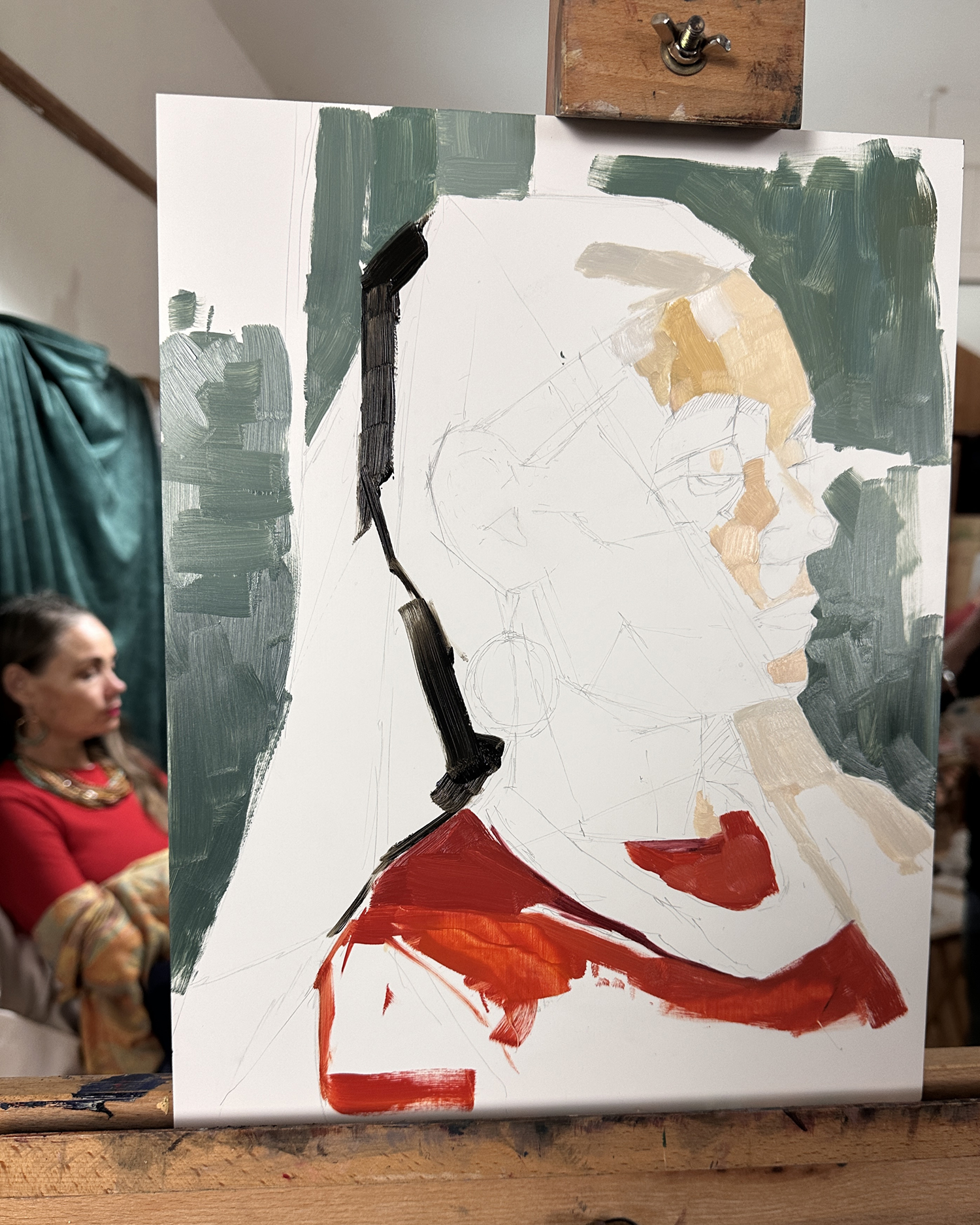
There was a lovely sense of shadow shape and subtlety in the shadow side. I started working around the face to judge the hues. Modelling by Fi.

11. Looking for light
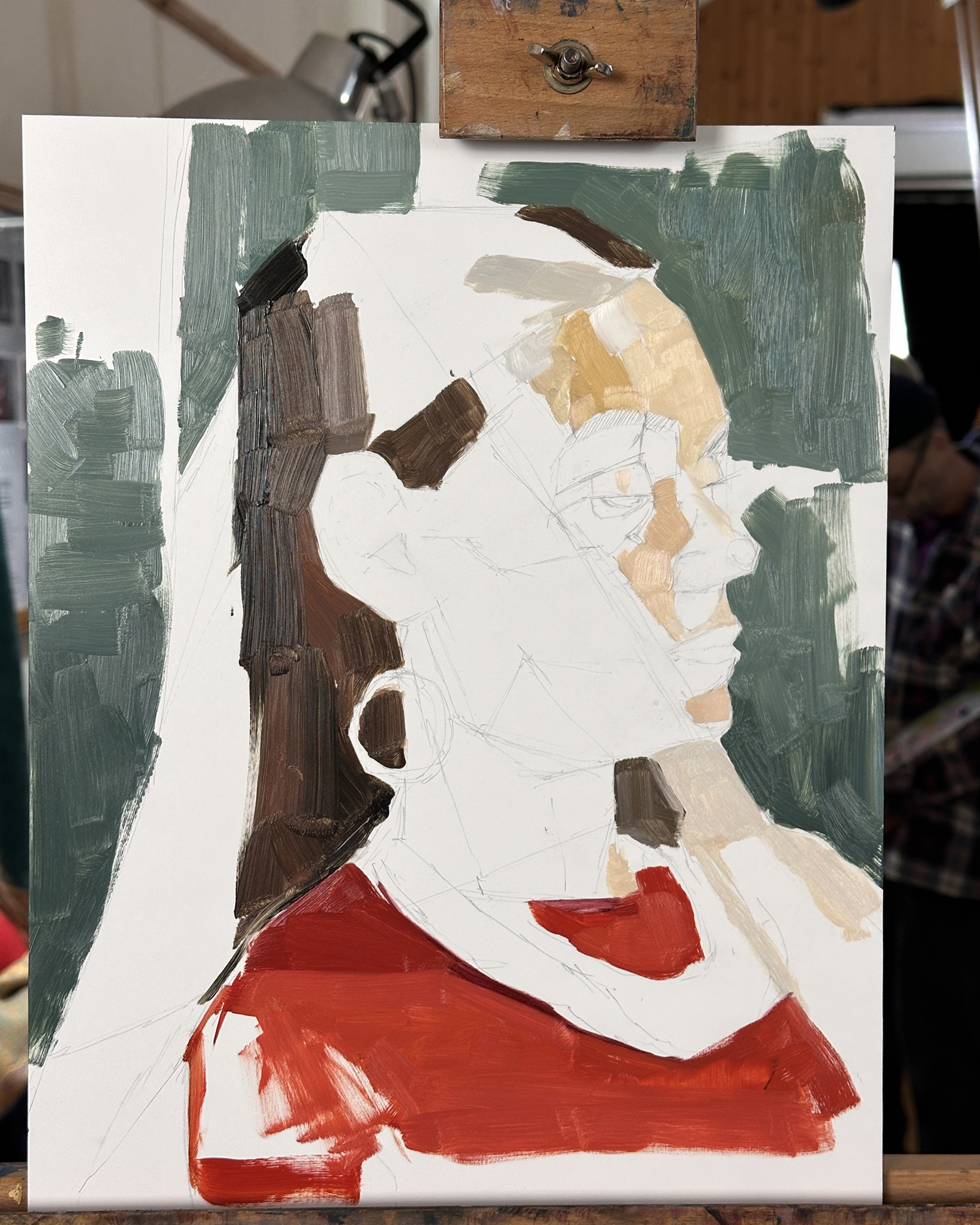
Making a map for the light to go, looking for shifts in warm and cool.

12. Balancing colour
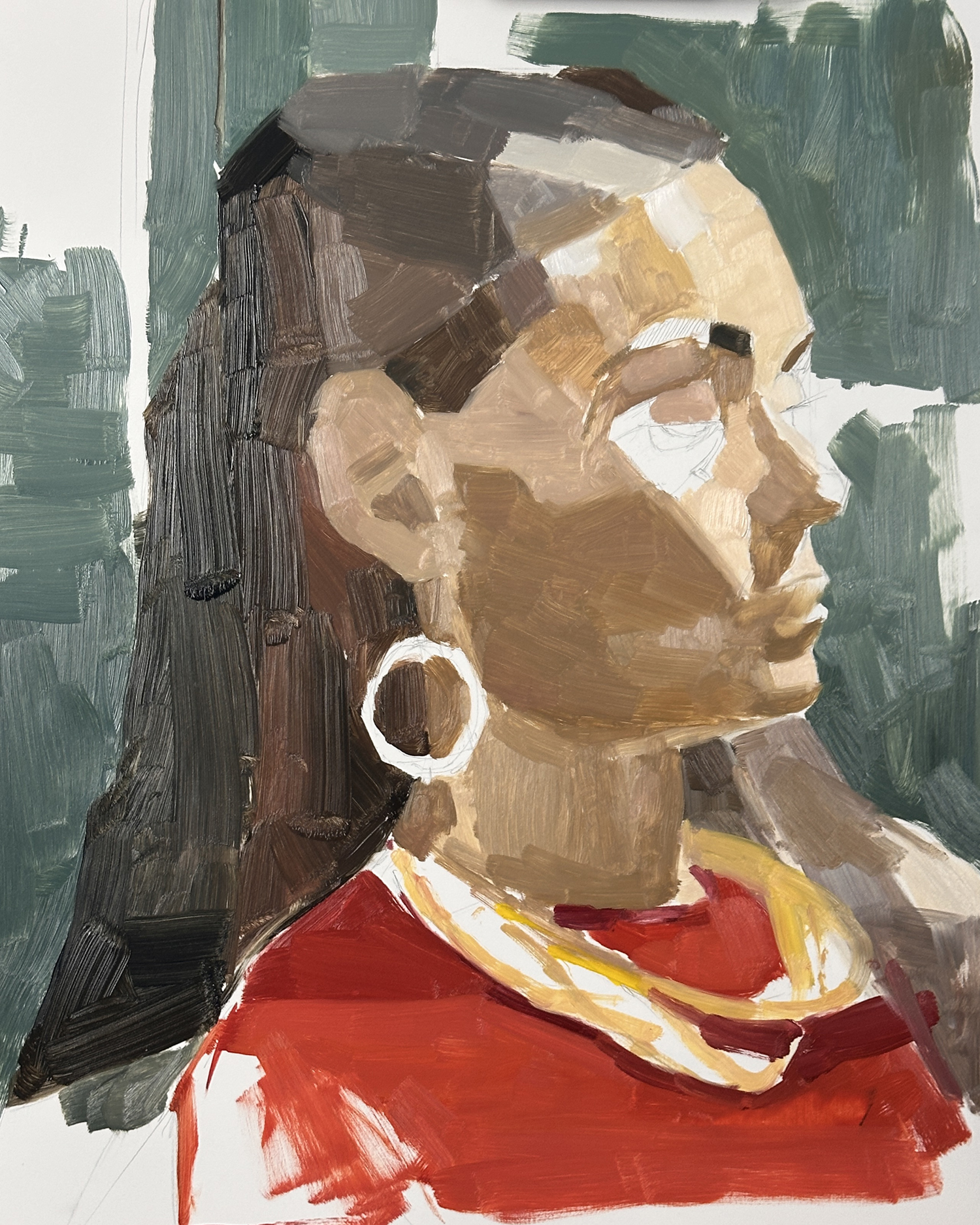
This is always the stage of a painting where you’ve got to keep the faith! I was enjoying some of the blocking-in of the larger forms, particularly the suggestion of the shoulder and the way the geometric shapes of the hair were coming together.

It was now a case of gradually developing some of the smaller, more detailed forms within the facial features.
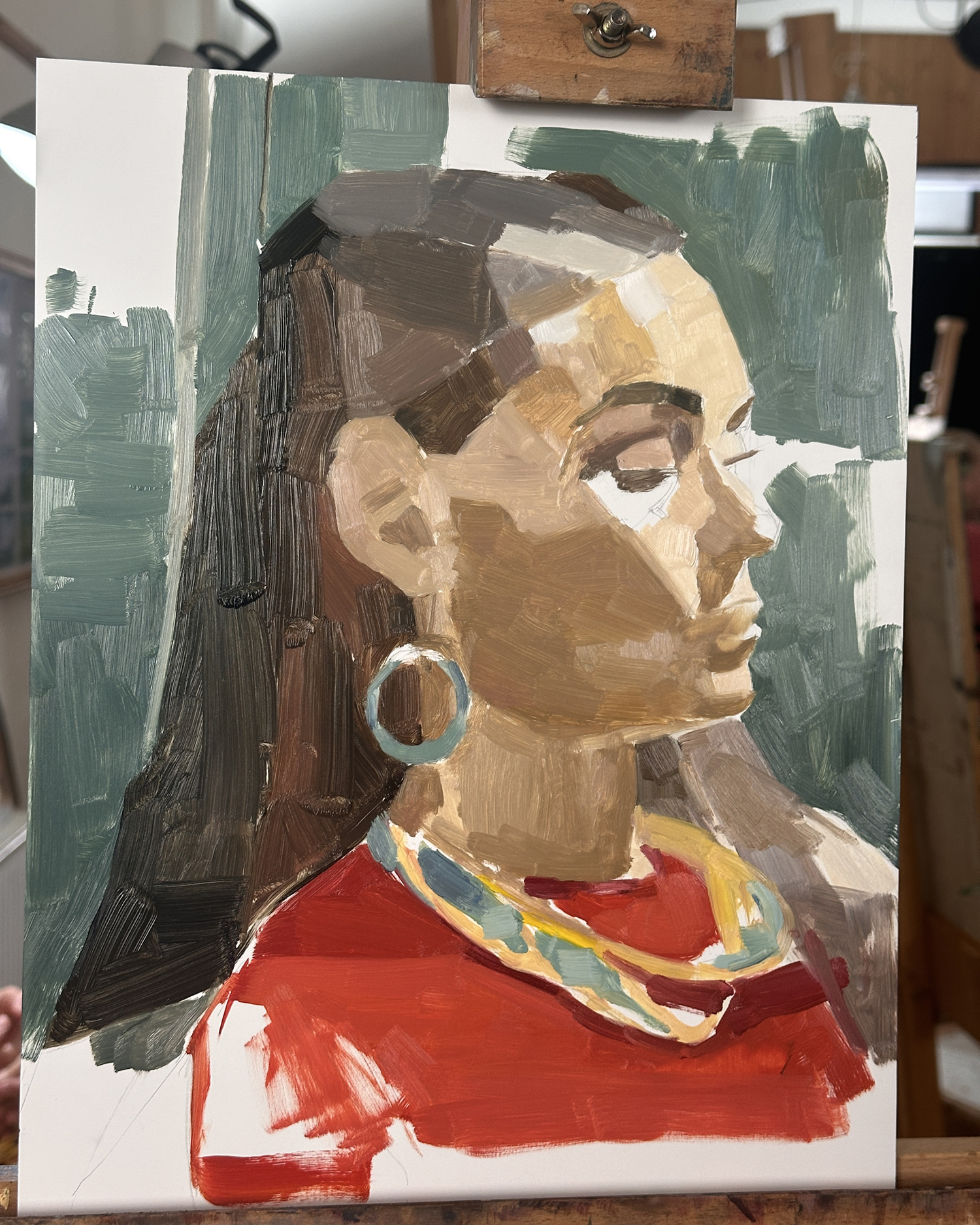
With the introduction of the turquoise on the necklace, the green has a path through the portrait, connecting the background and sitter.

13. End of the Day

5-hour session; the time seemed to rapidly increase as the day progressed!

Many thanks to Andy for his thoughtful observations and demonstrations, and Rose from Just Life Art for bringing it all together. I came away totally inspired!


Continue ReadingExpressive Portraits workshop with Andrew James

Amsterdam, Vermeer & The Little Street

This week I’m lucky enough to be in Amsterdam to experience the largest ever Vermeer Exhibition!

28 of Johannes Vermeer’s known 37 works, have been brought together from museums and private collections across the world for this unique opportunity at the Rijksmuseum.

It’s currently a sell out show with over 450,000 tickets sold! but they are releasing new tickets so it’s worth checking the site. (Rijksmuseum Vermeer Tickets)

On display is one of my favourites, ‘The Little Street’ and we do a master copy of the painting in the Beginners Water Mixable Oil Course.

When I get back to the studio I’ll put together a exhibition review but for now I’m off to grab a coffee and a Stroopwafel.

The 5hr+ course is best suited if you’ve been working with acrylics and want to learn about the pros and cons of water-mixable oils. We go through lots of materials and options to give you an overview of what’s available with water-mixable oils.

Speak soon,

Cheers,
Will

Continue ReadingAmsterdam, Vermeer & The Little Street

Edition // 001: Notes from the Artist’s Studio

Morning Class,

My name is Will and I am an obsessive notetaker.

I get sidetracked easily.

If I’m listening to something that has piqued my curiosity, it can send me down a rabbit hole of research….usually halfway through a painting.

And then the copious note-taking follows.

It got so bad at one stage, Vanessa had to prevent me from buying new notebooks because after furiously filling them with fascinating insights, I’d annoyingly lose where I’d put them or worse couldn’t decipher what my own scribbling all meant.

On a positive, my last birthday present was The Remarkable Tablet (an e-ink notebook that feels amazingly close to writing on paper) which has helped add order to the chaos and made the kitchen table decidedly neater.

Some of my research notes do come back to inspire my practice and if they bring me a new understanding or appreciation, I figured they are worth sharing.

So here are my top 5 art inspirations that I’ve read, experimented with or listened to this week, when I should have been at the easel, with the hope they might inspire your own work too…

Continue ReadingEdition // 001: Notes from the Artist’s Studio

Capturing Sunlight with Sorolla

sorolla-strollng-along-the-seashore

Joaquín Sorolla, Strolling along the Seashore, Detail, Valencia, 1909

Inside the Artist’s Studio

In the heart of bustling Madrid, behind a protective brick wall, sits the elegant former home and studio of Spanish painter Joaquín Sorolla (1863 -1923)

Huge decorative iron gates lead you through a lush Andalusian courtyard garden to one of the best-preserved artist houses in Europe, an absolutely priceless experience. 

musee-sorolla-casa

musee-sorolla-garden-entrance

Continue ReadingCapturing Sunlight with Sorolla

Discovering Zorn, the Petit Palais & Patisseries in Paris

We arrived in Paris to catch the last few days of a retrospective exhibition of the Swedish painter Anders Zorn (1860-1920)

After a snowy week in England, we woke to blue skies, warm croissants and this amazing rooftop view from our hotel room. I couldn’t resist a quick pen sketch of the row of chimney pots in the distance before we hit the show, check out those windows!

Sketch from Hotel, Rotring Art Pen (F), Pentel Brush Pen and Pentel Aquash Water Pen in A6 size (10 x 15cm) Seawhites of Brighton Sketchpad (140gsm All-Media Cartridge Paper)

Continue ReadingDiscovering Zorn, the Petit Palais & Patisseries in Paris

Studying Holbein’s Portrait Drawings: A Brief Encounter

Detail, Mary Zouch, Hans Holbein The Younger, Black and Coloured Chalks, Pen and Ink c.1532-43, Royal Collection Trust / © Her Majesty Queen Elizabeth II 2017

I was in London last month to catch the Encounter: Drawings from Leonardo to Rembrandt exhibition, held at the National Portrait Gallery until 22 October 2017.

I was particularly interested in studying the collection of portrait drawings by Hans Holbein the Younger on loan from the Queen’s Royal Collection, Windsor Castle.
I’ve always admired Holbein’s oil portraits at the National Gallery London and the Uffizi Gallery, Florence but only ever seen images of some of his drawings in books.

The exhibition room was quite small, the lights low with very few other visitors and it really felt such a privilege to view these drawings in such an intimate space.

The walls were painted a dark Prussian Blue and many of the Holbein drawings were on a muted pink ground hung side-by-side in a line. They were all relatively the same size and the first thing I noticed as my eye jumped across them, was the variety of silhouette shapes created by the headwear and angle of the pose gave a real sense of the sitter.

You can’t help your mind wandering back to the Tudor Court of Henry VIII and wondering about the characters in the portraits (and for the fans of ‘Wolf Hall’ I have to admit, I was silently humming the theme tune)

They felt so fresh with some of the contour lines reminding me of a Singer Sargent’s portrait, it’s pretty amazing to see how contemporary these drawings looked considering they were drawn over 400 years ago.

Continue ReadingStudying Holbein’s Portrait Drawings: A Brief Encounter

How to Glaze an Oil Portrait Course – New Course!

oil paint glaze recipe

How to Glaze an Oil Portrait for Beginners Course

When I was trying to find my way in portraiture, I’d spend hours studying Old Master paintings thinking “Wow, how did they do that?”

I was flummoxed.

Not only did the skin look realistic, but they’d managed to capture those bluish grey tones that lie just beneath the skin’s surface. In my naivety, I just couldn’t work out how you could paint one colour next to another colour yet create such a smoky transition.

I’d repetitively ask Vanessa, “When will I be able to paint the melt of the cheek you see on the Mona Lisa?”

Unhelpfully she used to say “Isn’t it just old?”

Inwardly I’d sigh.

And then I discovered oil glazing…

Continue ReadingHow to Glaze an Oil Portrait Course – New Course!

Discovering Velázquez, The Duke & Unexpected Treasures

When Vanessa suggested a spot of Winter sun, if I’m honest, I dragged my feet.

Locations where being proposed and I politely nodded.

When she casually mentioned a possible trip to Seville, my interest was piqued.

Why?

Seville was the birthplace and hometown of Spanish artist Diego Velázquez, and one of my favourite paintings is the ‘Waterseller of Seville’ by Velázquez, but I had never seen it in the flesh, was it even in Seville?

Caught up in the fever of ‘my’ trip, I got researching and discovered the painting was actually hanging much closer to home, in Apsley House, London.

Apsley House? Where’s that?

Well as it turns out, it’s known as Number One London and sits at Hyde Park Corner.

How had I missed it on all my gallery trips and what else was there?

Holy Moly! There’s a study for Pope Innocent X by Velázquez, there’s a Goya, in fact, there’s another portrait by Velázquez and some cracking portraits by Sir Thomas Lawrence.

I shouted through to Vanessa ‘Do you fancy a trip to Knightsbridge?‘

Who knew train tickets could be booked so quickly?…

Continue ReadingDiscovering Velázquez, The Duke & Unexpected Treasures

How a Few Small Changes Influenced my Portrait Painting Style

portrait-painting-oil-glazing-techniques

New Year, New View?

There was a small sign that hung below an empty black space, it read ‘In Prestito‘.

On loan.

Last Summer I was back in Florence, Italy, to visit one of my favourite paintings that had enticed me to the city over 10 years ago.

The only problem was, when I got to the gallery, the painting wasn’t there.

It was at the Kunsthistorisches Museum in Vienna and I had missed it.

The painting?

Caravaggio’s sleeping Cupid.

Continue ReadingHow a Few Small Changes Influenced my Portrait Painting Style

Inside Rembrandt’s Studio

outsideannefrankamsterdam

Earlier in the Summer, I took an impromptu trip to see ‘Late Rembrandt‘.

It was the first time that an exhibition had been solely dedicated to Rembrandt’s late works. Many of the most famous paintings that he produced in the last 15 years of his life had been brought together from museums and private collections across the globe.

This period is often the most celebrated due to Rembrandt’s development of a more gestural, impressionistic style and this was some 200 years before the popularity of the Impressionists.

He was out there!

I’d missed the exhibition when it was on show in London at the National Gallery but for the final leg of the tour it was going home to the Rijksmuseum in Amsterdam.

Heavy dark shadows, hidden brooding eyes, thick scratchy textured marks, lots of Brown umbers and a dirty yellow varnish glow are all the things that excite me about Rembrandt’s self-portrait style.

With the allure of Nutella Waffles, the opportunity to visit Rembrandt’s Studio and the once in a lifetime chance of seeing so many Rembrandt’s up close together, how could I resist…

Continue ReadingInside Rembrandt’s Studio

Singer Sargent & Friends

An Artist in His Studio,1904

An Artist in His Studio, John Singer Sargent, 1904

Last month saw the opening of a new exhibition at the National Portrait Gallery in London.

The show highlights the work of one of my favourite portrait painters, John Singer Sargent (1856 – 1925)

I’ve been a fan of Singer Sargent’s paintings ever since visiting the Tate in London as 15 year old student, blown away by Carnation, Lily, Lily, Rose, the most compelling scene with its magical sense of glowing light.

Carnation lily lily rose

Carnation, Lily, Lily, Rose, John Singer Sargent, Oil on canvas, 1885

I’d always thought it was quite a small painting having only seen it in books, but in reality it’s nearly 2 meters tall by 1.5 meters wide, the sheer scale of it being life-size really draws you into the piece. The golden hour light is fading and the glow from the lanterns illuminates the girls faces so beautifully.

And that’s often the most fantastic thing about visiting an exhibition, the experience of sitting in front of the painting and seeing it through the artist’s eyes…

Continue ReadingSinger Sargent & Friends

How to Paint Acrylic Portraits

acrylic portrait painting tutorial Painting portraits with acrylics can be frustrating.

It can seem that you’re facing an uphill struggle.

After the pleasure of not getting headaches from toxic turpentine and being able to paint with thick impasto marks there seems to be double payback for daring to tackle a portrait with acrylics.

Not only do the colours appear unsophisticated and garish but the paint dries too quickly to blend together successfully, especially when you’re trying to mix subtle skin tones.

You can be left feeling disappointed with your results, admit defeat and crack out the thinners for another go with the Oils.

I’ve been working on a new portrait course, that can help develop your portrait skills and dramatically shorten your learning curve to achieving classical looking portraits with acrylics…

Continue ReadingHow to Paint Acrylic Portraits

How do you Approach Lighting a Portrait Painting?

artist&illustratorsportrait

This week I’ve been featured in the U.K’s best selling artist magazine, ‘Artist & Illustrators‘.

The article was on understanding ‘How light sources can add impact to your portraits’.

It looked at three professional portrait painters and how they approach portrait lighting set ups of their subjects.

Below is the conversation I had with Martha Alexander from the magazine…

Continue ReadingHow do you Approach Lighting a Portrait Painting?

The 3 Key Secrets of Portrait Painting Success

The Art_of_Painting_Jan_Vermeer

The Art of Painting (detail),  Johannes Vermeer, 1666

You might think you need more time, or the perfect paint brand or a new brush.

When the weekend comes and you’ve finally managed to find some ‘you’ time, the blank canvas stares back at you and the finished portrait, you so desperately wanted to achieve, seems a world away.

Your motivation is high, your drawing’s good but the jump from pencil to paint has hit a wall.

Flicking through an art magazine or shopping for a new paint colour suddenly seems like an attractive idea.

You’ll start next week when you’ve got the exact colour you need.

But what if these actions are holding you back?

What if you forced yourself to try and achieve more with less, give yourself some constraints and your portrait painting could make giant leaps forward?…

Continue ReadingThe 3 Key Secrets of Portrait Painting Success