



The Midnight Sketch Club

Morning class,
The best thing I’ve done for my studio practice this year happens the night before I paint.
I call it the Midnight Sketch Club.
What separates a painting that ‘works’ from one that doesn’t is usually decided long before the first brushstroke goes down.
You need to recognise what to look out for, where your natural tendencies can lead to mistakes and how the values will work.
And the best way to figure all that out?
A sketch and a value study.
But most beginners don’t do them. Because they think they are boring.
Now, I know what you’re thinking because I do this too.
You see a subject, you get excited, and you think, “Right, I’m just going to dive straight in. I don’t need to do a sketch first—I’ll figure it out as I go.”
And then three hours in, you’re wrestling with a painting that’s fighting you every step of the way because you didn’t take twenty minutes to work out the problems beforehand.
On the Venice Light and Shadow Course, we do small tonal value studies before committing to a larger-scale painting.
On the How to Paint a Peony Course, we paint a simplified ‘poster study’ of the peony before committing to the main painting.
It’s like running through a dress rehearsal before the main performance.
But here’s what I’ve started doing instead.
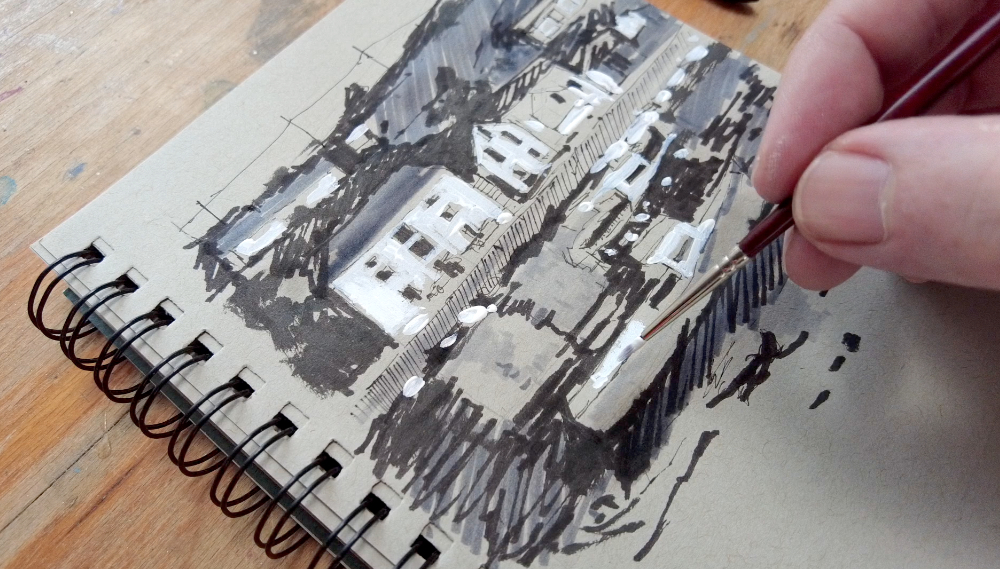
The night before I paint, usually around midnight, because I’m a bit of a night owl, I’ll spend 15-30 minutes sketching out the subject.
Nothing fancy.
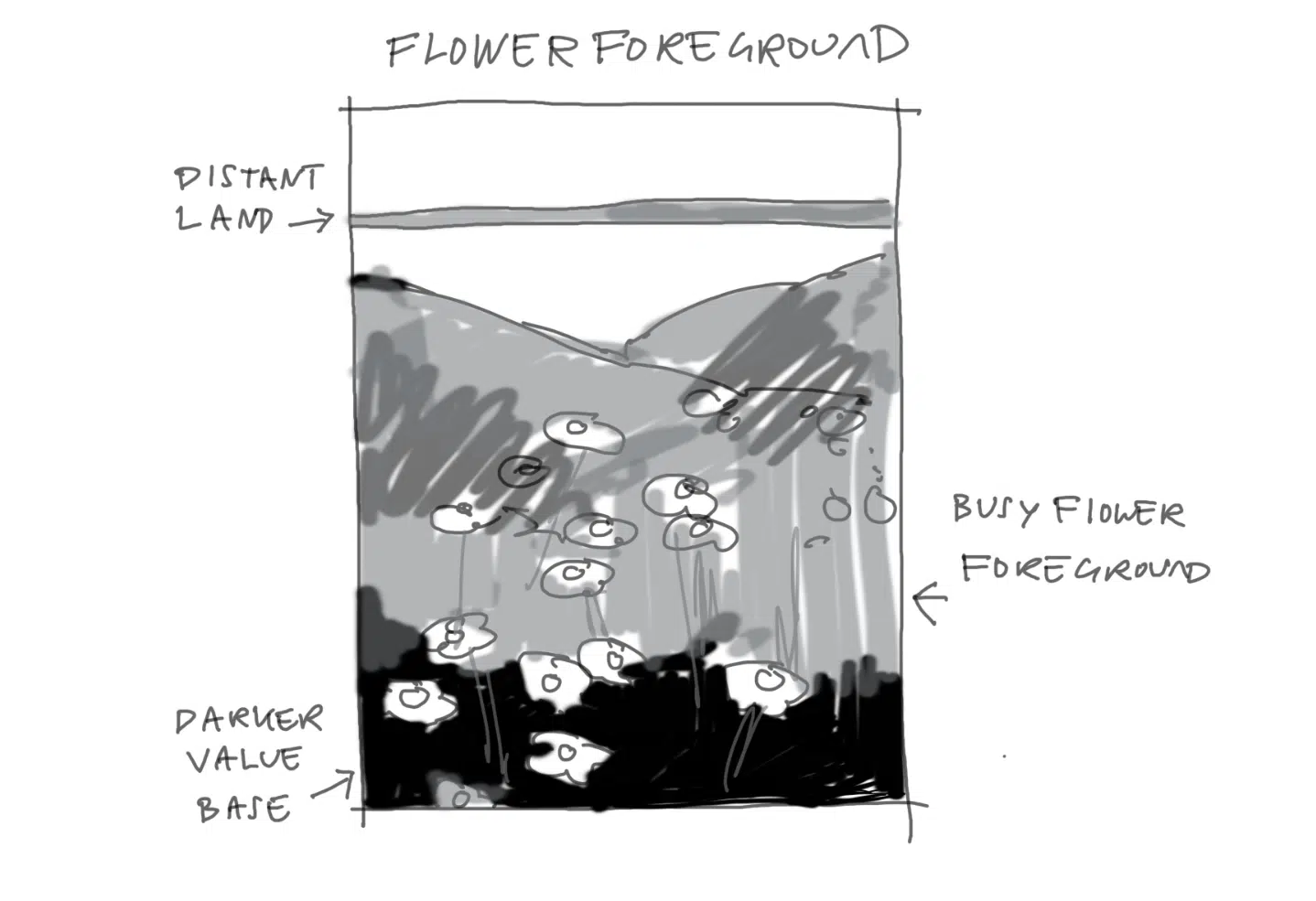
Just getting the composition down, mapping out the value structure, seeing where the darks and lights fall, and figuring out where the problems are going to crop up. It might be colour notes, or things I noticed.
You can do this with actual physical sketches, or on an iPad if you prefer digital. Doesn’t matter. What matters is you’re thinking about the painting before you’re in the painting.
And here’s the magic part: you sleep on it.
You give your brain a whole night to process what you learned. You step back from the subject. And when you wake up the next morning, something interesting happens: you’re actually more excited to paint it, not less. Because now, you’re not walking into the unknown.
You know what you’re doing.
You know what to look out for.
You’ve already solved half the problems while you were asleep.
The preparation is the work
It’s a bit like how film directors don’t just show up on set and wing it. They spend months in pre-production, storyboarding every shot (essentially a hand-drawn version of the final movie), working out every angle, so that when it’s time to actually film, they’re not figuring things out; they’re executing a plan.
Pixar spent over 2.5 years storyboarding Toystory before they animated a single frame.
That preparation is the work. The final painting, the final film, the final animation is the execution of all that thinking.
Why you need tea & biscuits
My brothers and sisters think I spend my days lounging around in some sort of artistic reverie, wafting a paintbrush toward a canvas in a state of internal bliss.
What we’re actually doing when we paint is solving hundreds of tiny problems, one after another, making decision after decision after decision. Which edge to soften? Where does that value shift? Is this colour too warm? Should that brushstroke follow the form or cut across it? It’s exhausting.
That’s why we need all the tea and biscuits afterwards, we’re recovering from genuine mental effort!
And this is exactly why my Midnight Sketch Club works so well. By sketching the night before, you’re solving a huge chunk of those problems in advance.
Now you can actually focus on the painting itself, rather than burning through your decision-making energy just trying to figure out where things go.
I was listening to a podcast, and Darren Cahill, co-coach of the current world No. 1 tennis player, Jannik Sinner, discussed Roger Federer’s work ethic.
“I did a week with Roger Federer and was stunned how hard he worked on the practice court. Four and five-hour blocks on the practice court. I never knew this about Roger because if you go and watch Roger warming up for a match, it looks like he’s going out to play with a country club, or he’s just slapping the ball around, barely out of his feet.”
He said:
“Darren, all the hard work is done in the lead-up. I just have to feel the ball and feel good about my game. Everything is done away from the public’s eyes. The actual match court is just for show. It’s when you are practising inside a stadium with zero people watching, that’s what really matters, and that’s where you’re putting in all that hard work. If you can accomplish that, then you can accomplish some great things.” – Roger Federer
So sketch at midnight
Map the values. Find the problems. Then sleep on it.
I think you’ll be surprised at how much better your paintings turn out when you’ve given yourself that gift of preparation.
Have a great evening,
Will