

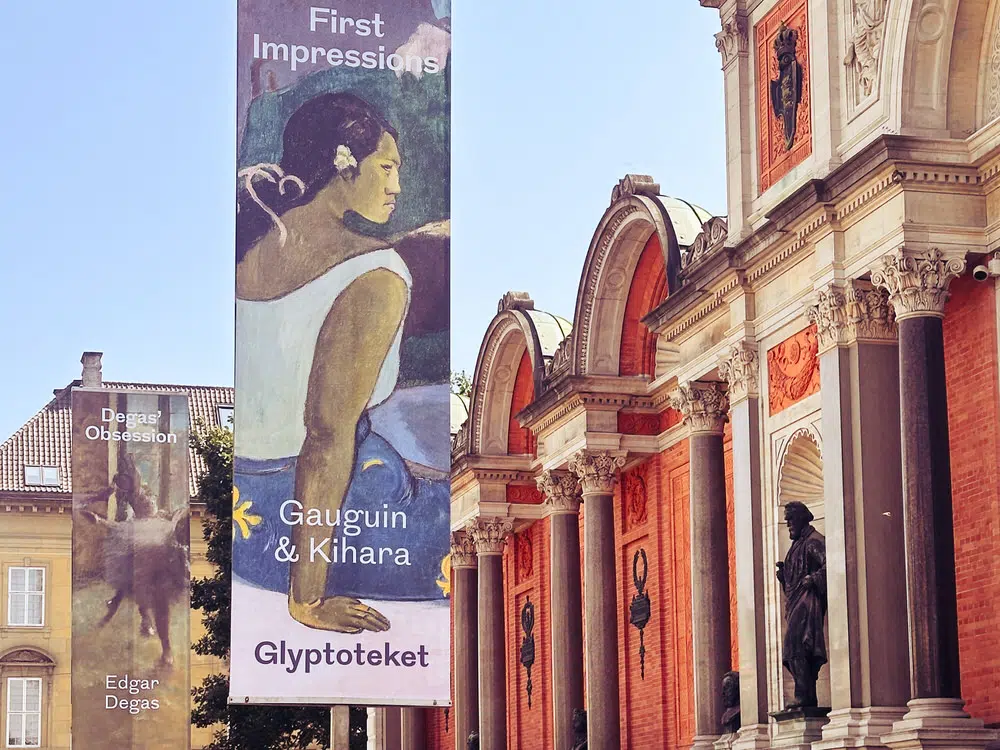
Set in the heart of Copenhagen, the Ny Carlsberg Glyptotek building is a masterpiece.
The highly decorative red-brick façade leads you into the entrance hall (the oldest part of the museum, designed by Dahlerup), which initially has that familiar grandeur of other classically inspired museums.
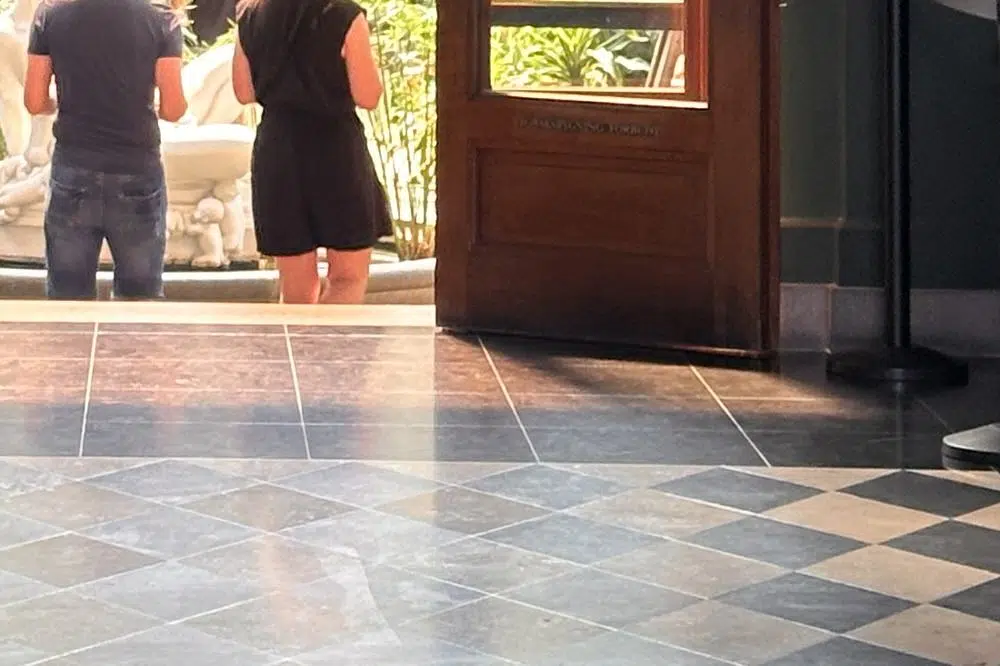
Subdued light, intricate tiled floors, decorative ceilings and sweeping staircases stretching out to all sides.
Only after walking a few feet do you spot an archway and double doors that seem to lure you forward.
It keeps opening up, opening up, until you find yourself standing in a super-bright, glass-domed oasis.

The Winter Garden in the central atrium is absolutely flooded with golden light. There are ginormous, lush palm trees and tropical plants. It’s covered in green and in the centre as a focal point, Koi swim in a pond, with a sculpture, “The Water Mother” by Kai Nielsen.
It is entirely unexpected.
This garden connects the other buildings and offers a peaceful, almost meditative spot to reflect on the sculptures or refresh tired gallery legs in the cafe.

To one side of the Winter Garden, Hack Kampmann’s central hall, with marble columns, feels like you’ve entered an ancient Roman square, featuring an extensive collection of Greek and Roman sculptures.
In addition to an incredible collection of Auguste Rodin’s works, which is considered the most important outside of France. The collection features iconic works such as “The Kiss” and “The Thinker”.
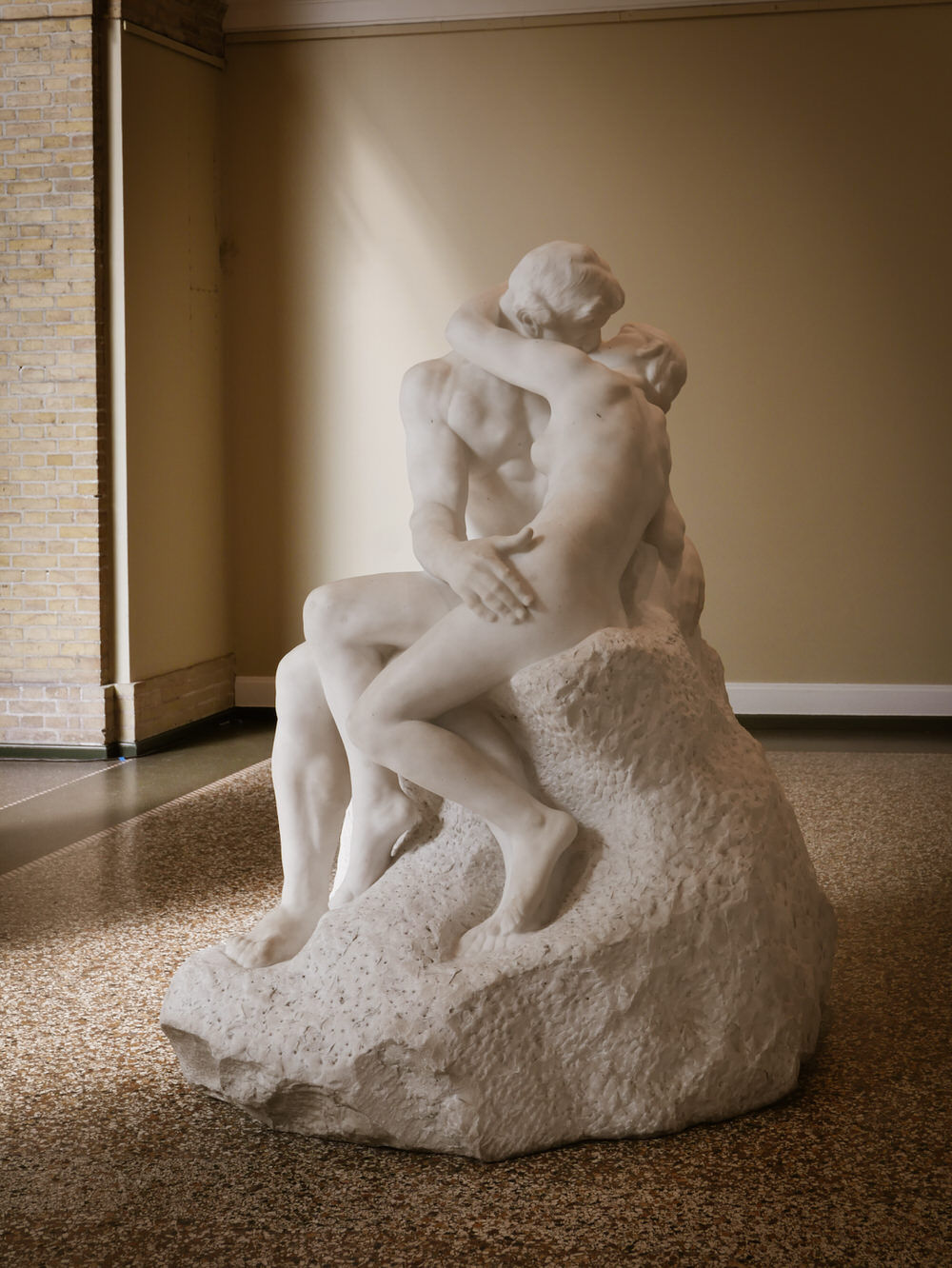
Auguste Rodin, the Kiss, Marble version

Auguste Rodin, Detail of The Burghers of Calais, Bronze
Then, as you wander around, you’ve got all these shafts of light leading you to a super modern stone staircase, massive voids with the cool, smooth, gently sloping walls of the Henning Larsen building.
This unique architectural blend of three buildings, where classical meets modern, provides an extraordinary setting for the museum’s sculptures and artworks.
You can’t help but follow the light to see the different artworks.
Then you see a splash of green trees.
Then your eyes get a break to look at the architecture.

It’s got a lovely balance of architecture, sculptures, paintings and light.

The natural light absolutely made it. And the use of coloured walls throughout the exhibition spaces enhances it.
It is exactly as the founder, Carl Jacobsen, of Carlsberg Breweries, intended, as it was originally designed to be a daylight museum, with artificial light being added much later for extended opening hours.
Jacobsen was a passionate collector. From the profits generated by Carlsberg, he built a sizeable collection of art and cultural artefacts.
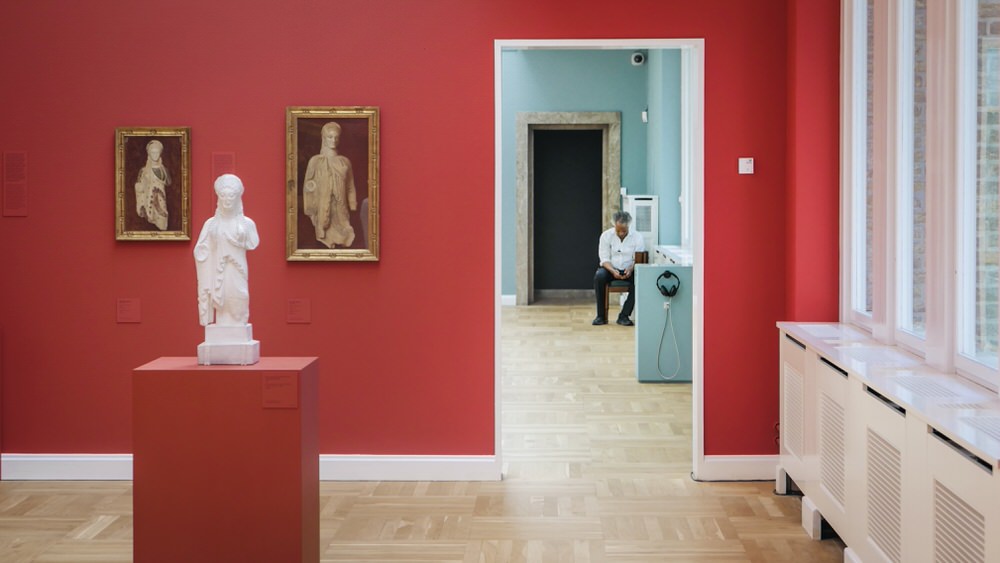
In 1888, Carl Jacobsen gave his art collection to the public and began the building of the Glyptotek to house it. (The name ‘Glyptotek’ comes from the Greek glyptos, meaning carving or sculpture, and theke for the place where something is collected or displayed.)

Degas’ Obsession

This exhibition delves into a single painting by Edgar Degas, Dancers Practising in the Foyer.
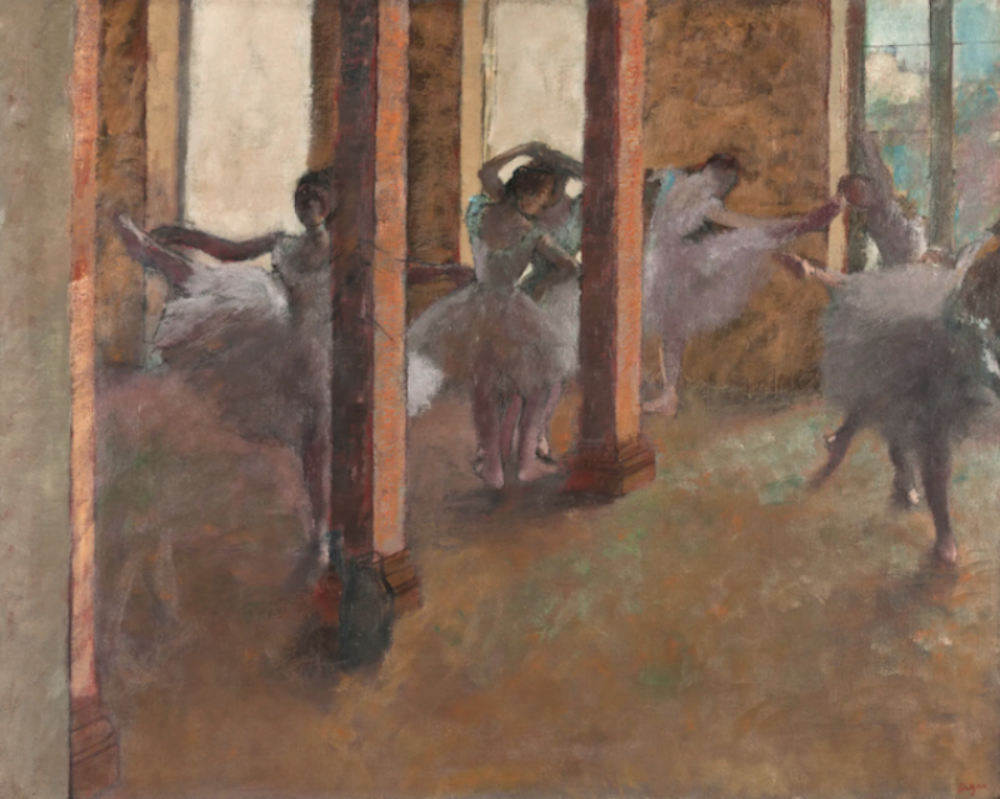
Dancers Practising in the Foyer, Degas
Edgar Degas (July 1834 – September 1917) was a French Impressionist famous for his pastel drawings and oil paintings. He identified with the subject of dance, with ballet being a central theme throughout his career.
‘Dancers Practising in the Foyer’ depicts a group of ballet dancers rehearsing in the foyer of the Le Peletier Opera House in Paris.
The painting appears unfinished, with uneven paint layers, some sharply defined areas, and a partially overpainted figure on the left.
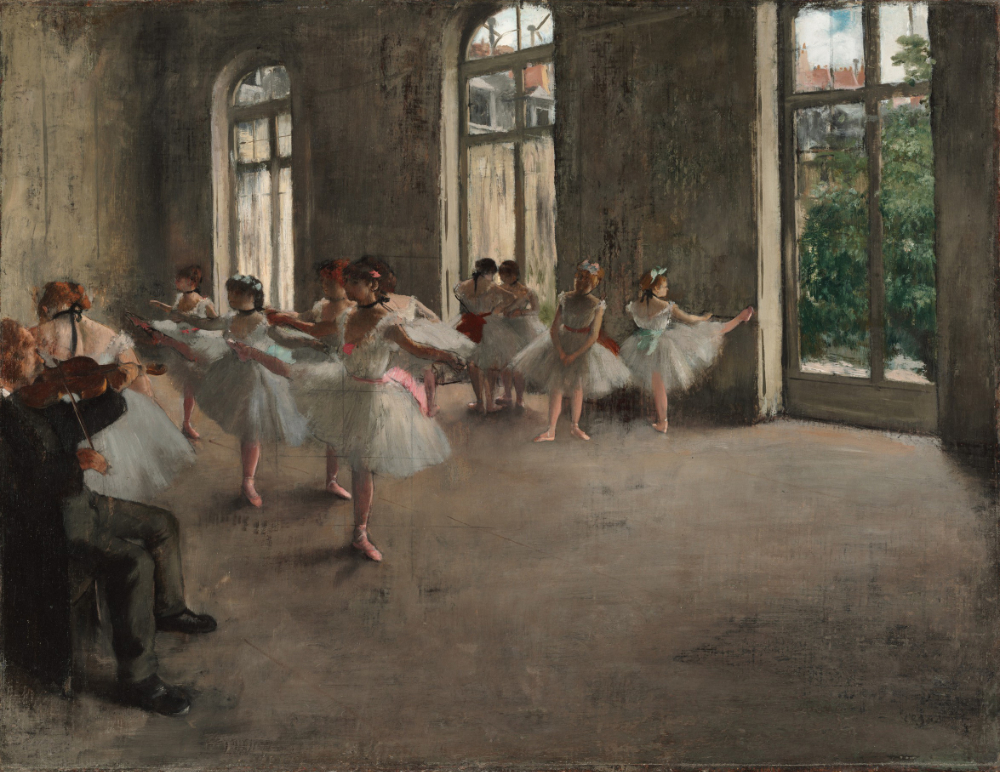
Ballet Rehearsal, Degas, 1873
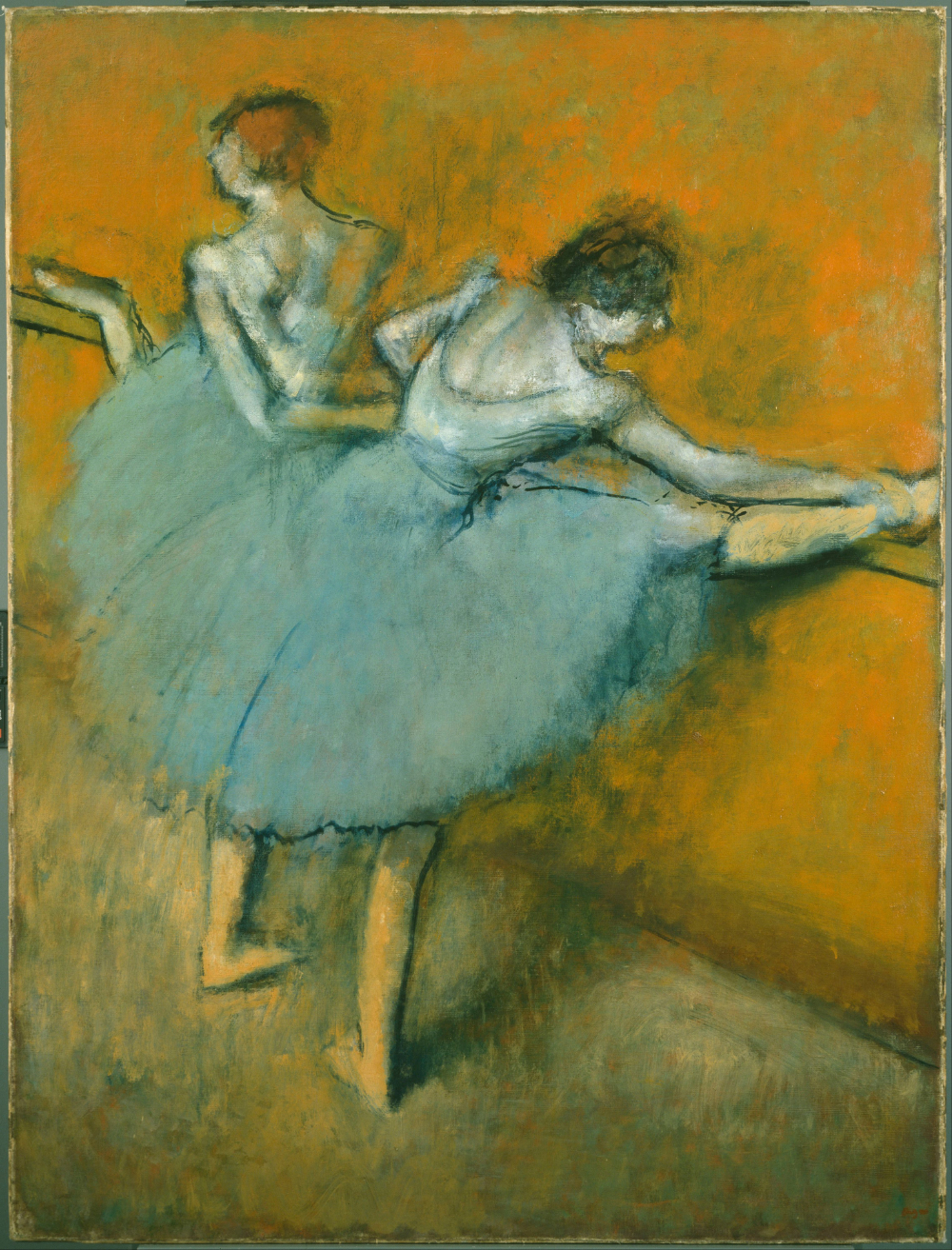
Dancers at the Bar, Degas, 1888
It has previously been dated to around 1883 when Degas painted several works featuring similar subject matter. However, others place it much later, around 1890, due to its abstract qualities.
This difference of opinion sparked an extensive research project led by art historian Dr. Line Clausen Pedersen, in collaboration between the Glyptotek and the Getty in Los Angeles.
This enabled technical analysis of the painting to offer new insights by viewing the hidden layers.
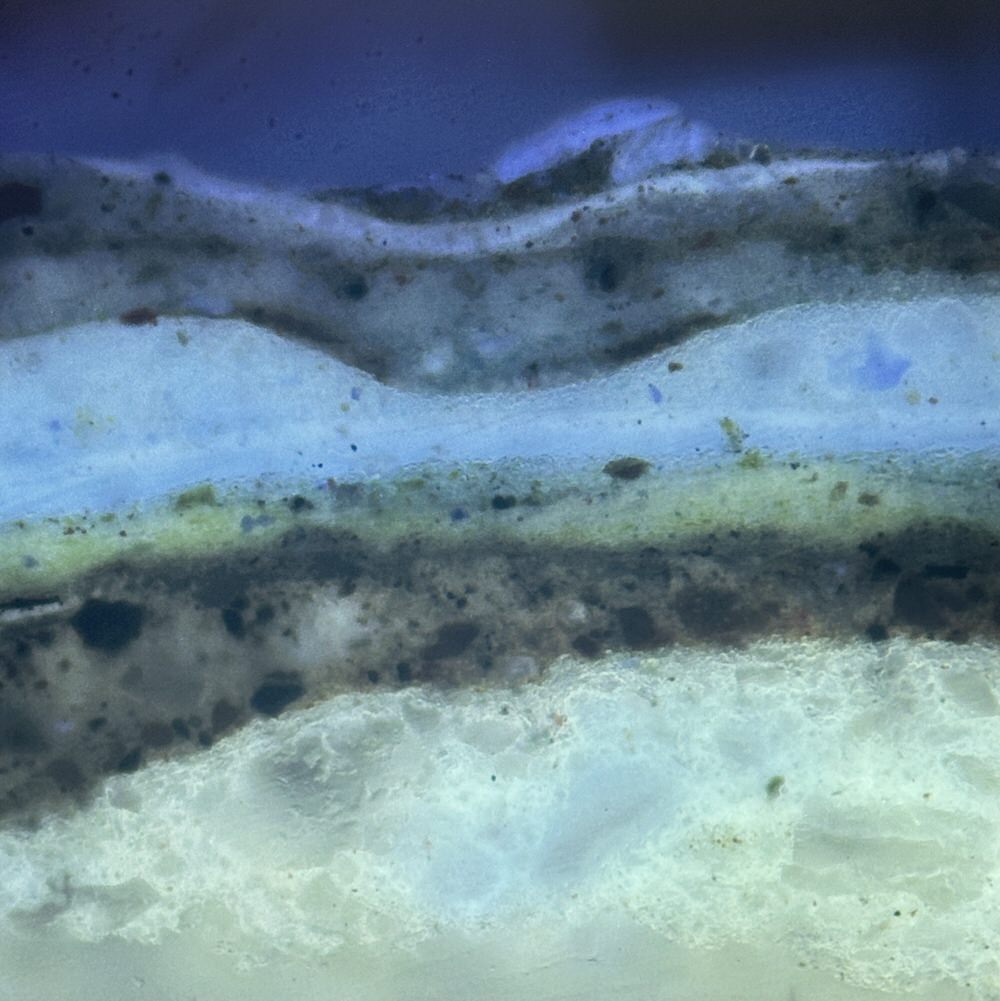
Degas under the microscope: showing the multiple layers of paint
The researchers at Getty used macro x-ray fluorescence spectroscopy, a new, highly advanced technique, to get under the layers of the painting.
They concluded that the painting was started much earlier than previously believed, marking the very beginning of Degas’s interest in ballet and his engagement with this subject.
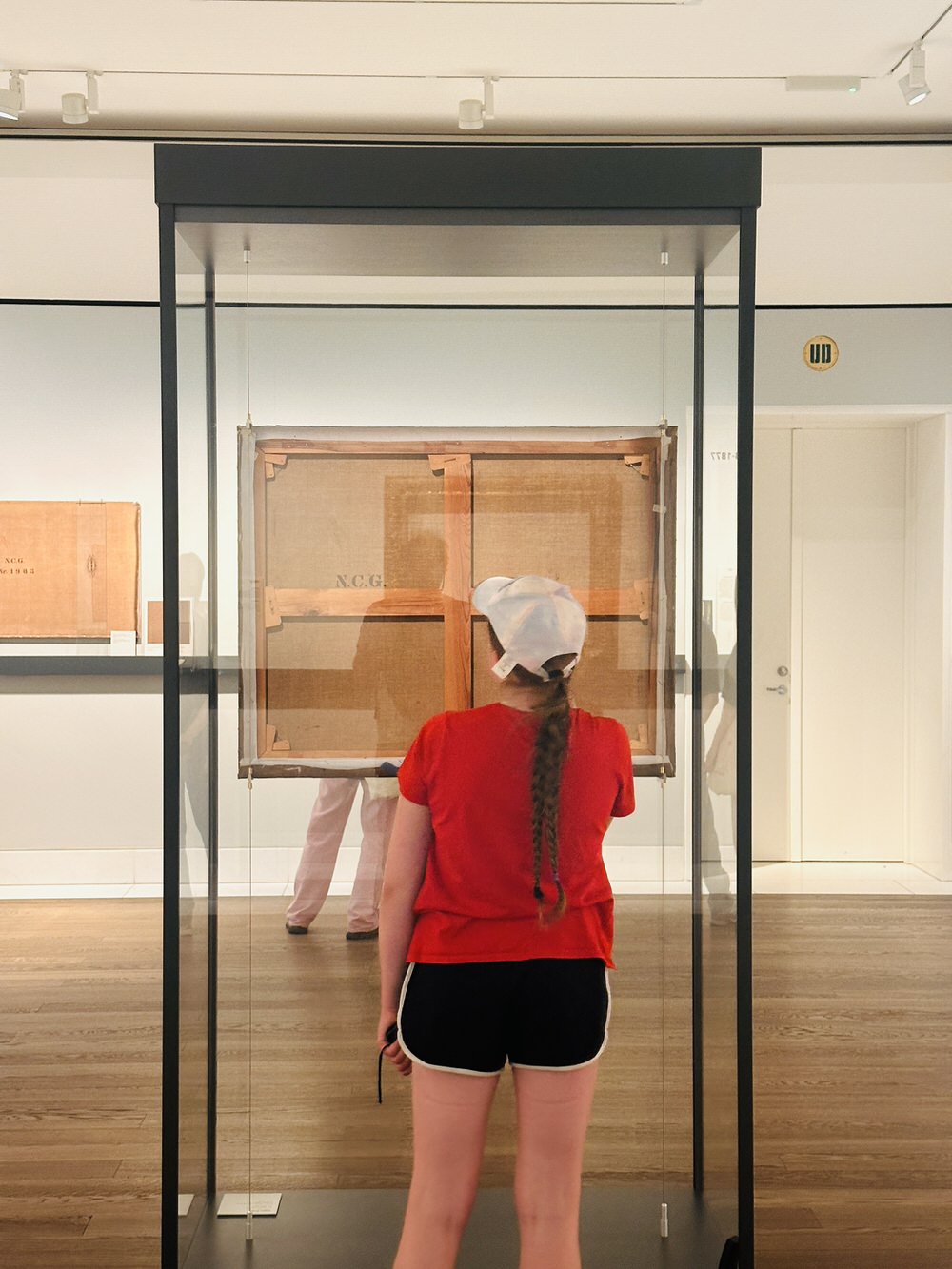
The Degas painting in display between glass
They treated the damaged canvas, reinforcing the edges. The painting is displayed in the space between glass panels so that you can see the back of the painting.
Some of the paintings contained up to 14 layers of paint, repeatedly reworked and altered.
The last alteration was likely made after 1900, meaning that he worked on this painting for nearly 30 years.
You can see a more in-depth analysis from the Getty Museum here:

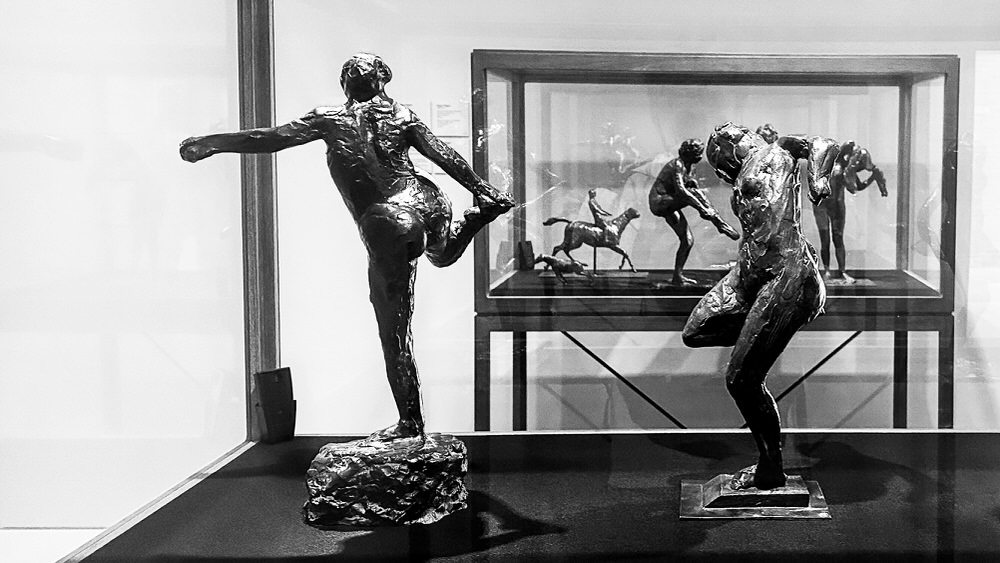
Gauguin: The Early Years
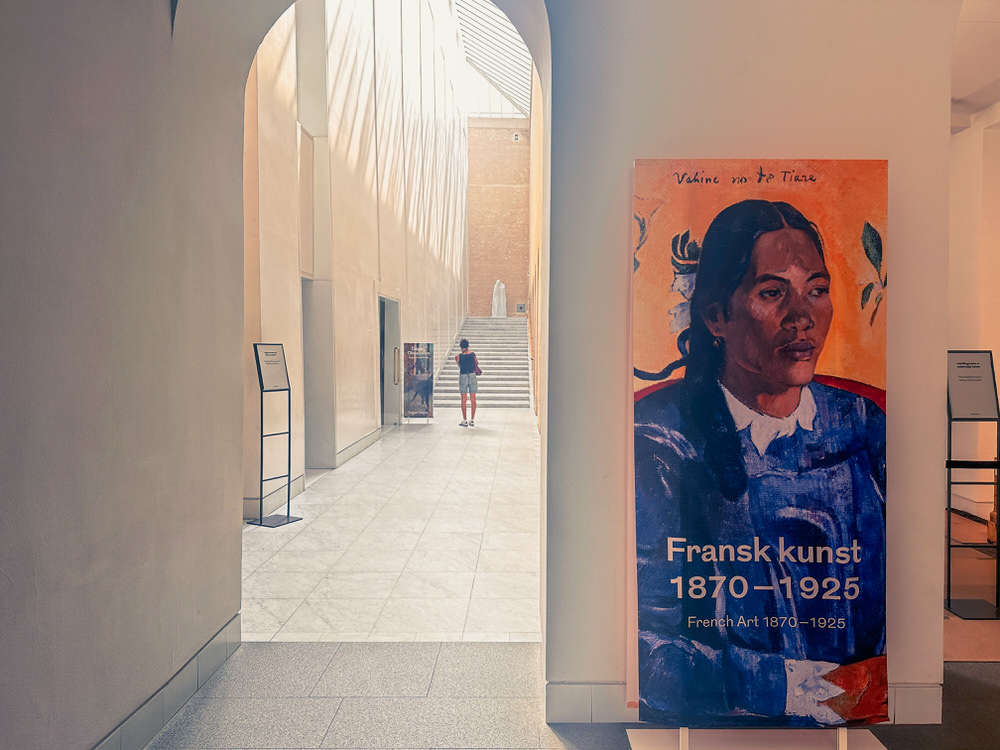
Alongside the Degas exhibition was a show of over 58 pieces created by Gauguin
Eugène Henri Paul Gauguin was born in Paris in 1848.
He was a post-impressionist artist who searched for the ideal environment for an artist’s life.
His early years were spent in Lima, Peru, which instilled a love for remote, exotic places. He returned to France aged seven, but he never forgot Peru and often dreamed of returning there.
This artist’s journey of discovery would take him from Paris to Copenhagen, Brittany, and Arles, and onwards to the Marquesas Islands and Tahiti.
Gaugin was hugely influenced by folk and primitive art, and he kept detail to a minimum in his paintings. Using flat areas of colour, bold outlines, and a move away from the naturalistic representation of Impressionism, evolving a method of painting called Synthetism
Synthetism was a precursor to conceptual art. Looking not only at the flat, colourful planes but also at the emotional expression and experience of the subject, rather than an impressionist interpretation of reality.
He is quoted as saying, “Who cares about accuracy!!”
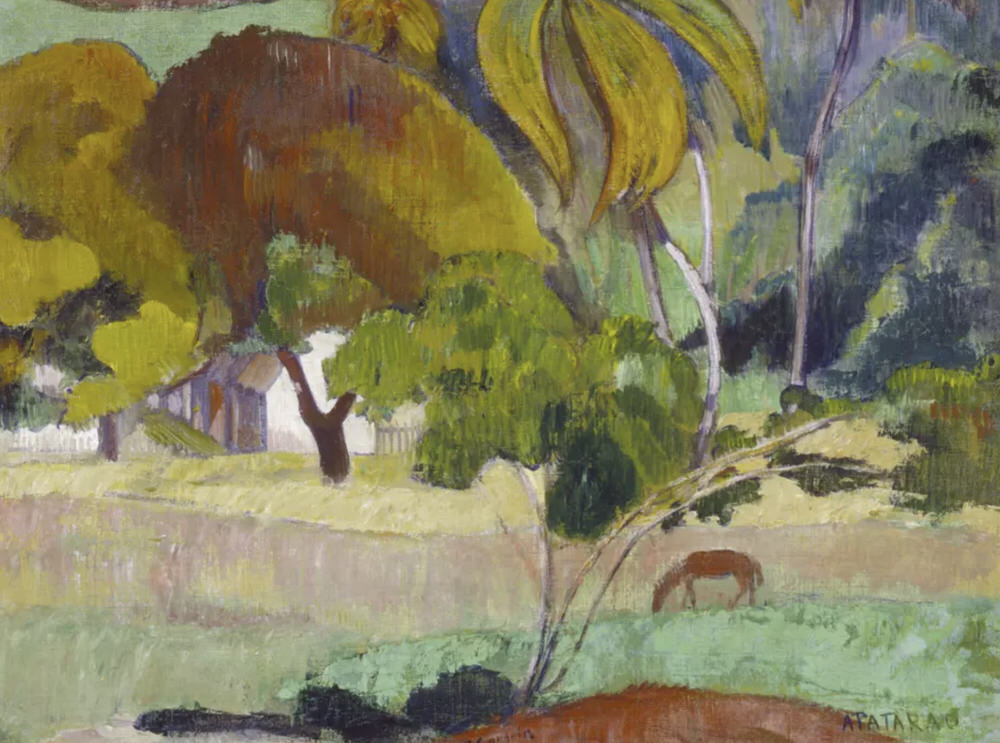
Paul Gauguin, Passage to Tahiti, 1891-95
Early career
After military service, Gauguin married Danish-born Mette-Sophie Gad and worked as a successful Parisian stockbroker.
By 26, he was making an excellent salary at an investment firm, but in his spare time was developing a passion for painting. He happened to attend the very first Impressionist exhibition and befriended the artist Camille Pissarro.
Pissarro mainly painted landscapes. He used quick brush strokes and dabs of colour to capture the fleeting impression of scenes.
Alongside his steady bank salary, Gauguin was also making money on various investments, on the advice of Pissarro, starting to collect Impressionist paintings, like Paul Cézanne’s, Edgar Degas and Édouard Manet. This gave him a chance to study different approaches and brushstrokes more carefully.
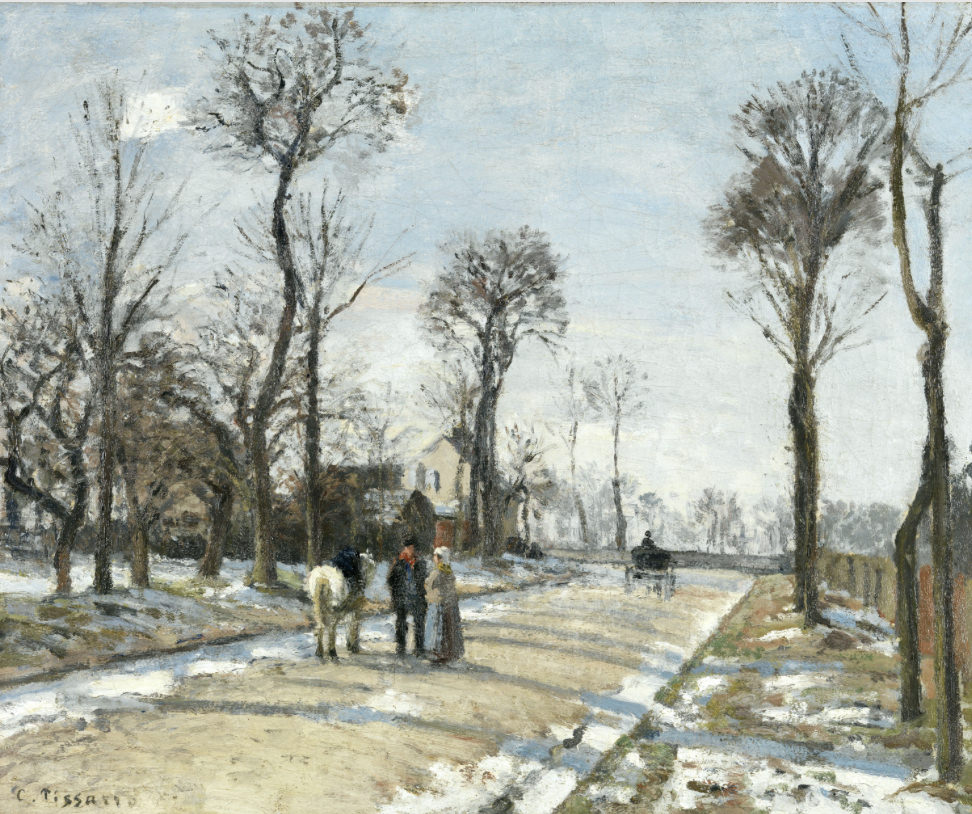
Camille Pissaro Route de Versailles, Louveciennes, Winter, Sun and Snow, 1870
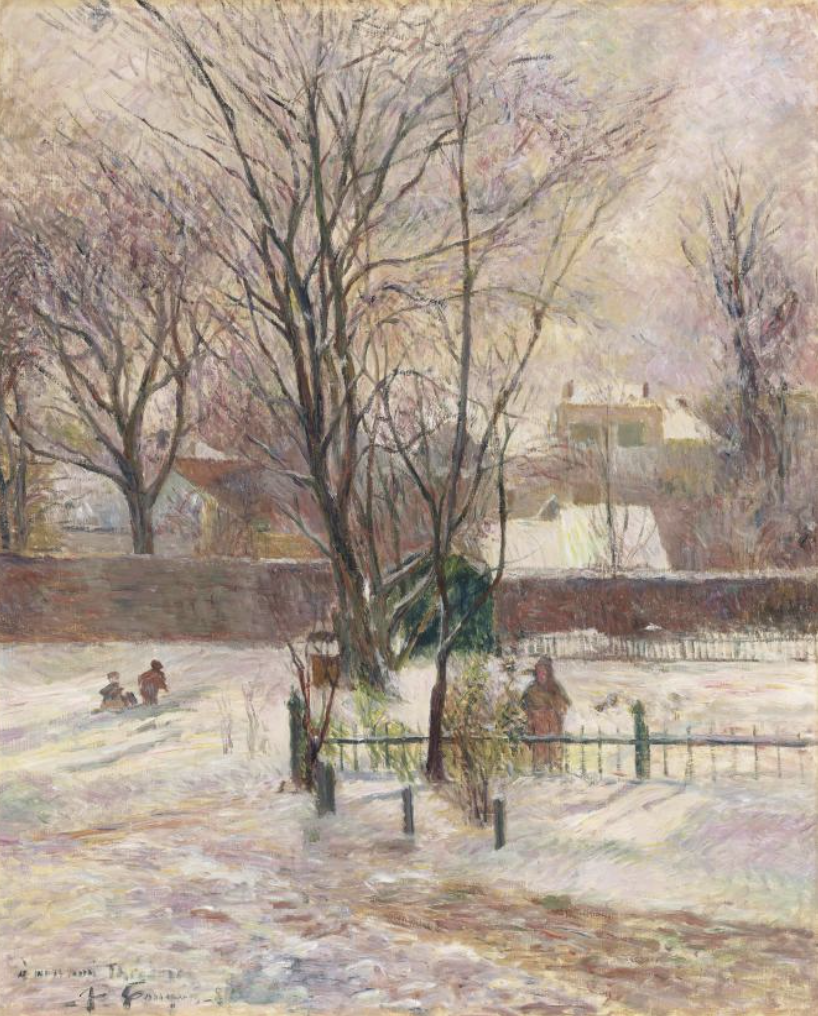
Paul Gauguin, The Snow in Copenhagen, 1884
By 1879, the 31-year-old Gauguin was both mentored by and a patron to Pissarro. Pissarro invited him to exhibit with the Impressionists, and Gauguin participated in their 4th, 5th, 6th, and 7th exhibitions.
The Search for the Ideal
After flying high as a stockbroker and the Impressionist shows, the 1882 financial crisis swiftly ended Gauguin’s banking career.
He moved his family to Rouen for cheaper living and became a full-time painter, but the move failed. By the end of the year, his wife and their five children relocated to Copenhagen near her family.
Gauguin followed in November 1884, hoping for new inspiration and financial security. But Denmark proved equally as difficult. Taking a position as Scandinavian agent for a French tarpaulin company. His job was to sell tarpaulins and horse blankets.
Letters from this time revealed a sense of anticipation with his new position.
He would regularly paint winter scenes outdoors using short brushstrokes and painterly layers, inspired by Pissarro, but his enthusiasm quickly declined.
He sold no paintings and no horse blankets. And didn’t particularly gel with the culture.
Spring briefly restored his confidence as he painted landscapes with more freedom, but the lack of sales at his solo exhibition strained their marriage further. Supported by her family, Mette convinced him to return to Paris.
However, the competitive Parisian art scene proved difficult. Gauguin spent his first winter back in poverty, taking odd jobs like posting advertisements on billboards.
He travelled to Pont-Aven’s artist colony in Brittany during the summer of 1886, hoping to find inspiration in rural culture while living cheaply among young artists.
Over the following years, he moved between Paris, Brittany, Panama, and Martinique.
By April 1887, in Colón, Gauguin was broke and worked as a labourer on the Panama Canal construction. He wrote to Mette
“I have to dig… from five-thirty in the morning to six in the evening, under the tropical sun and rain. At night I am devoured by mosquitoes.”
After visiting Martinique and falling ill in November 1887, Gauguin returned to Paris, where he met another artist trying to make his mark. A red-haired 34-year-old called Vincent van Gogh.
Gauguin & Van Gogh
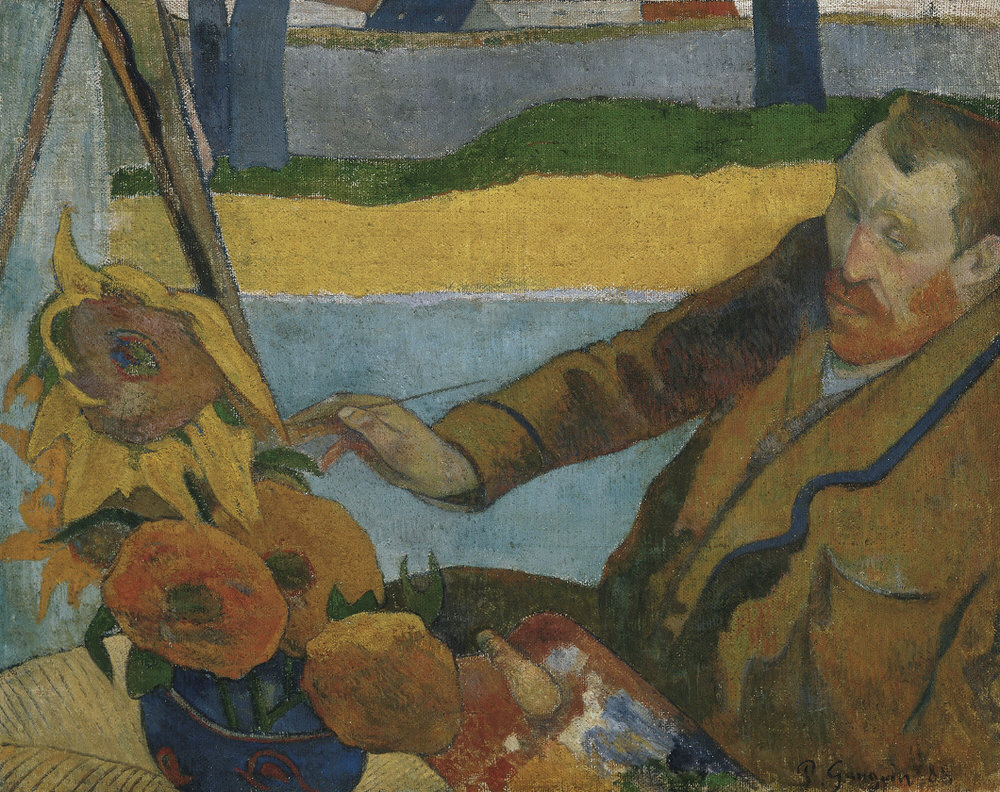
Paul Gauguin, The Painter of Sunflowers (Portrait of Vincent van Gogh), 1888
What’s fascinating about this painting is the mix of styles developing. Gaugin’s snow painting above was only 4 years previous. Here there are those solid blocks of yellow green and blue. A use of dark outline around shapes, An inclusion of hands and pattern within the scene.
In February 1888, tired of city life and longing for warmer climate, Vincent Van Gogh moved to Arles in southern France.
The Provençal landscape provided an ideal setting for Van Gogh. In letters to his brother Theo, he expressed delight at the sunlight, bright colours, landscape, and abundance of flowering trees. His painting style developed, becoming looser with bold experimentation and more expressive marks.
Van Gogh’s ambition in Arles was to create an artist community, a brotherhood of artists working together, including his new acquaintance Paul Gauguin.
Gauguin reluctantly finally arrived in late October 1888, but only after much persuading. His trip was helped by Vincent’s brother Theo, who also happened to be Gauguin’s art dealer in Paris. He had promised Gauguin 150 francs a month to relocate to Arles and paint with Vincent.
Initially, it worked.
They painted side by side, inspired one another, and ate and drank absinthe together!
However, their contrasting personalities caused frequent disagreements, and growing artistic differences led to heated discussions. Vincent displayed signs of agitation, his mental health deteriorated, and he became alarmingly eccentric.
After only nine weeks, Gauguin threatened to leave. Vincent fell ill and cut off his ear.
On December 23, Gauguin quickly left Arles for Paris.
Theo van Gogh’s untimely death in 1891, terminated a small but critical income source. That spring, Gauguin organised a public sale of his work and raised enough to plan his next trip… to Tahiti.
Tahiti’s Influence on Gauguin’s Style
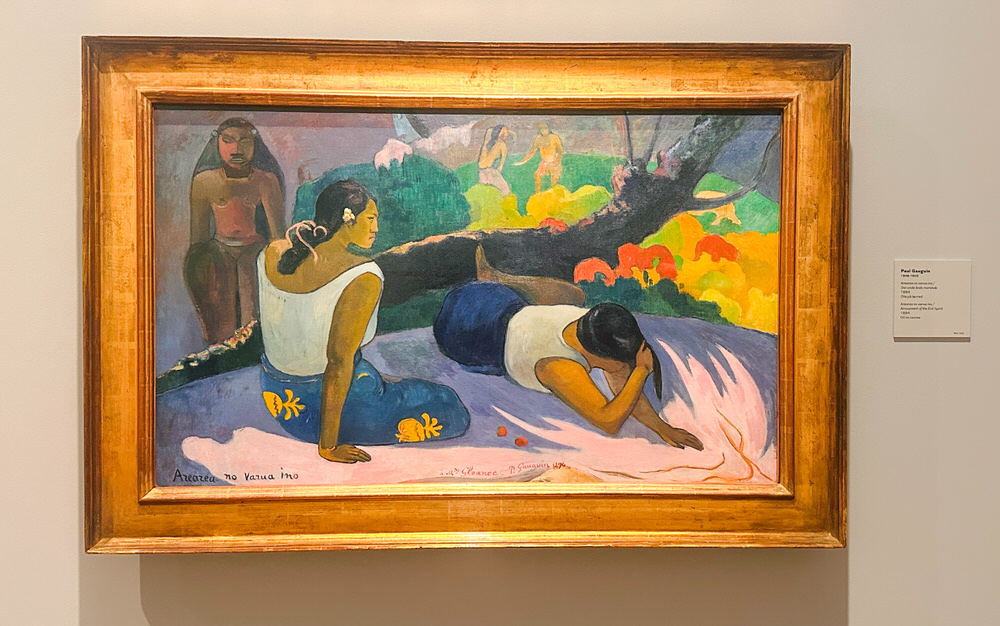
Gauguin left Paris on April 4, 1891, and arrived in Papeete, Tahiti, on June 8, after an almost eight-week passage, ill with bronchitis, but on the search for artistic inspiration.
Gauguin even had to sell his prized Cezanne painting to fund his medical bills.
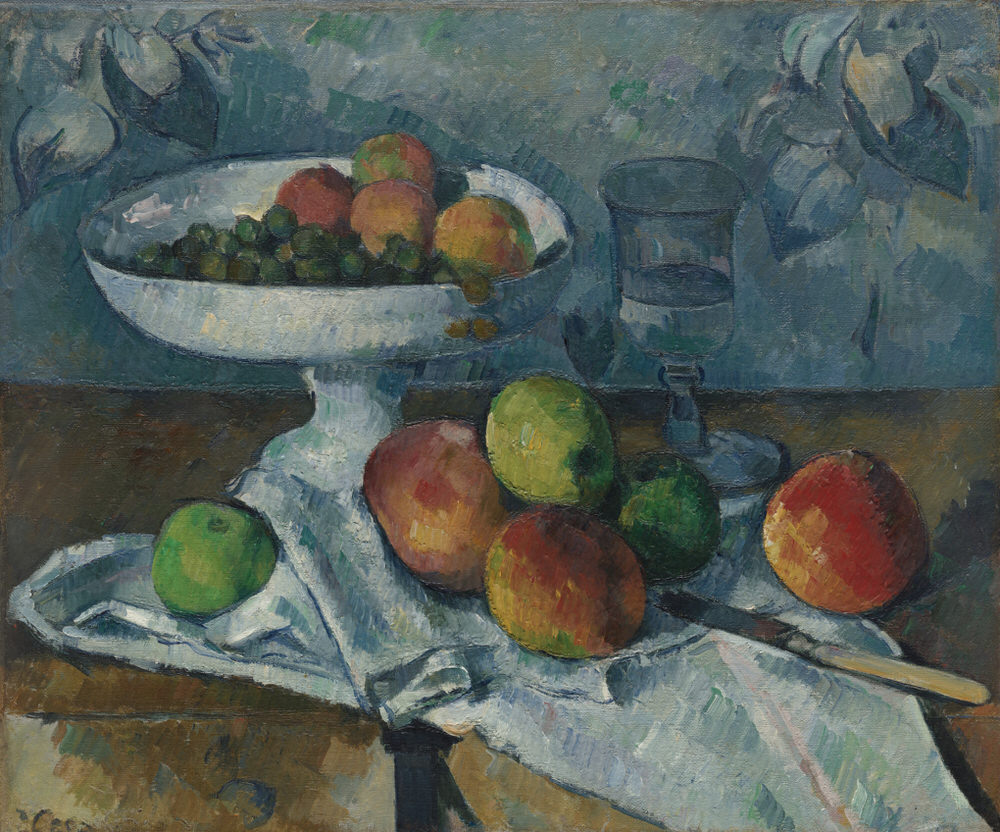
Paul Cézanne. Still Life with Fruit Dish. 1879-80
“an exceptional pearl, the apple of my eye.” – Paul Gaugin
Tahiti profoundly transformed Gauguin’s artistic vision. The island’s vibrant tropical landscape, indigenous culture, and spiritual atmosphere inspired him to abandon European artistic conventions entirely.
His palette became bolder and more saturated, incorporating the intense yellows, oranges, and blues of the South Pacific. He simplified forms, flattened perspectives, and embraced a more symbolic approach to painting.


Seeing the strong contrast of yellow and red, with the distinctive clean dark lines, reminded me of the colourful building facades I’d seen the previous day in Nyhavn (Urban Sketching in Copenhagen). The shadows and drainpipes even seem to outline the shapes.

Paul Gaugin, Tahitian Women with a Flower, 1891
I love how Gaugin includes pattern elements that break through the background, but also link to the narrative of the painting. The warmth of the ochres and the vermilion helps to reflect a sense of Tahiti. There is a somewhat inward thinking gaze, with the crossed hand position telling so much about the pose.
The Tahitian works show Gauguin moving toward what he called primitive art, seeking authenticity in what he perceived as an unspoiled culture.
He painted scenes of daily Tahitian life, religious ceremonies, and mythological subjects, often blending Christian and Polynesian spiritual elements.
His brushwork became more confident and expressive, with broad areas of flat colour outlined in dark contours. (This technique would later influence the Fauvists)
These paintings captured Gauguin’s romanticised vision of paradise, a place where humanity lived in harmony with nature, free from the industrialisation and constraints of European society.
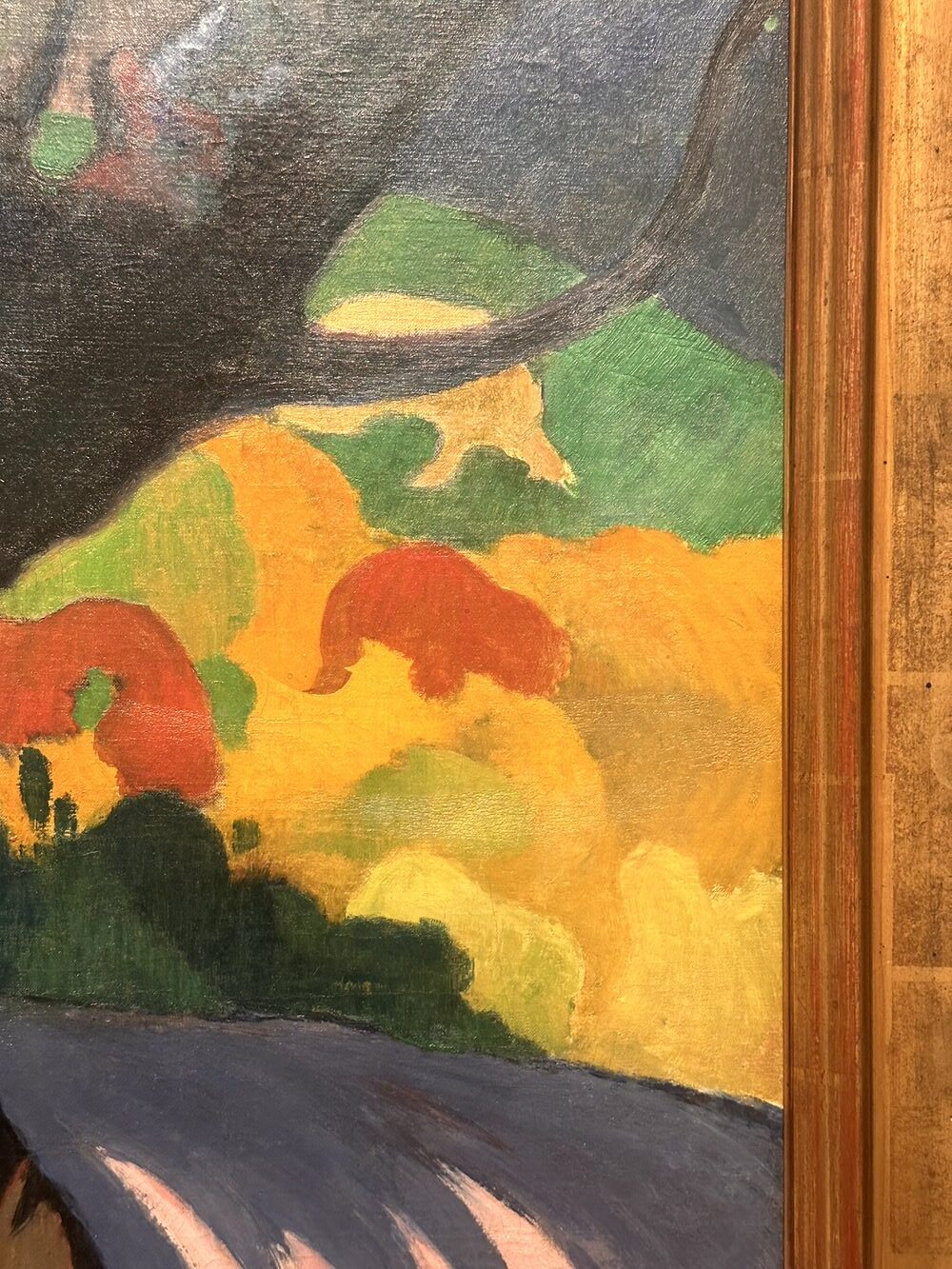
Detail from: Paul Gauguin, Reclining Tahitian Women, 1894
This detail shows the clean, abstracted nature of the build-up of colours. You can see brushmarks of Pissarro, colour of Van Gogh, pattern of Cezanne, and the development of Gauguin’s unique personal style.
There are many other floors and artworks to be seen at the Glyptoteket, from Monet to Cezanne; it’s a fantastic place to visit.
The Controversial Legacy
Gauguin’s personal life and lifestyle choices undoubtedly add to his controversial reputation. He abandoned his wife and children to pursue his artistic ideals, travelled, and often lived in poverty. He had a volatile personality, engaged in relationships with young Tahitian women, and died at 55 from ill health.
Gauguin spent his last years in more comfortable financial and emotional circumstances. Still, he never saw his family again, and ironically, as he stopped caring about his reputation as an artist, his work began selling again in Paris.
Separating Art from Artist
This begs the question: Is it possible to appreciate a work of art without our knowledge of the person clouding our judgment of it? Can you separate the art from the artist?
This dilemma has no easy answer. Gauguin’s artistic innovations, his bold use of colour, symbolic approach, and influence on modern art remain significant regardless of his failings. His Tahitian works capture genuine beauty and spiritual depth that continues to move viewers today.
Perhaps the answer lies not in complete separation but in informed appreciation.
Acknowledging both the artistic merit and the context. We can admire Gauguin’s technical innovations and visual poetry while being aware of the circumstances that produced them.
Further Reading:
Here are a couple of extra resources that readers have recommended:
A recent article on Gauguin in the New Yorker ‘What was Paul Gauguin Looking For?‘
A Book ‘Wild Thing: The Art & Life of Paul Gauguin’ By Sue Prideaux


Thank you so much for sharing this Will,
You have certainly treated us to some wonderful info and viewing.
I have yet to really like and even understand Gauguin.
I know he really upset Vincent in his stay and they did not have a very happy parting.
Soi far I find his work empty of empathy, I do not know why yet but I will probably figure it out !
Happy week wishes to you both Louise
Thank you thank you thank you! I may never get to see this in person but I enjoyed every second of seeing it on line.
Thanks Cathy, glad you enjoyed the virtual tour!
Gauguin at the Glyptoteket: Museum: absolutely fabulous review – Thank you so much!
My pleasure Judy
Lovely Will
Hello Will,
Wow. I seem to remember from a vacation a few decades ago in Tahiti seeing Gauguin’s work, and at the time noting the contrast of art vs reality, referring to the extreme poverty of native people. This circles back to the debate you’ve surfaced about separating art from artist, and consideration leading to perception. Enjoyed this review a lot! -Laura
Cheers Laura, so pleased you enjoyed it.
Very interesting will thankyou
Thank you for sharing this tour. I enjoyed it completely!
Hi Will, thank you for your time and excellent art tour. Very inspiring every single image. My respect and gratitude for all the people involved at this outstanding exhibition. I appreciate your desire to bring us these precios information. Thank you and wishing you to continue spreading the art.
Cheers Maria
Thank you very much.
Loved the tour. A long way from Hawaii but definitely on the “must do” list
What an insightful and interesting analysis of Gaugin’s artistic journey! Thank you Will for sharing your experience at the Glyptoteket, it was almost like being there and walking through the doors. What a contrast in artists, Degas and Gaugin were. One cannot really see the inner life of Degas’ ballerinas, did he really care about them as more than elegant object models? Whereas Gaugin shows us the depth of his subjects and how he cares what they are thinking and feeling (wondrously, despite the flat surfaces), his personal weaknesses notwithstanding. I know which one of the two I would prefer to have drink with :-) Thanks again fir your thoughtful review.
Thanks Philippe
Thanks Will, fantastic review! So lovely to get the atmosphere of the Glypt!
Great review, really appreciate it.
Thanks Sue
Hi Will,
Enjoyed your article, and the colourful layout of the paintings by Degas and Gaugin.
Oh Will, what a wonderful message to us all. Whilst I was mesmerised with your captivating stories of Gauguin and Van Gogh
it was the architecture of the Museum that court my eye more than anything. And I had forgotten The Kiss – marvellous.
You are always inspiring Will and all your messages are so watchable – and not forgetting your teaching guides.
Thank you once again Will
My pleasure Charles, yes the mix of the architecture and the art worked so well together.
Will, totally appreciated all the effort you put forth in sharing your visit. It was so informative regarding Degas, Gaugin, and Van Gogh and their relationships which were summarized so well. I felt like I was on the visit to the museum with you.
Glad you enjoyed it Jane
Hello Will, thank you, once again for your generosity in sharing your trip. Its a museeum I knew nothing about; and how amazing it is! Your description of how it kept opening up was so true, evoking memories of sketching in the Palm House in Kew Gardens. Ive always enjoyed Gauguin’s ‘flat colour’ landscapes… I worked for a time at the Courtauld and was able to really look at one closely, didnt he work on burlap at one time, very coarse cloth? Its great to chat about art. Thanks for the opportunity your visit to the Glyptoket gave us.
Hey Barbara, glad you enjoyed it, yes it did have a Kew Garden vibe!
Wow. That was amazing! Thank you for posting that. It was so very interesting and captivating for me.
Thanks Cynthia
Really enjoyed reading this, it’s almost like I was there. The photos are beautiful – I wonder what camera you used. Thank you so much.
Pleased you enjoyed the photos Ying, most are with an iPhone 14Pro, and a few with a Panasonic LX100
Cheers,
Will
Thank you for sending your review. It is incredibly well done and very enjoyable to read.
Best regards
Jennifer & Tim Ayers
Thanks so much!
Fascinating to learn about the Degas and Gaugin in the Getty / Glypototek collection in Copenhagen. I was particularly interested in the following:-
– results of XRF scanning analysis of multilayers over many years of changes made to paintings
– detailed comparisons between actual paintings and Thorley Lithographs of ‘Dancers Practising’
– pleased to see Gaugin’s ‘Winter Scenes’ compared to one my favourites Pissarro
– never heard of Synthetism, thanks.
Keep up the good work and enjoy your summer, thanks
Glad you enjoyed those parts Keith, yes Pissarro is great.
Thank you for sharing this Will, it was so interesting. Very much enjoyed.
My pleasure Barbara
Thank you. Beautiful place and beautiful art!
Thank you for this delightful visit to a magnificent museum and to a group of paintings whose artists’ names are well known but whose “back stories” – perhaps not so much. A great addition to your series of newsletter postings. Best wishes.
Thanks so much Carla.
Thanks very interesting, have never heard of this particular museum. The architecture and the Rodin sculptures were particularly interesting. Unfortunately I have never warmed to Gaugin’s art. He always seemed to me like a very odd painter with a simplistic, unattractive style. But thanks for sharing your visit, good to learn about somewhere new.
I had a great experience when I went there myself a couple of years ago, but to “wander the halls with you” gave me so much more insight and information and your photos goes a long way to really capture the mood of the place. Thanks for the tour, Will!
Glad you enjoyed the photos Rolf.
Thanks Will. Good review.
Will (no pun) be there in September.
Oh brilliant, hope you have a great trip.
Thanks Will…the museum sounds amazing and a really interesting summary of Gaugins life!
Cheers Sue.
Many thanks for the generous way that you take us with you on your inspiring art journey.
Thanks for reading Liz, glad you enjoyed it.