

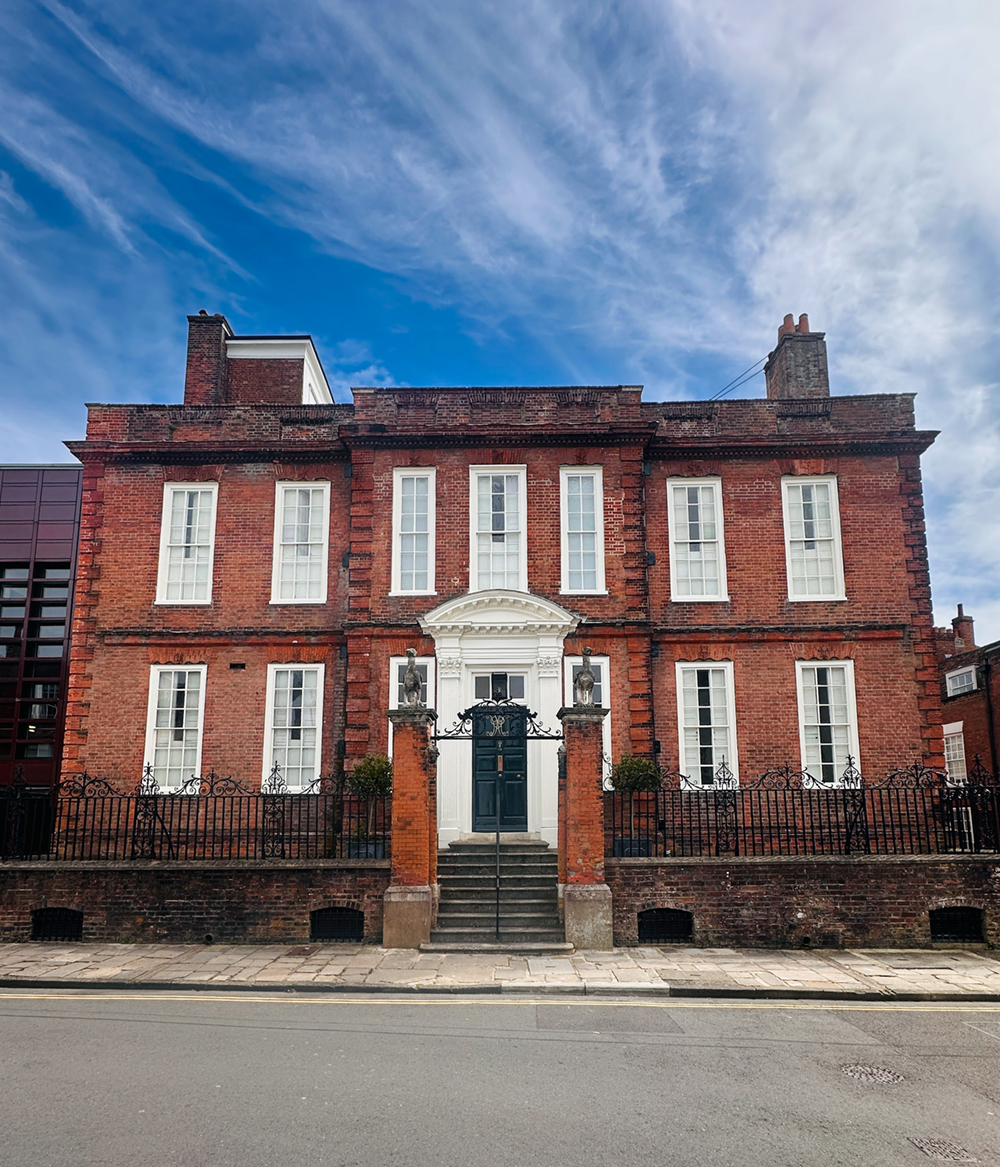
It’s always a pleasure to visit a gallery that feels so naturally in tune with the kind of paintings you already enjoy, and Pallant House in Chichester feels exactly like that.
The gallery is situated within a Grade I-listed Queen Anne townhouse, with an impressive modern extension. It creates a comfortable mix of the period beauty of a townhouse, built in 1712 for Henry Lisbon Peckham and his wife, Elizabeth Albery, and the contemporary galleries of the new wing.
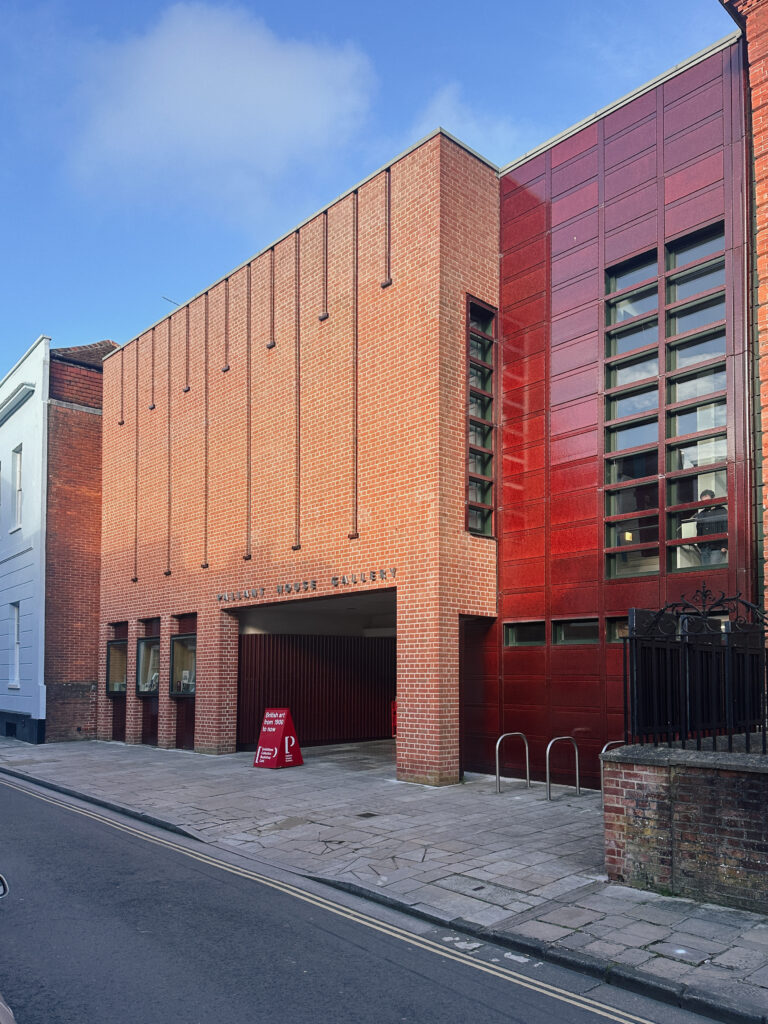
The extension, designed by Sir Colin St John Wilson in association with Long & Kentish Architects, opened in 2006. MJ Long had a long history of designing studios for artists, including Peter Blake, RB Kitaj, and Frank Auerbach, often accepting artworks as part payment.
This helped build an exceptional personal collection totalling 175 modern and contemporary works, which they later bequeathed to Pallant House. (See: Pallant House acquires British Pop Artworks)
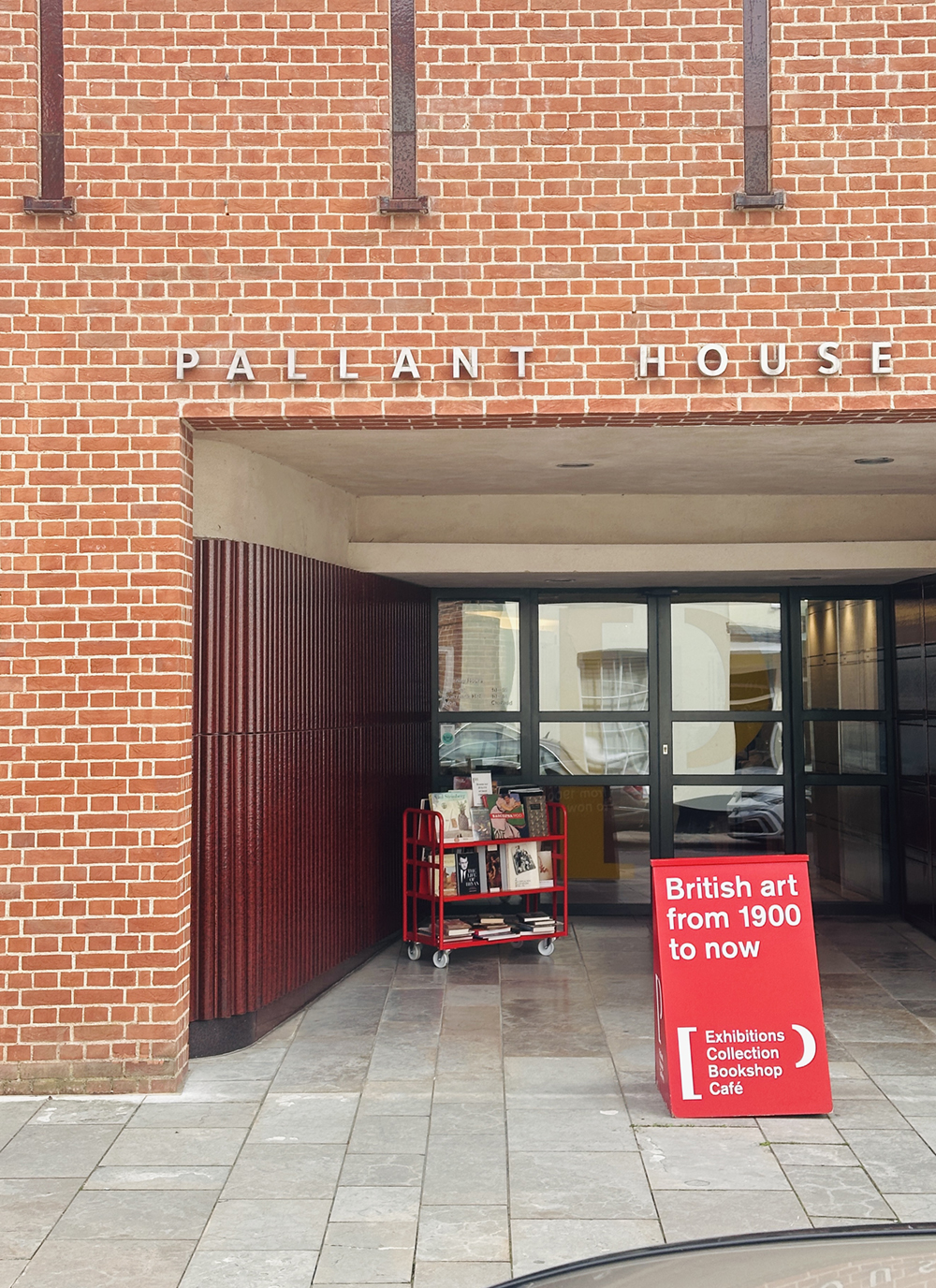
Pallant House has an amazing collection of British modern art. It first opened in 1982 with the collection of Walter Hussey, Dean of Chichester Cathedral, who donated work by Henry Moore, John Piper, Barbara Hepworth, Graham Sutherland and other artists to the city of Chichester.
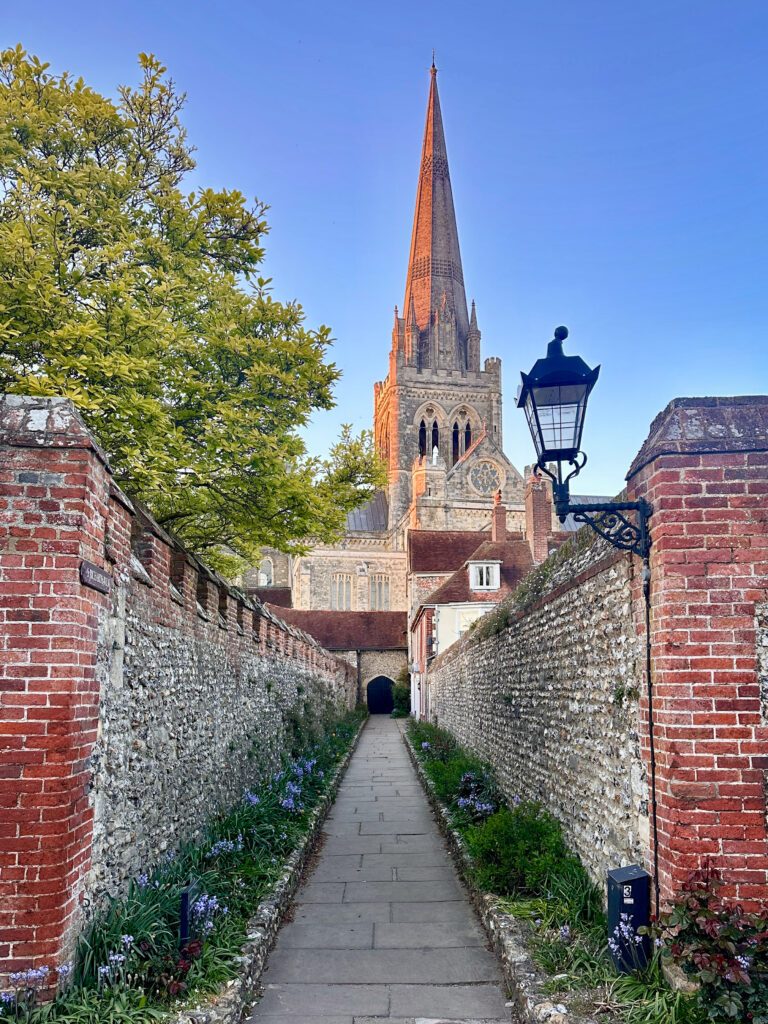
Walter Hussey, Dean of Chichester Cathedral, first donated pieces to Pallant House
This was followed in 1989 by Charles Kearley‘s bequest, which included works by international modern artists, including Picasso, Gino Severini, and Fernand Léger.
Walter Hussey believed that as long as the qualities are high, there is no reason why art from different periods cannot be displayed side-by-side.
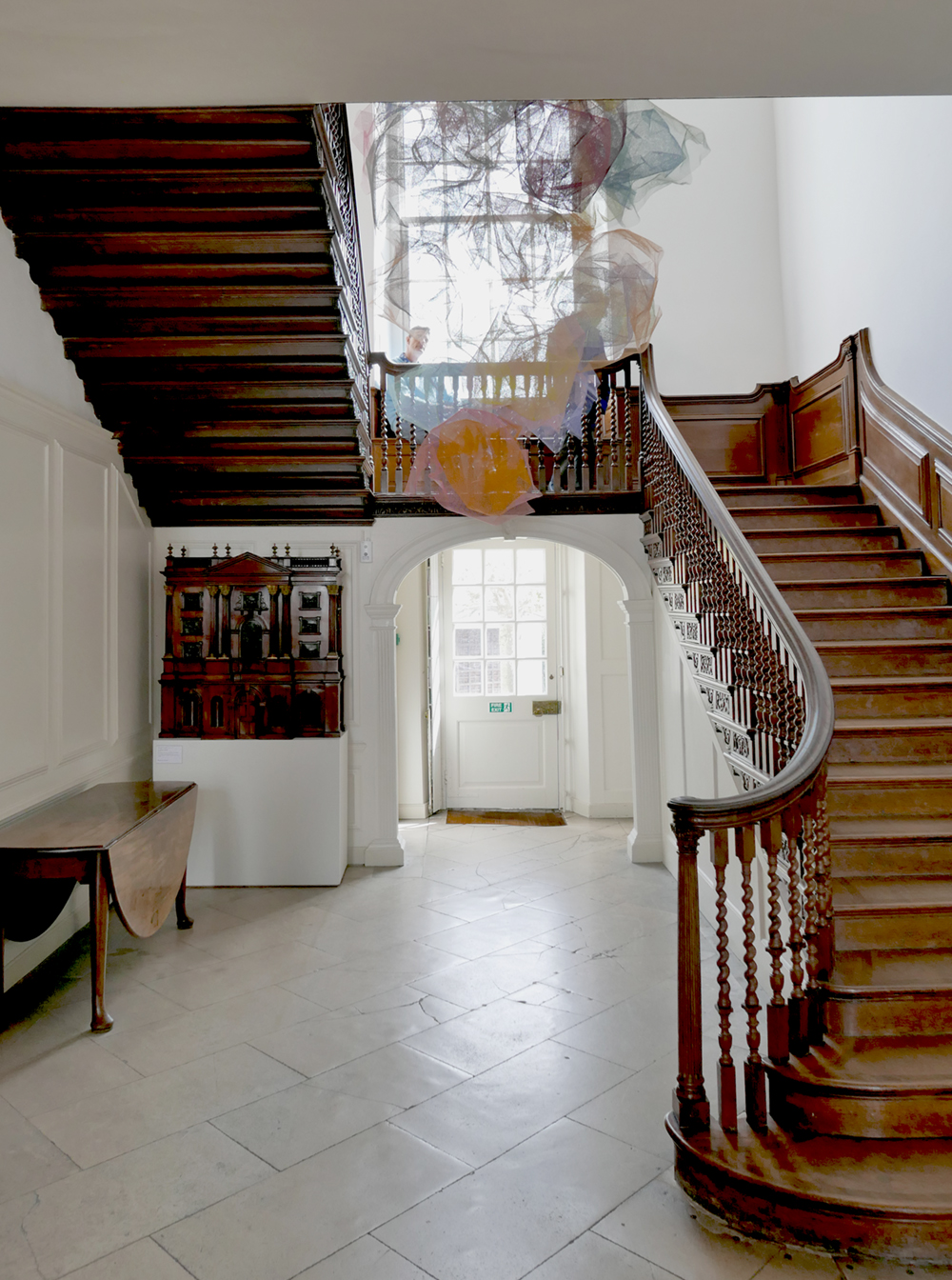
The grand entrance hall features an elaborately carved oak-and-walnut staircase.
I’d come specifically for William Nicholson, but as often happens with the best gallery visits, I got considerably more than I bargained for.
The Nicholson Exhibition

‘A Was an Artist (1897)’ is the first woodcut in the Alphabet series; it shows a pavement artist (modelled on himself) collecting pennies for his work.
This exhibition, William Nicholson (closing May 10th 2026) celebrates the art and life of one of the most versatile British artists of the early 20th century, William Nicholson (1872 to 1949).
Printmaker, painter, illustrator and designer.
This show reveals the breadth of his artistic vision, bringing together loans from public and private collections, from elegant still lifes, insightful portraits and evocative landscapes to his woodblock poster designs and book illustrations.

The building sets the mood before you’ve even looked at a painting. Pallant House feels welcoming and lived-in, almost like a home, and that really suits Nicholson’s work.
Early Portraits
To understand Nicholson’s still lifes, it helps to know a little about how he arrived at them, because his early career began in quite a different place.
Before he became known as a painter, Nicholson worked as a graphic designer. In the 1890s, he was working with his brother-in-law James Pryde as the ‘Beggarstaff Brothers’. Together, they created a series of posters that felt surprisingly modern for the time.
The designs used bold flat shapes and simplified silhouettes, with very little of the decorative detail you might expect from the Victorian period. In many ways, the work feels closer to something from the Bauhaus movement of the 1920s than to the London art world of the 1890s. It didn’t make them much money, but it did make a strong impression.
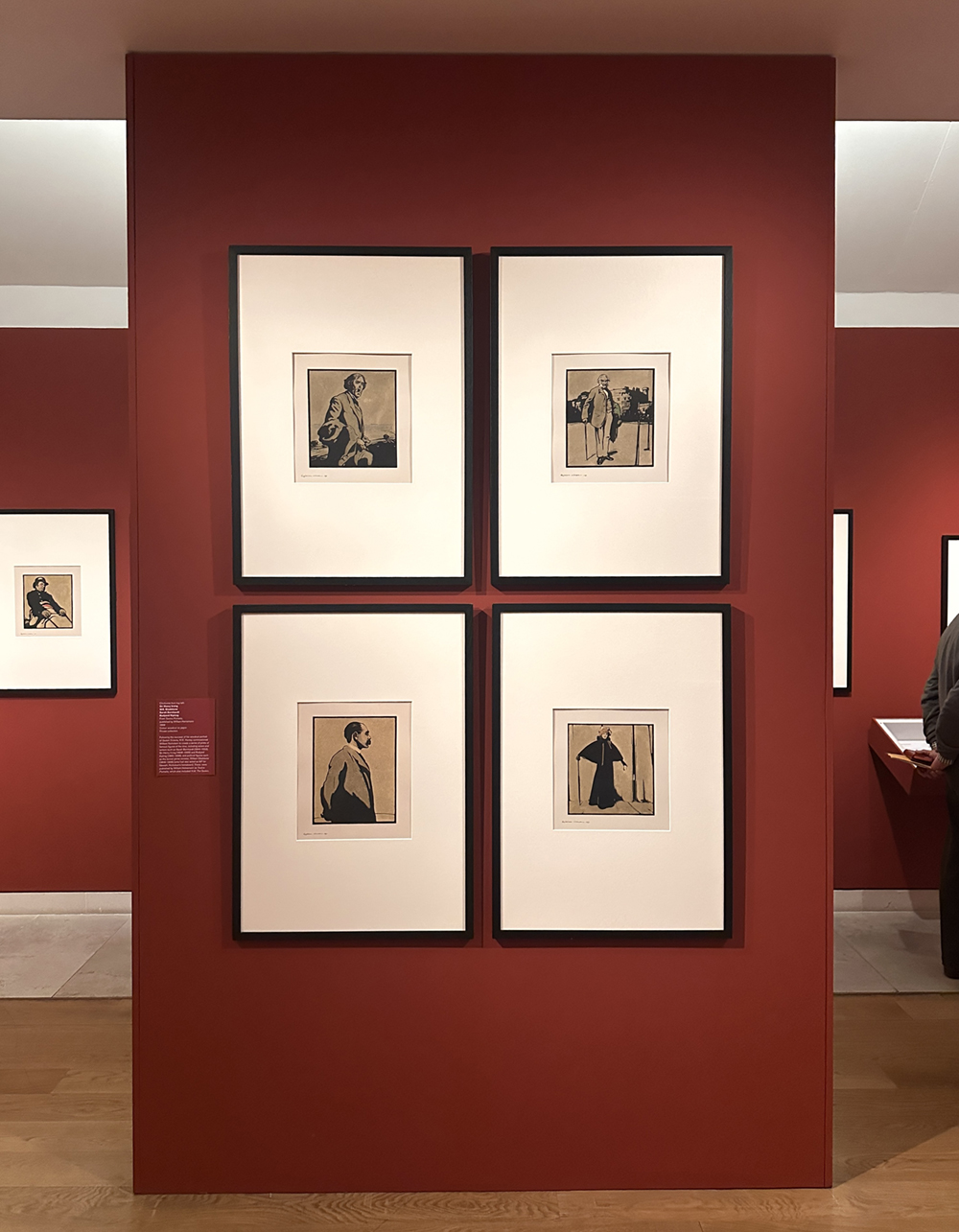
From there, Nicholson turned to woodcuts, producing a celebrated series of portraits and alphabet prints that showed the same instinct for reduction. He was teaching himself, through printmaking, to take things away rather than add them.
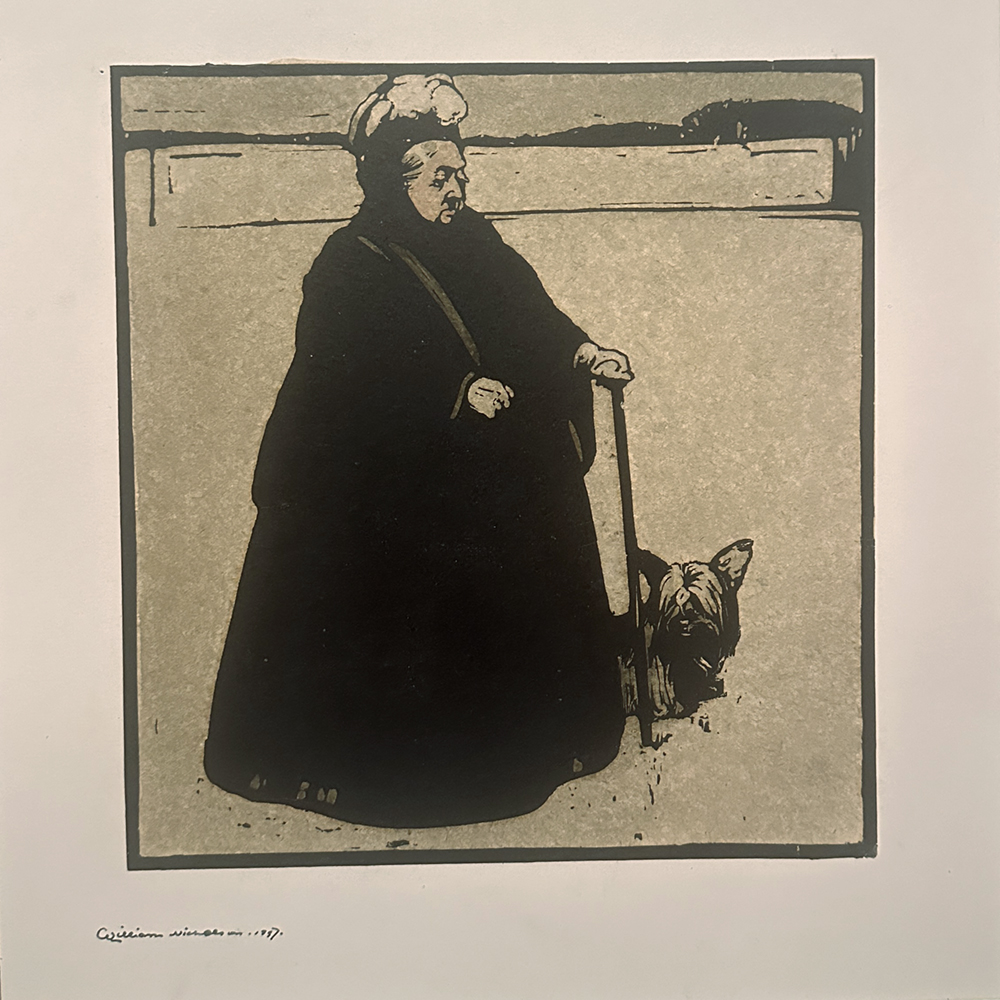
In 1897, Nicholsons’ woodcut portrait of Queen Victoria was published in The New Review and became a huge success.
What struck me most was how clearly his background in woodblock printing shaped the rest of his work.
That early training seems to have given him a strong sense of precision and graphic balance. In printmaking, the composition has to read instantly, often at a distance, and communicate clearly through simplified black-and-white shapes. You can still feel that discipline running through the later paintings.
Whistler
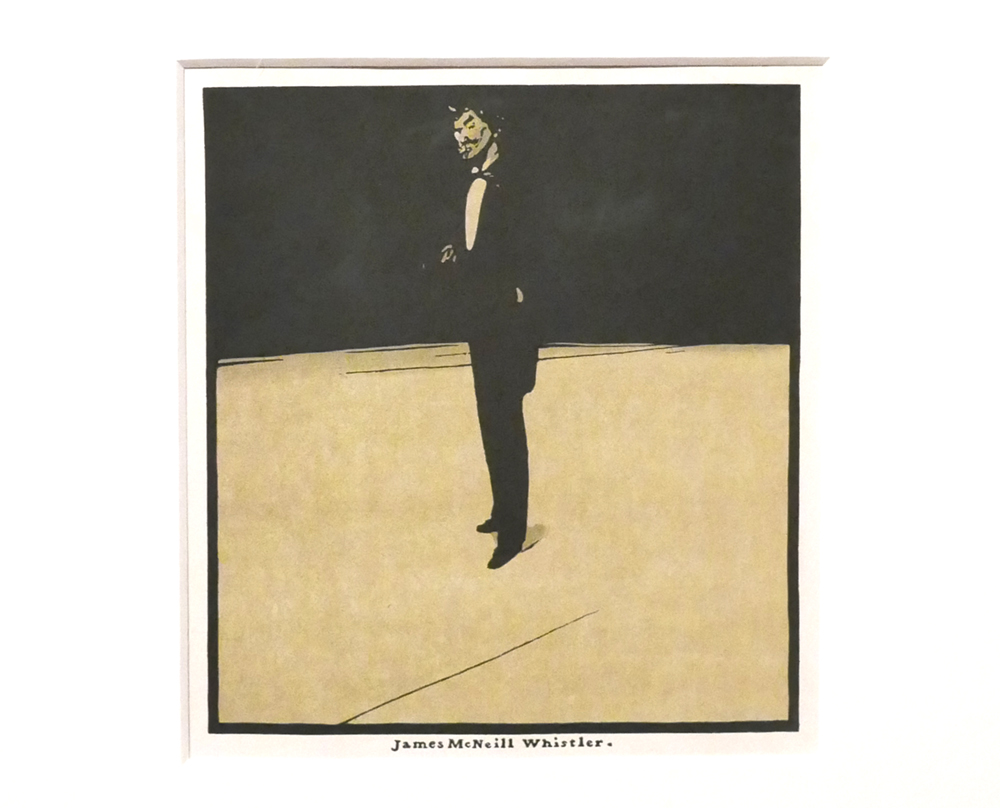
William Nicholson, Woodblock print of the painter James McNeill Whistler. The black of the jacket and backgroud are one value, our eyes create the countour of the figure.
Here is a woodblock print of the artist James McNeill Whistler, who was both a friend and an influence on Nicholson’s career. It was Whistler who recommended Nicholson to the publisher William Heinemann, and the publications that followed helped establish Nicholson’s reputation as a solo artist.
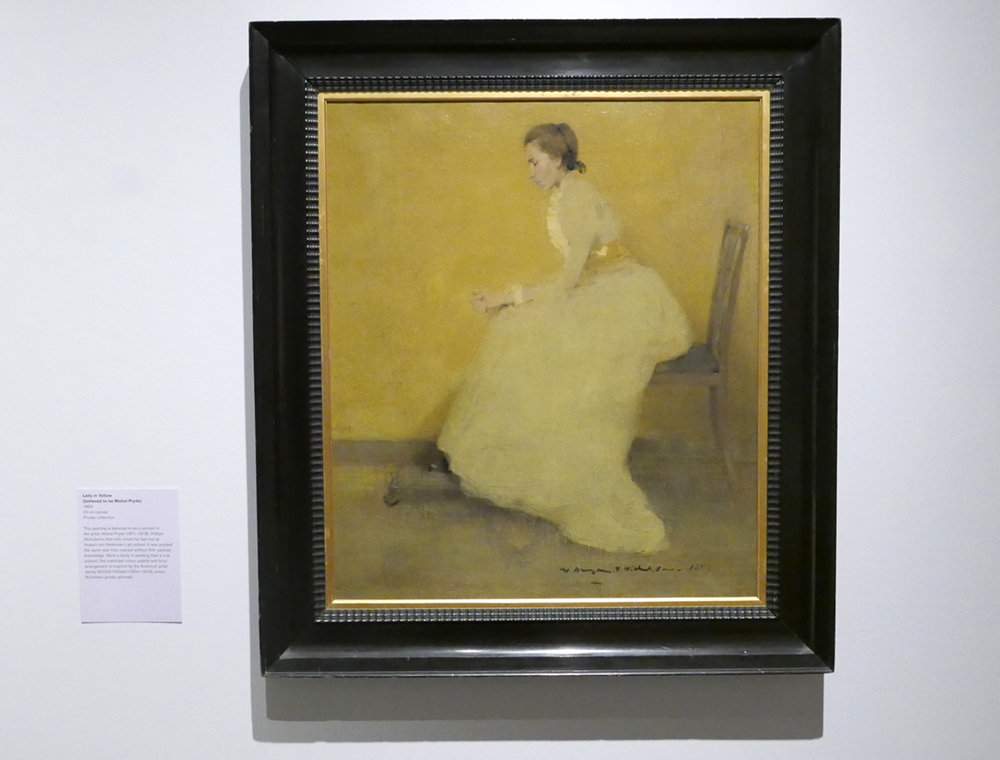
Here you can see one of Nicholson’s portraits, which has a similar emphasis on tonal balance and poise as Whistler’s work.
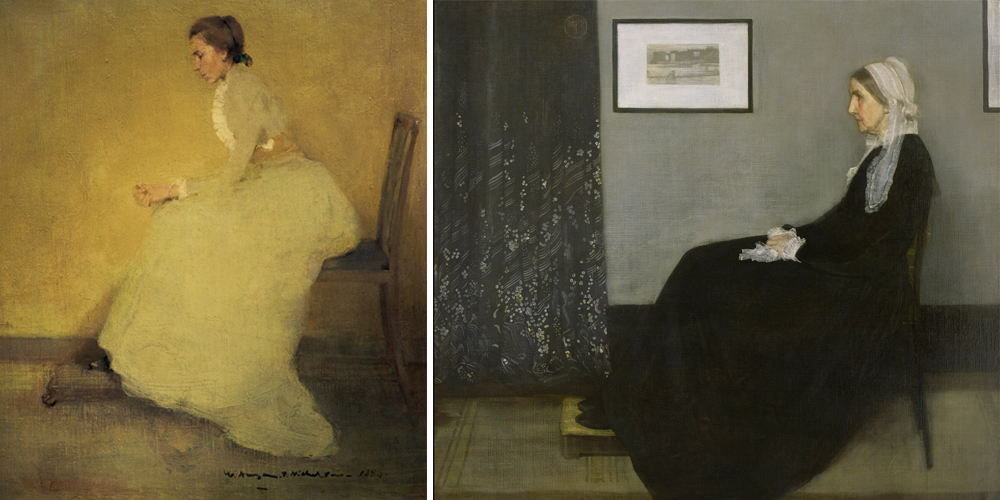
Comparing the composition of Nichoslon, 1893 portrait of his wife, painter Mabel Pryde, and Whistler’s 1871 painting Arrangement in Grey and Black No. 1
Whistler helped a whole generation of British painters think about tone before colour. He encouraged them to ask what mood or feeling a painting should have before worrying too much about the exact colours.
(You can read my exhibition review of the Whistler exhibition at Tate Britain here)
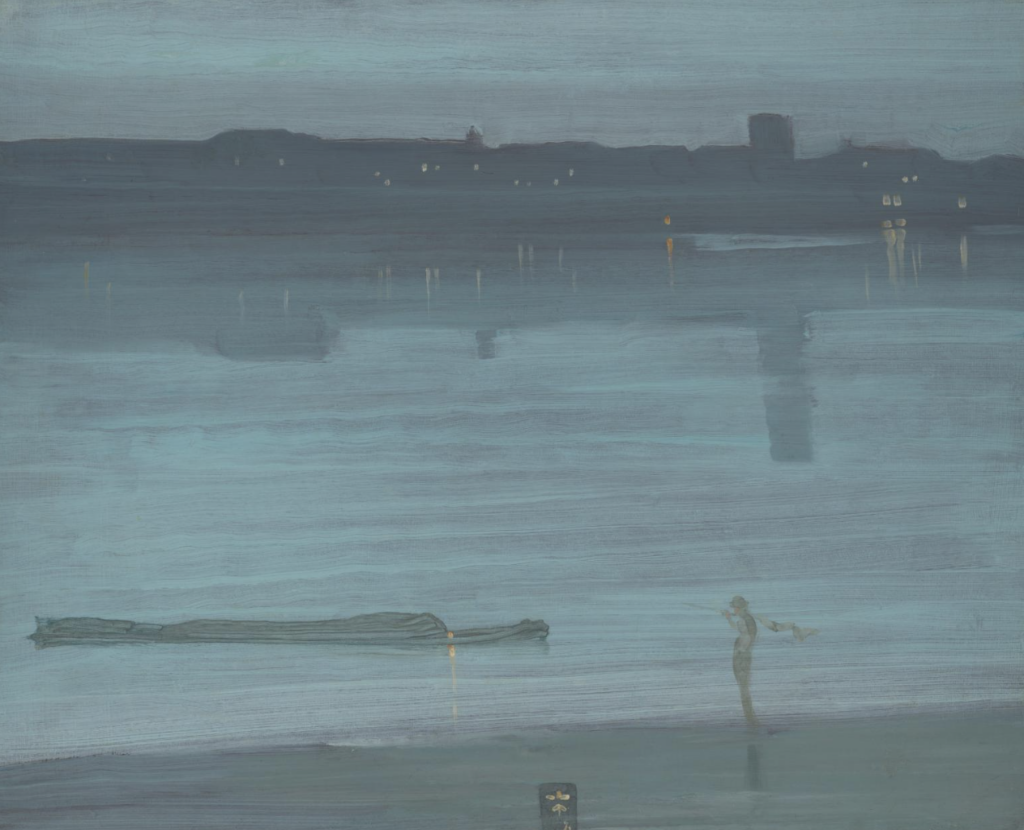
James McNeill Whistler, Nocturne: Blue and Silver – Chelsea, 1871,
In Whistler’s famous nocturnes, London is stripped right back to just a few lights against a dark, unified background. What matters most is not so much the subject itself, but the atmosphere it creates.
Nicholson seems to have taken that idea and brought it into the home. His still lifes have that same sensitivity to tone, with everything balanced around a main tonal mood, and colour used carefully for emphasis rather than simply for decoration.
There are echoes of that printmaker’s eye in the way forms are simplified and carefully arranged.

William Nicholson’s Gold Jug (1937)
Where woodblock printing is naturally flat, these paintings allowed him to explore texture, particularly in the impasto highlights, which gave the surfaces a richness and physicality that contrasted beautifully with the flatter, more simplified structure underneath.

Detail: showing the textural quality of the Nicholson Still Life
From 1901, Nicholson decided to step back from printmaking to establish himself as a portrait painter. which would provide a good income to support his growing family with Mabel.
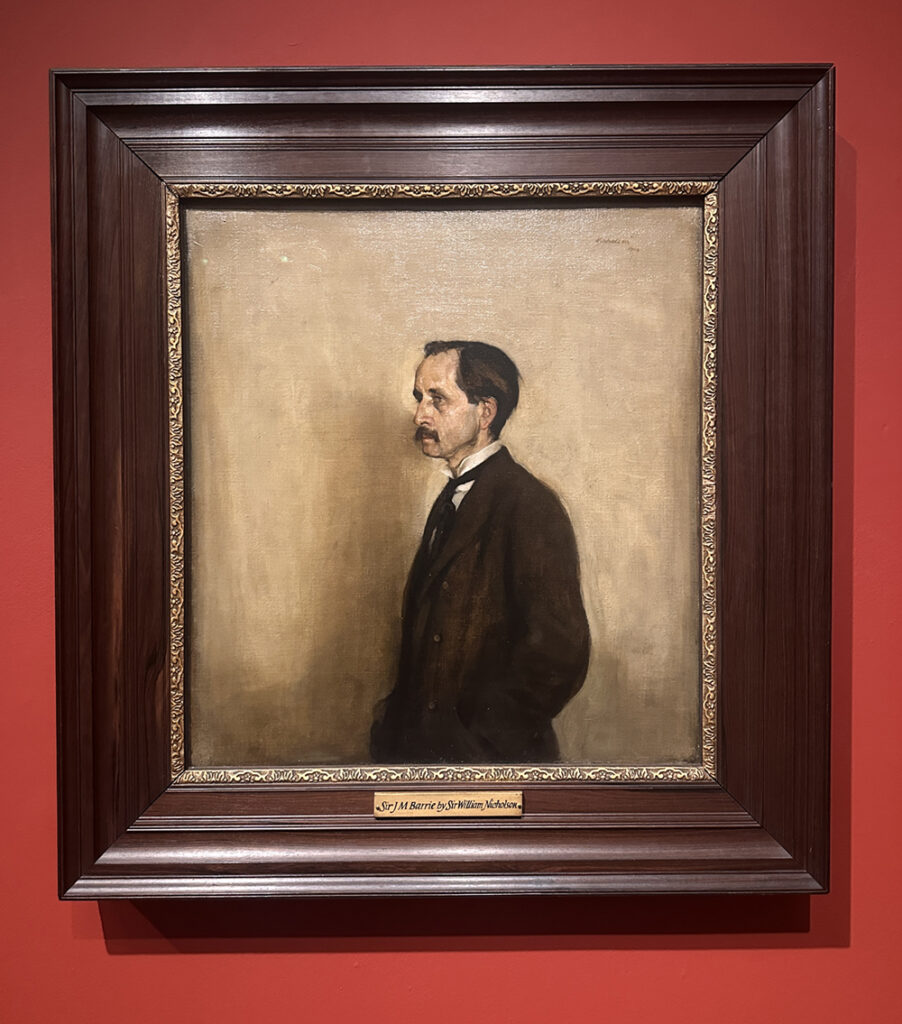
Sir J M Barrie by Sir William Nicholson. J.M. Barrie asked Nicholson to design the costumes for the first production of Peter Pan at the Duke of York inTheatre in December 1904.
Known for their quiet poetry and subtle use of light, his portraits ranged from leading cultural figures in London, including Heinemann, W. E. Henley, and the Author of Peter Pan, J. M. Barrie, to his own children, including Ben Nicholson. He also painted a wider cross-section of society, from barmaids and streetwalkers to morris dancers.
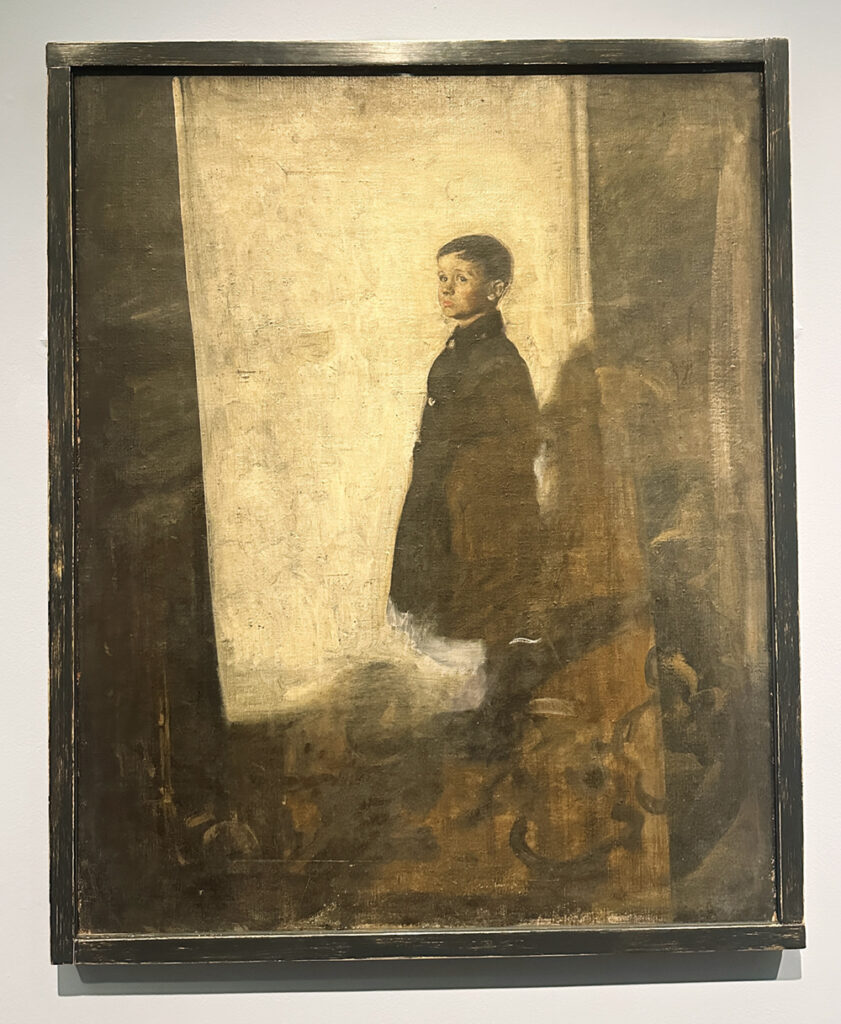
William Nicholson, Ben Nicholson as a child of Six or Seven, 1901

Edges, Lost and Found
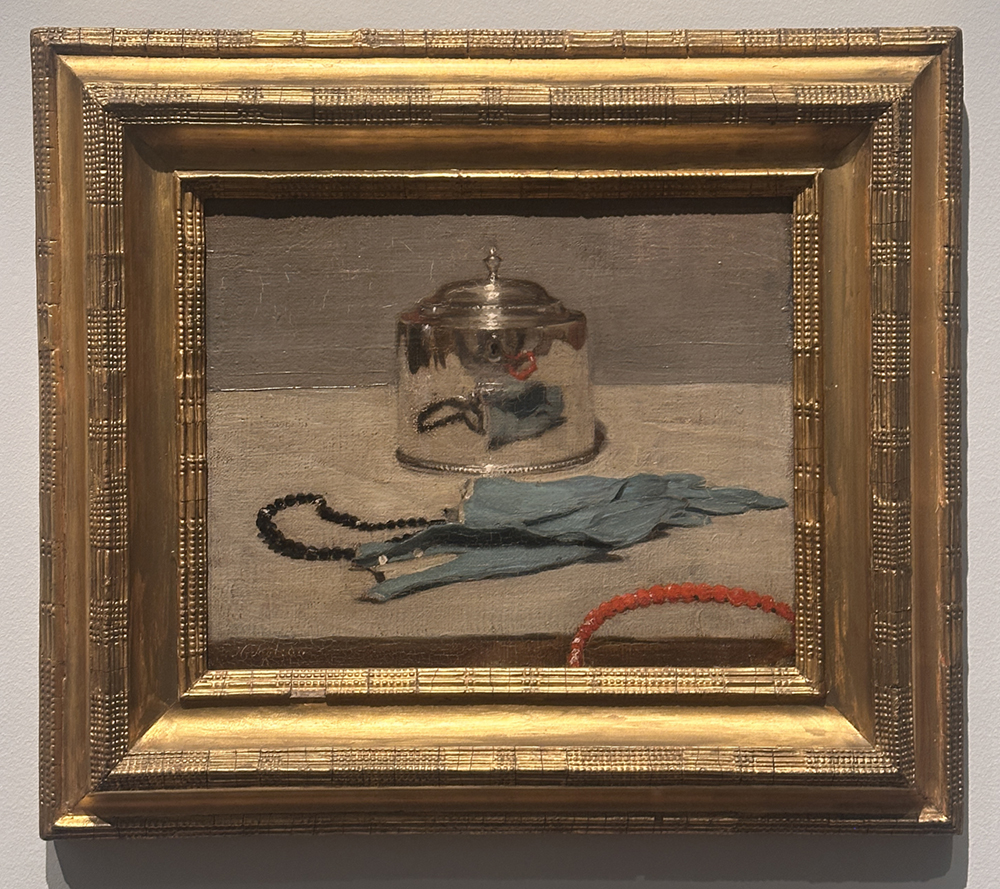
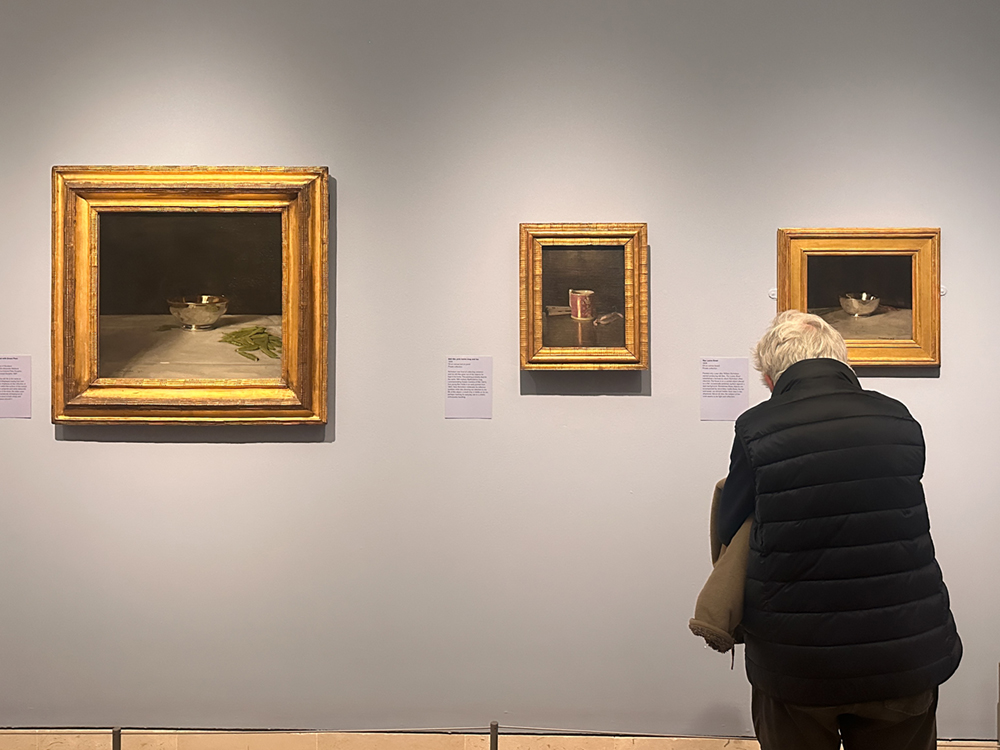
If I had to pick one technical quality that really sets Nicholson’s still lifes apart, it would be his handling of edges.
Edge control can sound a bit dry at first, but it is actually very simple in practice. Every place where one shape meets another is an edge, and every edge is a decision.
A hard edge tends to bring something forward. A soft edge lets it fall back. And when an edge almost disappears into the background, it creates a sense of atmosphere and space.
Nicholson seems to understand this almost instinctively. If you spend time with his still lifes, you notice how rarely he uses a really hard edge. Usually, it is saved for the point of strongest contrast, perhaps where light catches the rim of a jug or the curve of an object most directly. Elsewhere, he lets edges soften and merge into the surrounding tones.
That is what helps the objects feel solid and present without ever looking stiff or overworked. They feel as though they exist in real space, rather than simply being placed on the surface of the canvas.
In search of shadows

The way he applies paint also helps with this. In the middle tones and shadows, the paint is often thin enough to stay soft and controlled without becoming muddy. Then, where thicker paint does appear, it is usually kept for the lightest accents. Even there, he is restrained. The result is a surface that reads beautifully from across the room but reveals more and more the closer you look.

Nicholson’s jug and brushes are displayed alongside his finished painting. It’s interesting to look at the photograph of the jug, even though it’s in strong gallery light, at how strong the shadow shape is and how the lines are rendered. And if we compare that to Nicholson’s jug, how soft an edge he’s created and the shadows.
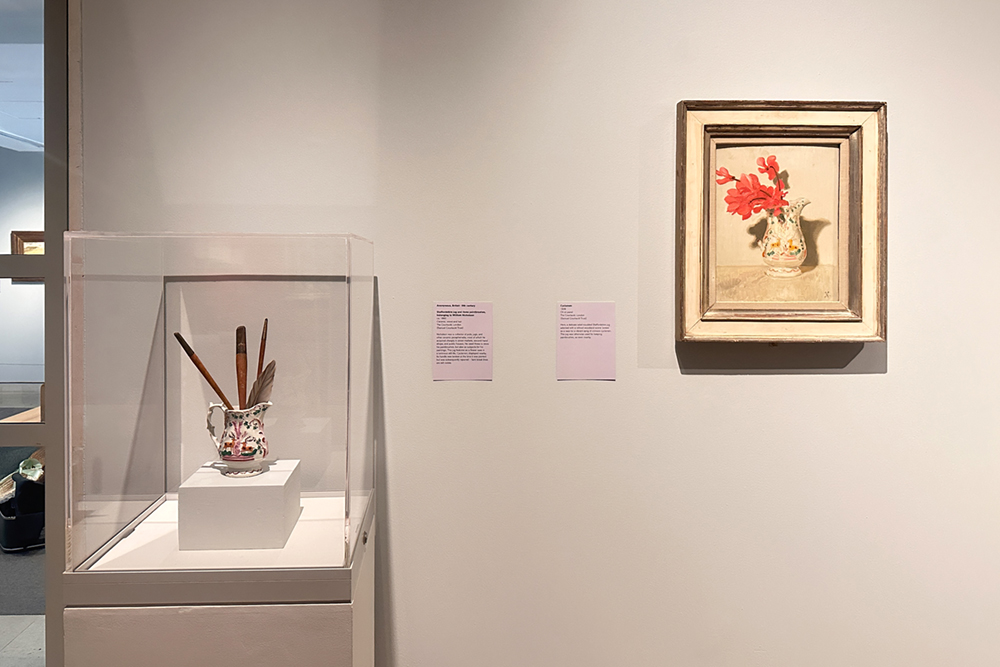
Whether he was printmaking or painting, Nicholson had a wonderful sense of how to use dark and light to create drama and atmosphere.
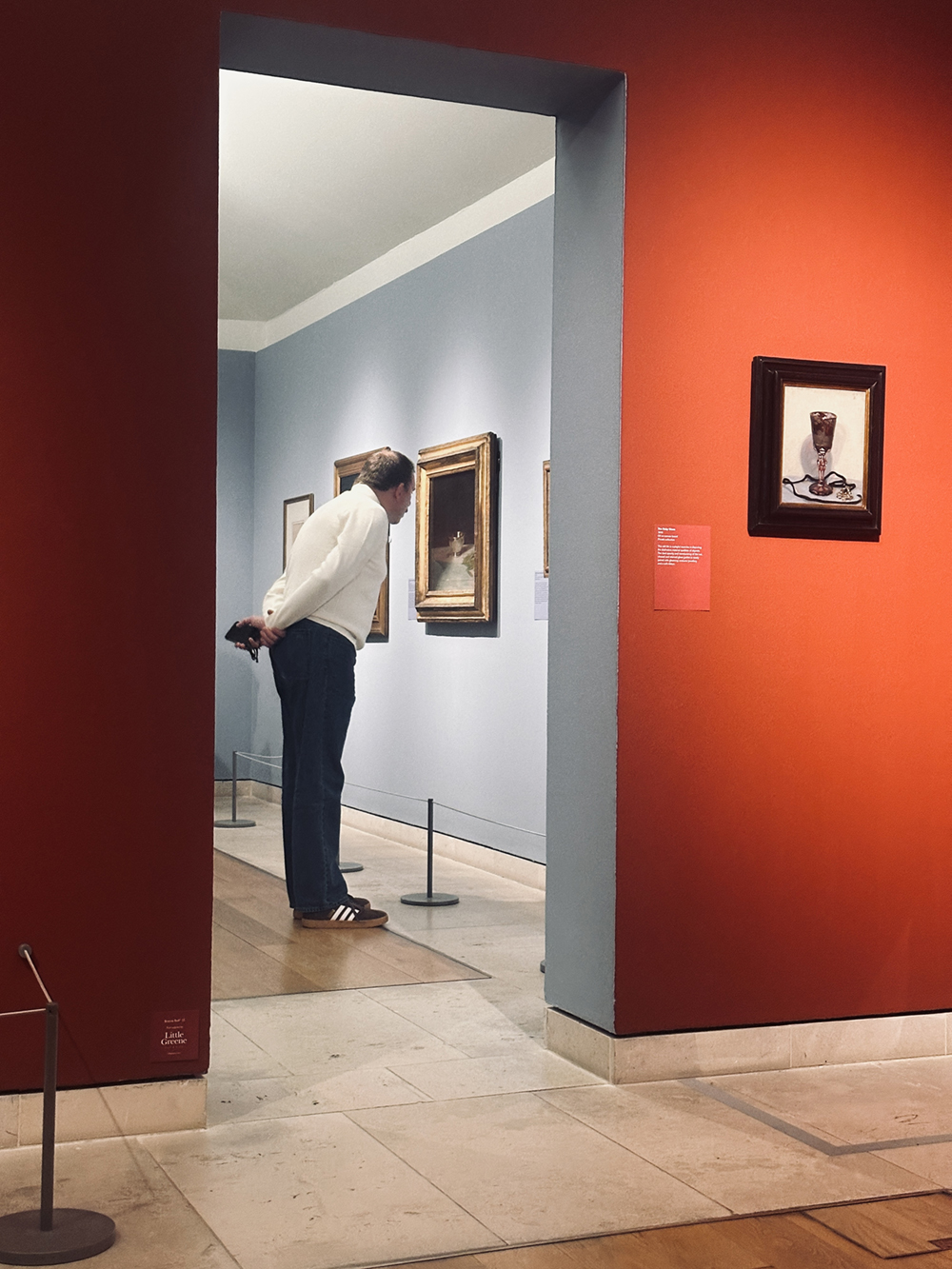
His paintings feel very at ease in rooms like these. They don’t seem to need huge white walls or grand spaces; they feel like works you could happily live with and return to again and again.


Later years
At the outbreak of the First World War, Nicholson had been enjoying a productive period in Paris, but the declaration of war forced him to return to England. By the end of 1914, he travelled to India with friend and architect Edwin Lutyens on a commission to paint the Viceroy, Charles Hardinge.
He returned to England in 1915, later moving to Appletree yard in London, a former coach house converted by Lutyens, which would be his home and studio until the end of the war.
In 1918, tragedy struck twice for Nicholson within a few months: he lost his wife, Mabel, to Spanish influenza, and his son, Tony, was killed in action.
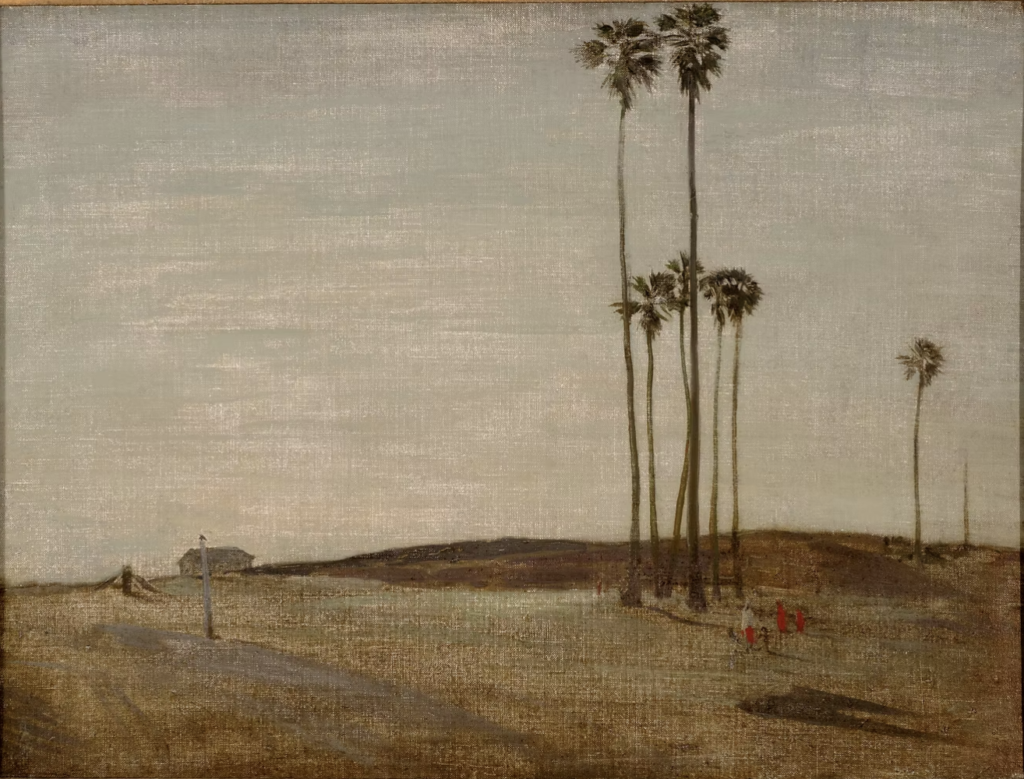
Nicholson’s landscapes have a very graphic, modern quality, with the colour becoming increasingly reduced.
Later in life, Nicholson took on fewer portraits and painted landscapes. Following Mabel’s death, William married Edie Stuart Wortley. They were given the White House in Sutton Veny, Wiltshire, as a wedding gift by her father and moved there in 1923.
Edie, a fellow painter who often worked under the name Elizabeth Drury, had one daughter, Liza, with William. Edie’s looser handling of paint and brighter palette would influence Nicholson’s later work.
Two key aspects of Nicholson‘s life that can’t be separated from his art are his sense of style, which he was known for being a dapper dresser and theatricality.
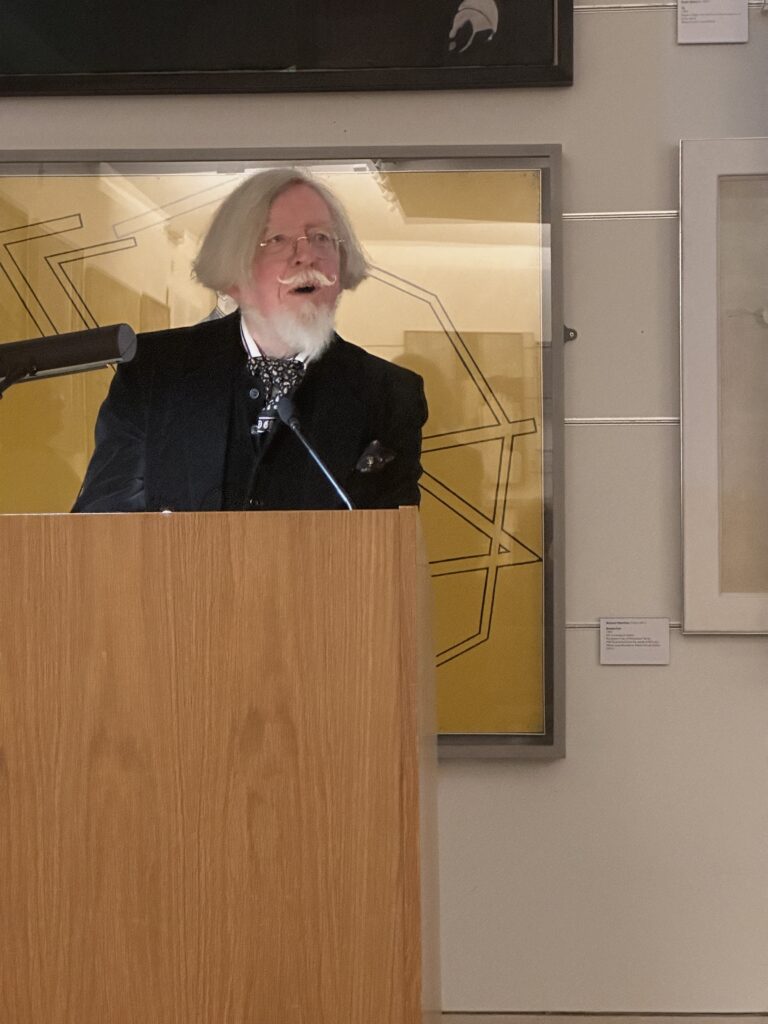
I managed to catch an evening talk ‘The image of the Artist” with Stephen Calloway. Calloway was a curator of paintings at the Victoria and Albert Museum in London. He is an expert on 19th-century art and has made a particular study of dandy culture. The talk looked at how the aesthetic side of the artist became as important to Nicholson and his contemporaries.
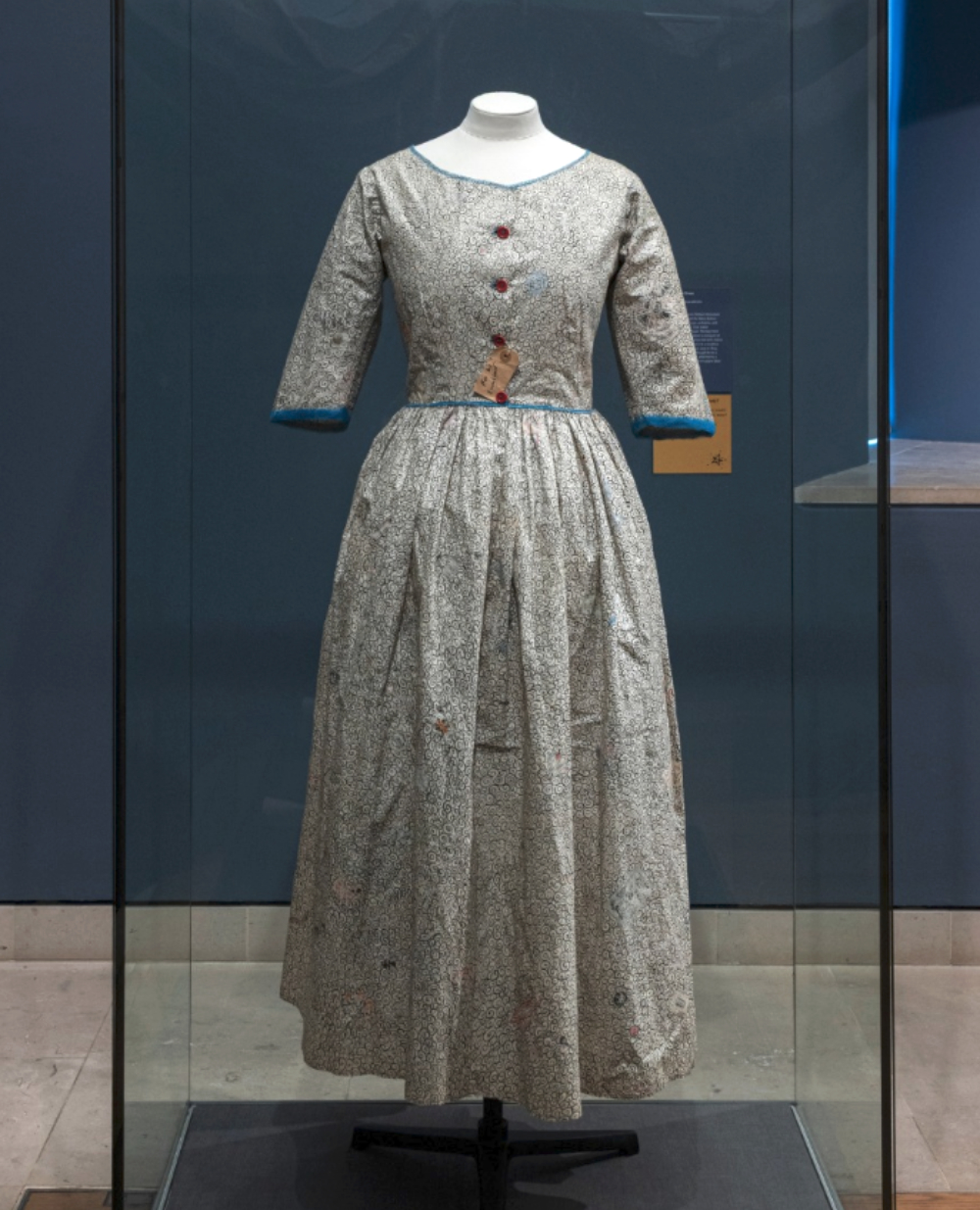
This hand-painted dress by Nicholson was an interesting addition to the show and was a gift to Edie. He covered the fabric with tiny, detailed ink drawings, hiding emblems and private messages of love.
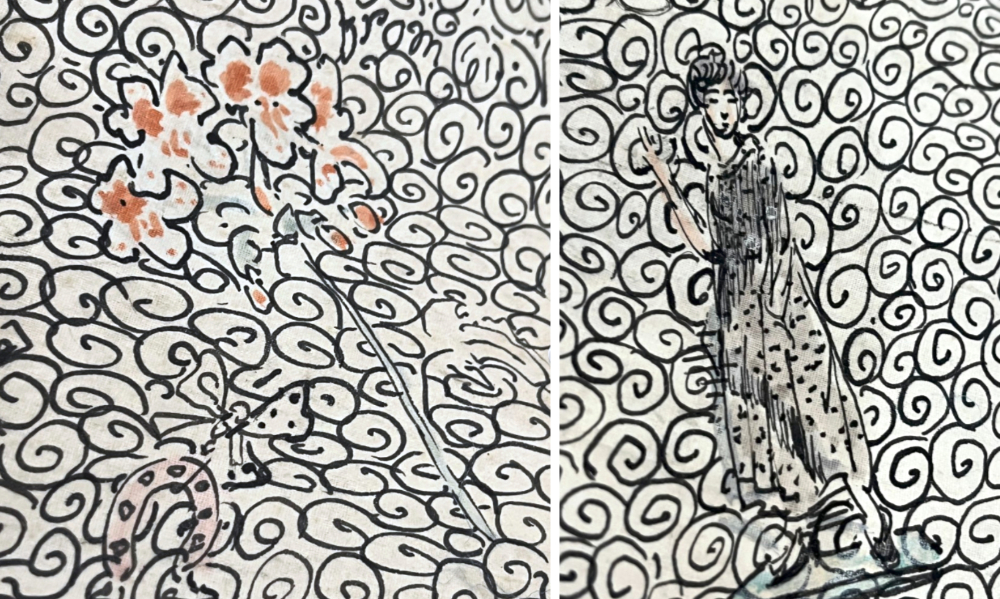
A bouquet, a horseshoe, and, near the hem, a tiny version of the painting Lady in Grey (thought to be Edie), attached to a button at the front, a brown paper label reading ‘For his Sweetheart’.
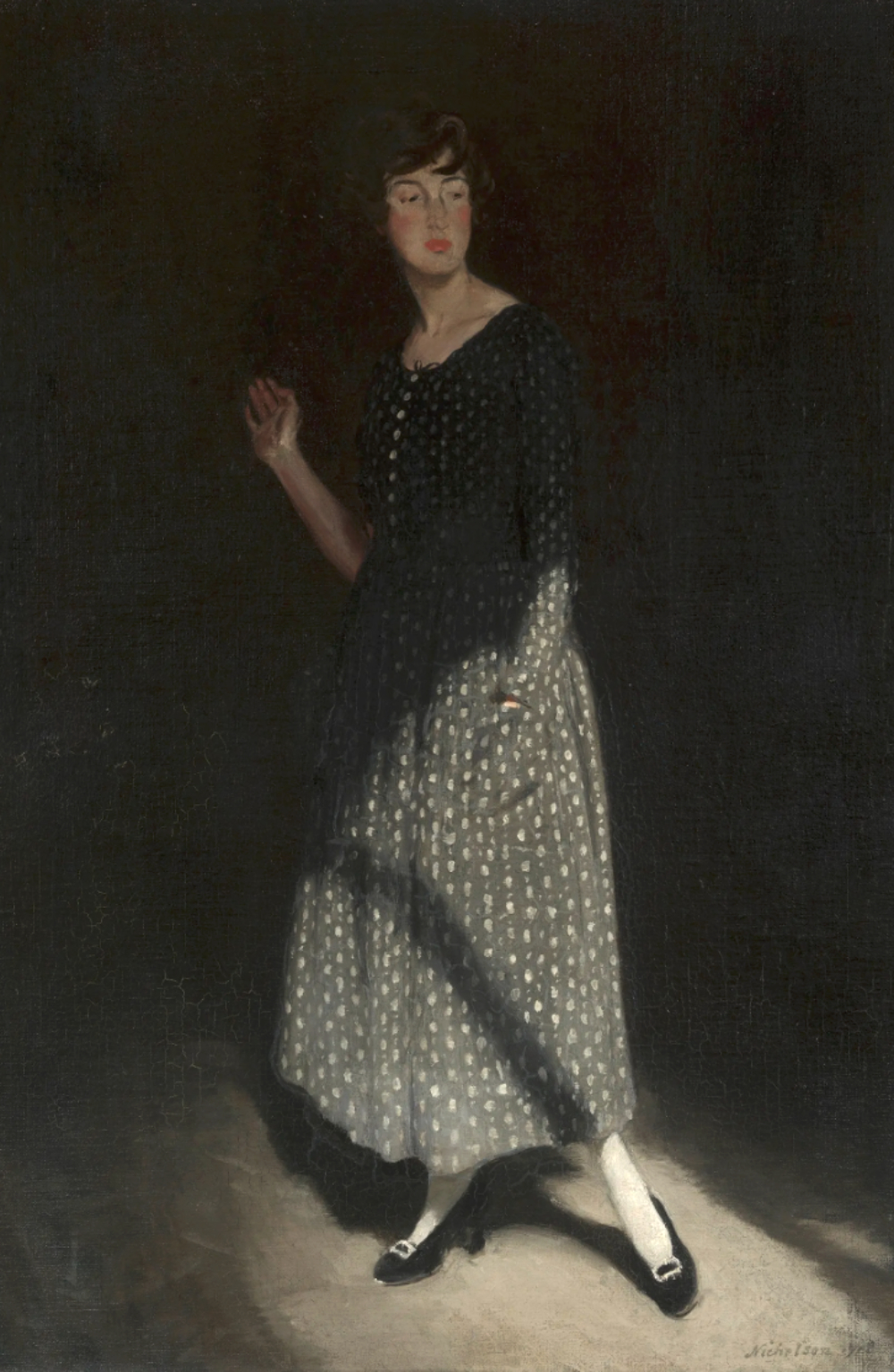
Lady in Grey, William Nicholson, 1918
By the early 1930s, tensions had developed in their relationship, and they separated in 1933.
In 1935, Nicholson went to stay with his friend, the Zoologist Peter Chalmers, in Malaga, and fell in love with writer Marguerite Steen. They travelled throughout Europe together, becoming Nicholson’s companion until his death in May 1949.
In 1936, he was recognised for his contributions to the arts and Knighted in the Birthday Honours List, becoming Sir William Nicholson.
Upstairs: Where the Story Gets Interesting
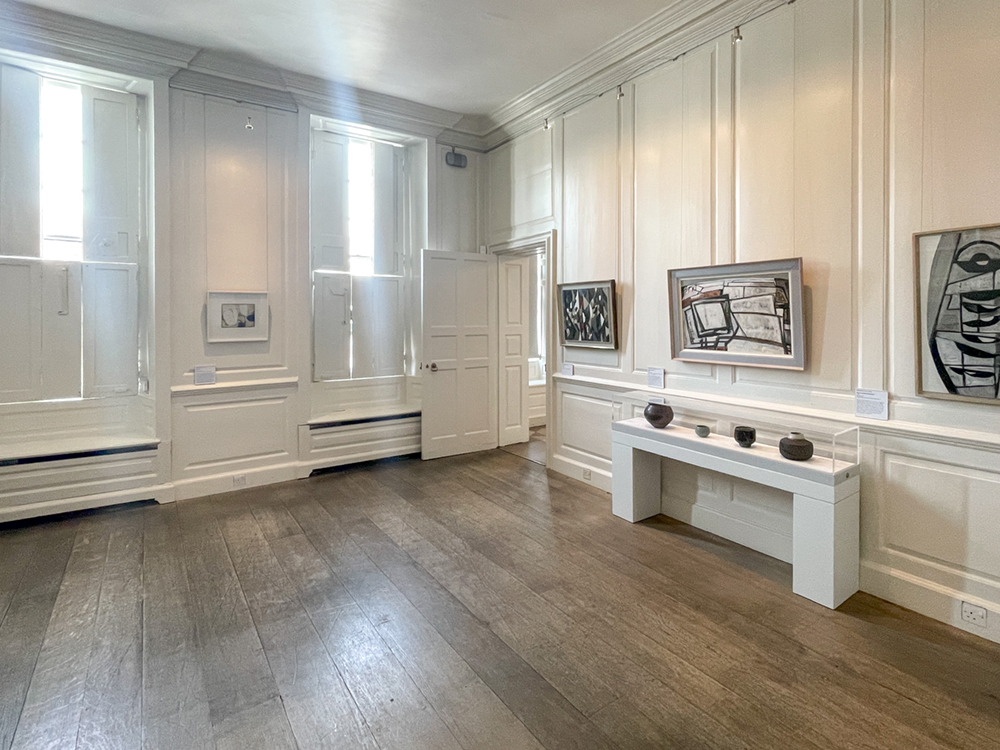
I’ll be honest, I wasn’t expecting the upper floor to be quite as rewarding as it turned out to be.
Pallant House has a strong collection of twentieth-century British modernism, and part of the exhibition carries that story forward through William Nicholson’s son, Ben Nicholson, and Ben’s wife, the sculptor Barbara Hepworth.
Walking upstairs felt a little like seeing a family conversation unfold across several decades. The father’s quieter, more intimate approach gives way to the son’s sharper abstraction, and you can feel the figurative tradition gradually shifting into pure form.

Ben Nicholson’s reliefs and paintings here are confident and rigorous, and, especially if you’ve just come from his father’s work, a little cooler in feeling.
Hepworth’s sculptures have a very different presence. Her forms feel physical and human, with holes, hollows, and smooth curves that seem shaped by touch as much as by thought. She and Ben spent much of their working lives in St Ives, and if you know that coastline at all, you can sense it in the work.
There is something in the way she uses space that brings to mind light on water, granite, and salt air. As someone living in Cornwall, I found that connection especially resonant.
If you can, it’s worth going on a quieter weekday. The still-life rooms, in particular, are best seen slowly, with enough time to stand close and really enjoy the surface, the brushwork, and all the small decisions in the painting.
Thoroughly enjoyable.
William Nicholson at Pallant House, Chichester: Until May 10th 2026


Thanks so much for sharing Will, what a fantastic lesson, I will enjoy perusing ! Have a great week.
Kind regards Louise
Thanks Louise, pleased you enjoyed it.
Will
Appreciate your take on the exhibits, Will. Thank you so much for sharing the beauty and inspiration you found in your visit.
Appreciate your take on the exhibits, Will. Thank you so much for sharing the beauty and inspiration you found in your visit.
Glad you enjoyed it Jennifer
Thank you so much for your timely email Will! I happen to be in the area tomorrow for one day only so have booked my ticket. I love WN’s work and your review is so interesting (as always). Cheers
Oh wow Debbie, that is perfect timing. Glad you managed to get a ticket. I really hope you enjoy the show, the courtyard cafe is good as well!
Wow! How exquisite. It’s kind of funny how the turn of century into the 1900s could be viewed so distant. Thankfully donations and a lot of organization took place, and the art is being preserved. Thanks, Will. Looks like it was a great day at the museum.
-Laura
Thank you so much for taking us around the exhibition Will. It was very enjoyable. We have not managed to get there this time but I have bought the book. I love William Nicholson’s work and you fitted it in so well to Pallant House, which we think is one of the best galleries in the UK. We are a bit biased as my husband used to have an office in the building when it belonged to the Council – maybe it still does. I also enjoyed your mentions of many of the other British artists associated with Chichester, especially John Piper and his connection with the cathedral. We have moved back to live in Scotland now so I get great pleasure from your visits to galleries in the south and south-west of England.
Hey Vanessa, Hope it brought back some good memories of your time there. Yes, love Piper’s work, it’s got that great structural quality to it yet still being free flowing.
Will
Loved seeing this gallery through your eyes.
Cheers Peter, so pleased you enjoyed it.
Thank you so much for sharing your visit and for your insights.
My pleasure Susan, really hope you enjoyed reading about his paintings.
Thank you so much, Will for taking us through the exhibition! Absolutely brilliant to see. Your descriptions and observations are marvellous to read! Thank you for brightening my day with this beautiful excursion! Fantastic!
My pleasure Tine, glad you enjoyed the article and had a virtual tour!
Thank you for this amazing tour Will! Very lovely!
Thanks Margo
What a wonderful article about a fascinating artist. Thank you so much, Will, for giving us the opportunity to see a part of this exhibition through your eyes. Much appreciated
Thanks Elise, glad you enjoyed learning about Nicholson’s work.
Thanks for taking the time to give us a glimpse of the gallery.
My pleasure Chuck
I have two of Nicholson’s signed woodcut prints I found in an antique print shop in Toronto (where I live). I’m not sure but it looks like they could be two of a series of images done for a calendar. I knew nothing about the artist; I just liked the simplicity of them. Now I know something about the artist! Thank you.
Oh wow, that’s great Victoria, so glad it’s given you an insight into the pieces.
Thank you so much, Will. A beautiful way to spend a rainy morning in the Bay Area. (I was even inspired to do a “walking tour” of Chichester Cathedral.) I am also reminded of a lovely time in Cornwall and St Ives some years ago–when I first “met” Ben Nicholson and Barbara Hepworth. Now I can add William Nicholson to my acquaintance. Much appreciated!
That’s great to hear Stephanie, glad it helped connect the dots between the artists.
What a coincidence: yesterday I was looking and deeply enjoying the worksof William Nicholson in a book that I’ve got of his work: I presume, one of the very little ever published. For me, Nicholson is one of the absolute top British painters/graphic artsts I’ve known, for quite some time and I’m delighted that you brought it among the readers attention. What a joy. What a noble work.
Oh wow, that’s good timing Onno, pleased you’ve been enjoying the book on his works.
Many thanks Will. I always thoroughly enjoy your visits to exhibitions and galleries. Your commentary is so conversational it’s as if we are there with you.
Thanks Anne, that’s great to hear, so pleased you enjoyed it.
Will
Thank you for being so generous with your time and writing this article to give me a peep at this wonderful gallery. Oh how I wish I lived closer!
My pleasure Jan.
I really appreciate how you share your exhibition experiences, Will, from the beautiful buildings to the artists’ work. I had never heard of William Nicholson. I loved what I saw and did some more research. His first wife was also a wonderful painter and I was surprised to see he illustrated The Velveteen Rabbit, too. Thank you so much for sharing. I envy the access that you have to so many museums across Britain and Europe. Here on the west coast of Canada our choices are, sadly, very limited.
I thank you so much for your generosity. Sharing this work of art and telling us his story is extremely appreciated for one of your Canadian students.
So pleased to hear that Jocelyne
Thanks for sharing your thoughts Will, on this wonderful artist and background. I had not been aware of Nicholson’s work, and it’s great to discover these great paintings and captivating style. The following website is maintained by the William Nicholson Trust, if anyone wishes to see more of his work, as I did:
https://www.williamnicholson.net
The ‘tonal mood’ of Nicholson’s paintings, as you aptly describe it Will, is a quality I would like to better understand, and I might try to paint one of Nicholson’s deceptively simple jugs as an exercise. Thanks again, your website is such a great resource!
Glad you enjoyed it Phillipe
Really enjoyed reading this. It’s interesting how Nicholson’s work feels so quiet and understated at first, but the more you look, the more you notice the subtle control in composition and tone. The way everyday scenes are handled with such restraint makes them feel almost timeless.
Also liked how the article highlights that sense of calm observation rather than dramatic storytelling, it makes you slow down and actually look more carefully at the painting.
So so enjoyed this tour through Pallant House . . . and wish I wasn’t all the way in Canada. WN’s work is wonderful, and I especially enjoyed his printmaking. Thank you for sharing!
Glad you enjoyed seeing the tour Connie.
This s such an interesting post. What a wonderful account of your visit to Pallant House.
I get so much pleasure from your informative posts, Will. How generous you are- it must involve considerable amounts of your time.
I was amused to see the broken handle of the the jug (in the painting with the paint brushes) had been repaired in real life. It’s interesting to see the objects beside a painting of them…
So pleased to hear that Judy. Yes, it was fascinating to see the objects next to the paintings. I’m really glad you enjoyed the article.
Will
Only just found this excellent post too late to visit the Ben Nickleson exhibition. We live not far from Chichester so we will certainly make sure to visit the Pallant Art Gallery next time we are in the area
It’s such a lovely gallery. Yes, definitely worth a visit. The cafe is very nice too in the courtyard.
Will